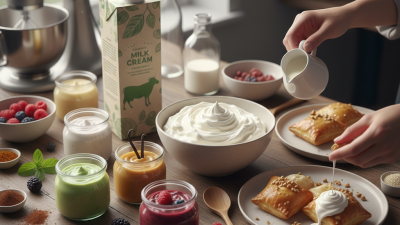
Why Choose Milk Cream for Global Food Production?
Global food manufacturers are seeking ingredients that improve texture, flavor, and product consistency. Milk cream offers all three. Its natural fat phase creates a smooth mouthfeel in sauces, desserts, bakery fillings, beverages, and cultured products. It also carries fat-soluble flavors effectively. That matters when consumers expect rich taste from smaller portions.
Industry data supports this opportunity. The OECD-FAO Agricultural Outlook 2024–2033 identifies population growth, urbanization, and rising incomes as continuing drivers of dairy demand. The report also highlights stronger demand for processed dairy products in developing markets. FAO’s Food Outlook 2024 shows that dairy supply chains remain closely connected to feed costs, energy prices, climate conditions, and transport risks. These pressures make dependable sourcing and processing controls essential. Milk cream is not simply a premium ingredient. It is a practical tool for standardizing recipes across regions.
Its performance is visible on the production floor. A controlled cream blend can help a bakery filling remain glossy after chilling. It can give soup a rounder texture without excessive stabilizers. In ice cream, carefully managed fat content supports body and slower melting. The International Dairy Federation emphasizes the importance of hygienic handling, compositional control, and traceability in dairy production. USDA Dairy: World Markets and Trade reports also show how international dairy trade depends on quality specifications and reliable cold-chain logistics.
Still, no ingredient solves every formulation problem. Cream can raise costs, require refrigeration, and create sustainability questions. Buyers should evaluate origin, fat percentage, shelf life, certifications, and supplier transparency before scaling production. The better question is not whether cream is fashionable. It is whether milk cream fits the product, market, and supply chain honestly.
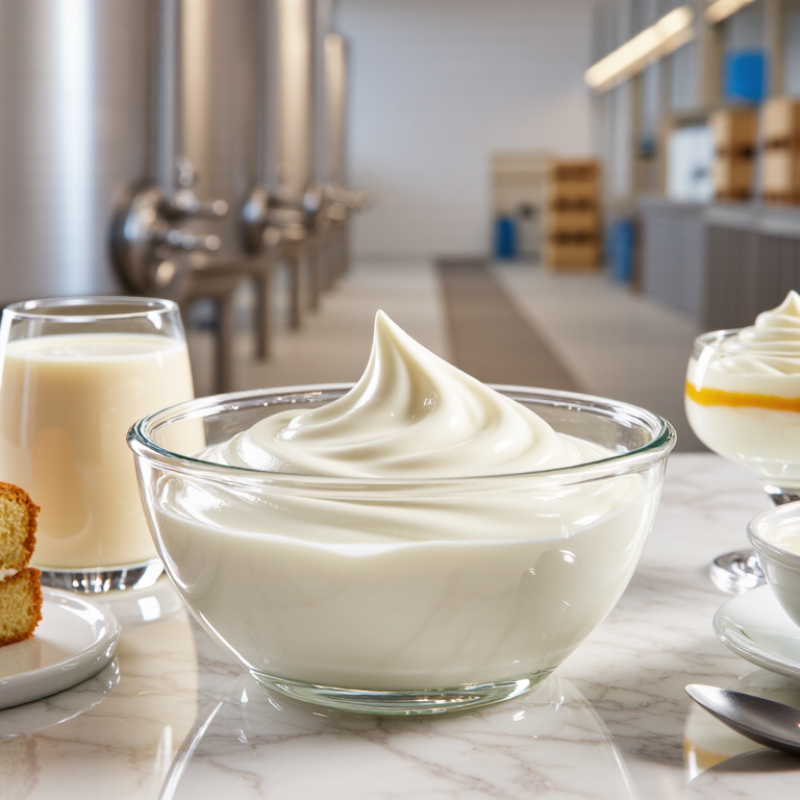
What Is Milk Cream and How Is It Produced?
Milk cream is the fat-rich layer separated from fresh milk. It usually contains about 18% to 40% milk fat, depending on its intended use. The remaining components include water, milk proteins, lactose, and minerals. This balance gives cream its smooth body, pale color, and mild dairy flavor.
Production begins with clean, chilled milk. A centrifugal separator spins the milk at high speed. The lighter cream moves away from the denser skim milk. Processors then standardize the fat level for cooking, whipping, or industrial formulations. Pasteurization reduces harmful microorganisms while preserving the cream’s natural qualities. Some cream is homogenized, which breaks fat globules into smaller particles and creates a more stable texture. It is then cooled quickly and packed under hygienic conditions.
Small details matter. Temperature control can affect viscosity, flavor, and shelf life. Poor handling may create unwanted separation or a cooked taste. In large food facilities, sanitation records, laboratory testing, and traceable batches support reliable production. Regulations and processing limits also differ between countries, so manufacturers must verify local requirements. Cream may appear simple, but its performance can change with feed, season, storage, and processing equipment. That variability deserves attention. Even well-controlled production is not perfectly uniform.
Why Choose Milk Cream for Global Food Production?
Milk cream is the fat-rich portion of milk separated by centrifugal force and then standardized, pasteurized, and sometimes homogenized. Its fat level influences texture, flavor, whipping performance, and heat stability.
How to read the chart: Higher-fat cream generally provides richer mouthfeel and stronger whipping performance. The values shown are representative fat levels based on common international cream classifications; exact standards vary by country.
Which Nutritional and Functional Properties Define Milk Cream?
Why Choose Milk Cream for Global Food Production?
Milk cream is more than a rich ingredient. Its nutritional profile supports energy-dense foods, sauces, desserts, and cultured products. USDA FoodData Central reports that heavy cream provides about 340 calories and 36 grams of fat per 100 grams. It also contains approximately 2 grams of protein and small amounts of calcium, phosphorus, and vitamin A. These values vary with fat level and processing. The label matters.
Its function comes from milk fat globules suspended in a water phase. During whipping, air becomes trapped in a flexible fat network, creating volume and a smooth mouthfeel. In heated sauces, cream can improve body and reduce harsh flavor perception. The International Dairy Federation identifies fat content, protein composition, acidity, and heat treatment as important quality factors in dairy processing. Small changes can affect stability.
Cream also carries practical advantages for international production. Its neutral dairy flavor fits sweet and savory applications. Standardized fat levels help processors manage texture across recipes. However, cream is not automatically stable under every condition. High heat, low pH, or excessive mixing may cause separation. OECD-FAO Agricultural Outlook 2024–2033 notes continuing growth in global dairy demand, yet demand does not guarantee successful formulation. Processing conditions, nutrition targets, and local consumer preferences still require testing. That part is easy to underestimate.
How Does Milk Cream Support Large-Scale Food Manufacturing?
Milk cream supports large-scale food manufacturing through fat, flavor, and process control.
Its natural fat content improves mouthfeel in sauces, desserts, bakery fillings, and ready-to-eat meals. It also helps manufacturers standardize recipes across production sites. This consistency matters when thousands of units leave a line each hour.
1.6% annually
The OECD-FAO Agricultural Outlook 2024–2033 projects global milk production to grow by about 1.6% annually. FAOSTAT data also places worldwide milk production above 900 million tonnes in recent years. These figures show a broad raw-material base for cream processing.
In factories, cream can be pasteurized, cooled, and blended with measured ingredients. Automated dosing reduces variation between batches. Small changes still matter.
Cream also supports stable product development. Its fat phase carries flavors and can improve the texture of emulsified foods. In chilled desserts, it helps create a smoother structure during freezing. In bakery applications, it can support tenderness and richer sensory performance.
However, cream is not a universal solution. Its performance depends on fat percentage, heat treatment, storage temperature, and mixing speed. The Institute of Food Technologists emphasizes process control as a key factor in consistent food quality.
A production team should test each formulation under real factory conditions, not rely only on laboratory results. That assumption deserves testing.
What Quality, Safety, and Storage Standards Govern Its Use?
Milk cream supports global food production because it adds richness, texture, and consistent performance. However, its value depends on controlled quality from farm collection to factory use. Buyers should verify fat content, acidity, flavor, color, and microbial results against the agreed specification. Fresh cream should show a clean dairy aroma, without sour notes, separation, or unusual discoloration. Small differences matter.
Safety controls usually begin with approved suppliers, pasteurization records, allergen declarations, and batch traceability. A documented HACCP system can identify risks during collection, transport, filling, and processing. Each shipment should include a certificate of analysis when required. Testing may cover pathogens, antibiotic residues, and contamination indicators. Requirements vary by destination, so one certificate may not satisfy every market. In practice, paperwork is sometimes incomplete. That is a weakness worth correcting, not ignoring.
Tips: Keep chilled cream within the supplier’s stated temperature range, commonly 0–4°C for fresh products. Use calibrated thermometers at receiving and during storage. Check seals, lot codes, and use-by dates before unloading. Store containers away from strong odors and raw ingredients. Apply first-expired, first-out rotation. Do not repeatedly warm and chill the same batch. If freezing is permitted, confirm its effect on texture before large-scale production. Some creams separate after thawing, even when they remain safe. Record that change honestly. Clear records help production teams investigate complaints, adjust recipes, and protect consumers across different markets.
Which Global Food Products Commonly Use Milk Cream?
Milk cream appears in more global foods than many shoppers notice. It gives sauces a smooth body, desserts a clean dairy aroma, and coffee a rounded finish. In bakery production, it supports fillings, whipped toppings, laminated pastries, and chilled cakes. The OECD-FAO Agricultural Outlook 2024–2033 projects world milk production to reach about 1,145 million tonnes by 2033. This expanding supply can improve cream availability, although regional fat levels and processing standards still differ. Cream is not simply extra milk. Its performance depends on fat content, heat treatment, acidity, and storage time.
In Europe and North America, cream commonly appears in ice cream, cultured cream, butter, soups, and ready meals. South Asian sweets often use concentrated dairy ingredients, while East Asian bakeries use cream in soft breads, cakes, and filled pastries. The International Dairy Federation’s World Dairy Situation 2023 highlights resource efficiency across dairy value chains. USDA’s Dairy: World Markets and Trade reports also track international trade in processed dairy ingredients used by manufacturers. Yet recipes are not interchangeable. A cream that whips well may split in a hot sauce. Small details matter. In practical formulation trials, taste panels, fat testing, and shelf-life checks should guide decisions. Some reports combine cream with wider dairy categories, so cream-only market volumes remain difficult to compare. That limitation deserves more attention.
| Product Category | Common Global Food Products | Primary Function of Milk Cream | Main Quality Contribution | Typical Processing or Use Stage | Key Formulation Considerations |
|---|---|---|---|---|---|
| Whipped Cream and Toppings | Cakes, pastries, pies, dessert toppings, filled pancakes, and plated desserts | Provides a fat phase that can be aerated and stabilized into a light, spoonable or pipeable foam | Creamy mouthfeel, smooth texture, volume, and a rich dairy flavor | Chilled before whipping; used as a topping, filling, or finishing component | Fat level, temperature, whipping time, stabilizers, and storage conditions affect overrun and foam stability |
| Ice Cream and Frozen Desserts | Ice cream, frozen custard, gelato-style products, ice cream sandwiches, and frozen dessert coatings | Supplies milk fat and helps create the continuous fat-water structure of the frozen mix | Richness, body, smoothness, slower melting, and reduced perception of ice crystals | Added during mix preparation before homogenization, pasteurization, aging, and freezing | Fat balance, total solids, emulsification, freezing conditions, and overrun must be controlled |
| Dairy Desserts and Custards | Puddings, crème brûlée, panna cotta, mousse, rice pudding, and custard-based desserts | Enriches the liquid base and contributes to emulsification and viscosity | Silky texture, rounded flavor, creamy appearance, and improved sensory richness | Blended into the base before heating, setting, chilling, or aeration | Heating intensity, protein interactions, sugar level, and gelling system influence final texture |
| Bakery Fillings and Creams | Whipped fillings, pastry cream, buttercream variations, ganache-style fillings, and cream-based laminates | Adds dairy fat, liquid, and emulsifying capacity to fillings and coatings | Spreadability, flavor release, smoothness, and a premium creamy profile | Used in cooked fillings, whipped systems, emulsified creams, and finished bakery assembly | Compatibility with chocolate, sugar, starches, eggs, and shortening is important for stability |
| Chocolate and Confectionery | Ganache, truffles, filled chocolates, chocolate sauces, and cream-based confectionery centers | Forms an emulsion with cocoa butter and other fats while providing moisture and dairy solids | Soft bite, gloss, smooth texture, balanced flavor, and controlled richness | Heated and combined with chocolate or confectionery ingredients, followed by cooling or setting | Water-to-fat ratio, emulsion control, cooling profile, and microbial stability affect shelf life |
| Sauces and Gravies | Cream sauces, white sauces, pan sauces, pasta sauces, mushroom sauces, and savory gravies | Provides a fat-and-water base for emulsification, dilution, and viscosity development | Smooth body, richness, gloss, flavor-carrying capacity, and reduced harshness | Added during sauce preparation and reduced, emulsified, or combined with starches and seasonings | Heat stability, acid tolerance, shear conditions, and prevention of curdling are key concerns |
| Soups and Ready Meals | Cream soups, chowders, bisques, prepared meal sauces, and chilled or frozen ready meals | Enriches the liquid phase and improves emulsion stability and viscosity | Full mouthfeel, smooth consistency, opacity, and improved flavor distribution | Incorporated during cooking or finishing, depending on the desired heat treatment and texture | Retort or high-heat processing may require suitable stabilizers and careful control of pH and shear |
| Beverages | Cream-based coffee drinks, milkshakes, dessert beverages, specialty hot drinks, and dairy smoothies | Increases dairy fat, viscosity, emulsification, and sensory richness | Creamy body, whitening effect, smooth finish, and improved flavor persistence | Mixed into the beverage base, used as a topping, or incorporated into a blended formulation | Homogenization, separation control, temperature management, and compatibility with acidity are important |
| Cheese and Dairy Spreads | Cream cheese-style spreads, processed cheese products, soft cheese preparations, and cheese dips | Raises fat content and supports a smooth, spreadable emulsion | Softness, lubricity, mild dairy flavor, and improved spreadability | Blended with milk solids, cheese ingredients, salts, and stabilizers during processing | Fat-protein balance, pH, salt level, heat treatment, and water binding influence consistency |
| Prepared Salads and Dips | Creamy dips, coleslaw dressings, potato salads, vegetable dips, and savory sandwich spreads | Contributes richness and helps create a smooth, cohesive dressing or dip structure | Creamy texture, flavor retention, opacity, and improved palatability | Blended with acids, seasonings, vegetables, herbs, or other dairy ingredients | Acid stability, viscosity control, cold-chain management, and resistance to phase separation matter |
| Infant and Medical Nutrition Applications | Selected specialized nutritional formulations and high-energy dietary products | Can provide milk fat and energy when permitted by the product specification and regulatory framework | Energy density, dairy flavor, and contribution to a balanced fat system | Used only under controlled formulation, quality, safety, and regulatory requirements | Strict microbiological, allergen, compositional, traceability, and regulatory controls are essential |
Related Posts
-
2026 Top Trends in Milk Cream Products for Delicious Recipes?
-
2026 Best Milk Cream Products for Global Buyers?
-
Is Grass Fed Raw Milk the Best Choice for Global Buyers?
-
Best Practices for Dairy Farming in China What Global Buyers Need to Know
-
China Top Farm Milk Brands and Their Unique Features?
-
Order Milk at the 139th Canton Fair for Global Sourcing?