How to Order Milk in Bulk in 2026?
Ordering milk in bulk in 2026 can help cafés, restaurants, caterers, and larger households manage regular demand. The right plan starts with actual use, not a supplier’s biggest available deal. Review a few weeks of sales or household consumption, then estimate how much you can store and use before the milk’s date. A full cooler may look reassuring. It can also hide waste.
Before you order milk, compare pack sizes, delivery schedules, product types, and minimum order quantities. Ask suppliers about delivery temperature controls, date labeling, and what happens if a shipment arrives damaged or warmer than expected. Check that your refrigerator can hold the delivery safely, with space for airflow and clear access to older stock. Small details matter. Keep recent invoices and note how quickly each product sells; those records make future orders more accurate. If demand changes by season or event, adjust quantities rather than relying on last month’s pattern. This guide explains how to assess suppliers, calculate a practical order, and plan storage and delivery. Prices and availability vary by location, so confirm current terms directly with vendors. There is no perfect forecast, and I would not pretend otherwise. A cautious first order, followed by a review of real usage, is often more useful than a confident guess.
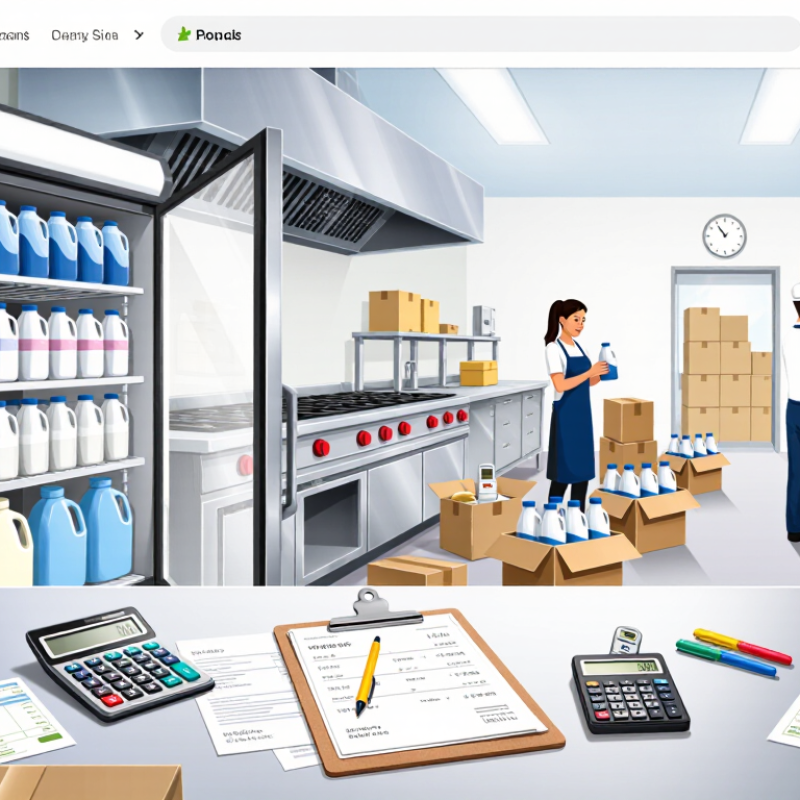
Define Your Bulk Milk Needs and Product Specifications
Before requesting a bulk milk quote, estimate how much your kitchen or production line actually uses. Review several weeks of invoices, daily service levels, and seasonal changes. A café serving 200 drinks on a busy morning may need a different delivery rhythm from a bakery using milk mainly for dough and fillings. Build in a modest buffer, but avoid ordering by guesswork. That estimate can be wrong. Adjust it after comparing actual use with leftover stock.
Write down the product specifications clearly. State whether you need whole, reduced-fat, or lactose-free milk, and give the required fat percentage if it matters to your recipes. Confirm pasteurization requirements, package size, and whether containers must fit existing coolers or dispensers. For example, a ten-liter container may reduce handling, but it is unhelpful if staff cannot store it safely once opened. Specify delivery days, acceptable time windows, and the temperature condition required on arrival. Check the stated shelf life against your expected usage, not just the printed date. Keep a record of substitutions and quality issues; small details can change how a product performs. Review your specifications when menus, equipment, or customer demand shifts. Some needs will remain uncertain, so note assumptions and revisit them after a few orders.
Find Suppliers and Check Their Quality and Safety Standards
In 2026, compare bulk milk suppliers on more than price and delivery distance. Ask how milk is collected, chilled, stored, and transported. Request recent inspection records, food-safety procedures, and clear batch traceability. A reliable supplier should explain how it controls temperature from pickup to your receiving dock. Ask for evidence. Not just promises.
Check whether staff monitor refrigeration and keep dated temperature logs. Confirm that vehicles arrive clean and insulated, and that sealed containers show no leaks, damage, or unusual residue. Ask how the supplier tests milk quality and handles a failed result. Independent laboratory reports can add confidence, but verify their dates and what each test measures. Requirements vary by location, so check applicable food-safety rules with your local authority.
Visit the facility if possible. Look for tidy loading areas, handwashing stations, and equipment cleaning records. Request a small trial delivery before committing to recurring volumes; taste, consistency, and arrival condition may reveal practical problems paperwork misses. Keep the first order manageable. I would also review delivery windows, return procedures, and notice periods in writing. One detail can be overlooked: a supplier may meet quality expectations yet struggle during peak demand. Ask for a realistic capacity estimate and a backup plan before placing a large order.
Calculate Order Quantities, Delivery Frequency, and Storage Capacity
How to Order Milk in Bulk in 2026?
Estimate your average daily use from recent sales or kitchen records, not memory alone. A café using 18 liters a day and receiving deliveries every three days needs about 54 liters between deliveries. Add a modest buffer for busy periods, perhaps 10 percent, if past demand supports it. That brings the order to roughly 60 liters. Demand can shift. Review the estimate weekly, especially during holidays or menu changes.
Delivery frequency should match both consumption and shelf life. More frequent deliveries may reduce spoilage, but can raise handling costs and create scheduling pressure. Less frequent deliveries require more storage and a reliable cold chain. Keep milk at 4°C or below, and check the temperature when stock arrives. Small details matter: a delayed handoff or a blocked cooler vent can affect product quality.
Measure usable refrigerator space before placing a large order. Include room for existing stock, airflow, and safe access—not just the shelf’s advertised volume. If cases hold 12 liters, a 60-liter order needs space for five cases, plus clearance for circulation. Rotate older stock forward and check date labels during each delivery. I once underestimated how much space was lost to awkward case shapes; the calculation looked right, but the cooler did not. Start with a smaller trial order if your actual capacity or demand is uncertain.
How to Order Milk in Bulk in 2026: Order Quantity, Delivery Frequency & Storage Capacity
Planning example: For an operation using 100 gallons of milk per day, order quantity equals daily use multiplied by the number of days between deliveries. The storage estimate adds a 10% planning buffer. Adjust these figures to match actual demand, delivery schedules, and available refrigerated space.
Compare Prices, Terms, and Delivery Options Before Ordering
How to Order Milk in Bulk in 2026?
Compare Prices, Terms, and Delivery Options Before Ordering
A bulk milk quote is only useful when you know what it includes. Compare the delivered cost per gallon, not just the listed product price. Add fuel surcharges, container deposits, minimum-order fees, and any charges for missed delivery windows. USDA Agricultural Marketing Service’s Dairy Market News publishes regular dairy market reports, which can help buyers track price movements and regional conditions. Use them as context, not as a guarantee of your supplier’s final price.
Check the terms as carefully as the number. Ask how long the quote remains valid, whether the order has a minimum volume, and what happens if a delivery arrives late or short. Confirm temperature requirements, packaging, receiving hours, and the process for reporting damaged or questionable product. USDA NASS reported U.S. milk production of about 226 billion pounds in 2023, illustrating the scale of the market; local availability and delivered costs can still differ. A cheaper quote may not be the better deal. Small details matter.
Confirm the Order and Check the Milk Upon Delivery
Before dispatch, request written confirmation of volume, milk type, fat content, packaging, delivery window, and temperature requirements. Match the confirmation against your purchase order; a vague “one pallet” can mean different quantities. USDA’s National Agricultural Statistics Service reported 225.9 billion pounds of U.S. milk production in 2024 in its Milk Production, Disposition, and Income 2024 Summary. Large supply figures do not guarantee that an individual delivery meets your specifications. Small mismatches matter. Keep the confirmation and agreed specifications available for the receiving team.
At arrival, check the truck’s cleanliness, package seals, item count, lot codes, and dates before signing. Use a calibrated thermometer on a designated sample, or review a validated shipment temperature record. The FDA Food Code 2022 sets 41°F (5°C) or below as the cold-holding limit for time/temperature control for safety foods. Record the reading, delivery time, and any damage. If milk arrives warm, leaking, or with a broken seal, photograph it and contact the supplier before accepting it. I’ve learned that a quick handoff can miss a small but costly discrepancy.
Tips: Assign one person to receive the order, keep a simple checklist by the cooler, and note exceptions on the delivery record. A perfect checklist cannot fix a rushed handoff.
Related Posts
-
China Best Daily Milk Suppliers for Global Buyers?
-
China Top 10 Real Milk Suppliers for Global Buyers?
-
2026 Best Fresh Milk Options for Health and Taste?
-
How to Choose a Dairy Delivery Supplier in 2026?
-
Why Choose Real Milk for Your Business Needs?
-
China Top 10 Milk Cream Manufacturers for Global Buyers