How to Choose a Dairy Delivery Supplier in 2026?
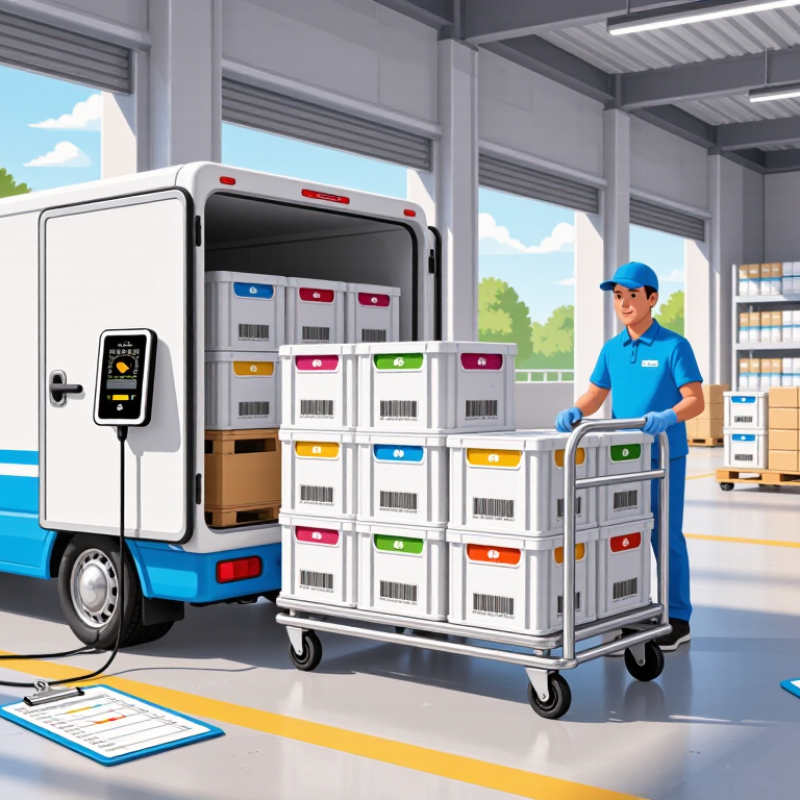
In 2026, choosing a dairy delivery supplier requires more than comparing prices. Milk, yogurt, cream, and cheese depend on disciplined temperature control from dispatch to arrival. A supplier may promise freshness, yet the loading dock tells the real story. Look for insulated vehicles, calibrated temperature logs, and clear delivery windows. Ask how quickly the company reports a broken seal or delayed route. Small details matter.
Traceability should be equally visible. Reliable suppliers can identify the farm, processing batch, and delivery date behind each carton. Request current food-safety certifications and verify that they match your region’s requirements. Review recall procedures, insurance information, and product specifications before signing. References from restaurants, schools, or retailers can reveal patterns that marketing materials hide. Speak with the driver or account manager, too. Their answers often show how seriously the company treats service.
Your needs may change. A café ordering twenty liters weekly has different priorities from a hotel serving breakfast to hundreds of guests. Compare minimum order quantities, substitutions, payment terms, and holiday coverage. Calculate the cost of spoilage, not only the invoice total. No supplier is perfect. A checklist can overlook delivery access and crate handling. That mistake is avoidable. Test a supplier with a short trial order, record arrival temperatures, and inspect packaging before expanding the contract. This practical evidence supports a more confident dairy delivery decision, while leaving room to revise your choice when conditions change.
Define Your Dairy Delivery Requirements and Business Priorities
When choosing a dairy delivery supplier in 2026, define your operating needs before comparing prices. List the products, pack sizes, weekly volume, delivery areas, and required arrival times. A café may need small, frequent deliveries, while a manufacturer may need planned pallets and strict batch consistency. Record storage capacity, refrigeration limits, allergen controls, and acceptable shelf life. These details prevent vague promises from influencing your decision.
Tips: Ask for sample temperature logs, delivery records, product specifications, and recall procedures. Check whether the supplier can provide batch traceability and accurate invoices. Test a small order before signing a long agreement. It reveals practical problems quickly.
Your priorities should include product quality, service reliability, communication, and total cost. A low unit price may hide delivery fees, spoilage, extra handling, or missed production time. Review how the supplier manages delays and damaged cartons. Clear escalation contacts matter during busy periods. In practice, no supplier performs perfectly every week. I would question anyone promising that. Instead, assess response speed, corrective action, and honest reporting. A short trial can show whether their systems match your daily reality. Make room for change, too. Demand, staffing, and delivery routes can shift during the year. Your requirements should be reviewed quarterly, not forgotten after approval.
Assess Supplier Product Quality, Safety, and Compliance Standards
How to Choose a Dairy Delivery Supplier in 2026?
Choosing a dairy delivery supplier in 2026 requires more than comparing prices. Product quality should be visible, measurable, and consistent across every shipment. Ask for current specifications covering fat content, allergens, storage temperature, shelf life, and packaging integrity. Request recent laboratory results, not only marketing statements. A reliable supplier can explain testing methods in plain language.
Details matter. During a site visit, inspect clean loading areas, sealed containers, calibrated thermometers, and orderly batch records. A cold truck means little if staff leave doors open during loading. Safety controls should follow a documented system, such as HACCP principles or ISO 22000-based procedures. Check pasteurization records, sanitation schedules, allergen separation, water quality, and employee training. Ask what happens after a temperature deviation. The answer should include isolation, investigation, notification, and corrective action.
Keep records. Traceability should connect each delivery to its batch, production time, driver, and destination. Test a recall exercise before signing a long contract. It may feel excessive, but delays become expensive when information is missing. Review licenses, inspection reports, insurance, and compliance with applicable food and transport rules. Verify certificates are current and issued by credible, independent bodies. I have learned that polished certificates can still leave practical questions unanswered. A checklist alone is not enough. Reassess performance monthly through temperature logs, complaint trends, delivery accuracy, and corrective-action closure.
How to Choose a Dairy Delivery Supplier in 2026? - Assess Supplier Product Quality, Safety, and Compliance Standards
| Assessment Dimension | What to Verify | Reference Benchmark or Requirement | Acceptable Evidence | Suggested Weight |
|---|---|---|---|---|
| Regulatory Authorization | Confirm that the dairy processing and storage facilities are legally registered or licensed in every market they serve. | Current authorization from the relevant food authority; requirements vary by jurisdiction. | Valid license, registration number, latest inspection report, and corrective-action records. | 10% |
| Food Safety Management System | Evaluate hazard analysis, critical control points, monitoring procedures, verification, and corrective actions. | A documented HACCP-based system is a core food-safety expectation. ISO 22000 or FSSC 22000 certification may provide additional assurance but is not automatically required by law. | Current certificate where applicable, HACCP plan, internal-audit results, and recent nonconformance records. | 15% |
| Pasteurization and Process Controls | Check whether pasteurization parameters are validated, continuously monitored, and linked to production records. | For example, the U.S. Grade “A” Pasteurized Milk Ordinance recognizes 72°C for 15 seconds or 63°C for 30 minutes for high-temperature short-time or batch pasteurization; local rules may differ. | Calibration certificates, time-temperature charts, batch records, and deviation investigations. | 12% |
| Microbiological Safety | Review testing for relevant pathogens, indicator organisms, environmental contamination, and product shelf-life stability. | Testing should follow a documented, risk-based sampling plan and applicable legal or customer specifications. Typical hazards may include Salmonella, Listeria monocytogenes, coliforms, and total plate count. | Recent certificates of analysis, laboratory accreditation details, sampling plan, and trend reports. | 15% |
| Cold-Chain Management | Assess temperature control from loading through delivery, including vehicle hygiene and temperature excursions. | A common food-service control target is 5°C (41°F) or below for chilled perishable foods, unless the applicable law or product specification requires another limit. | Continuous temperature logs, calibrated data loggers, vehicle sanitation records, and excursion-response procedures. | 15% |
| Product Quality and Freshness | Compare fat content, protein content, sensory quality, packaging integrity, shelf life, and delivery-date consistency with the specification. | Supplier specifications should define measurable acceptance limits and minimum remaining shelf life at delivery. | Product specification sheets, incoming inspection results, shelf-life data, and complaint-trend reports. | 10% |
| Allergen and Label Compliance | Verify accurate milk-allergen declaration, ingredient lists, nutrition information, date marking, lot codes, and storage instructions. | Labels must comply with the destination market’s food-information and allergen-labeling laws; milk is a regulated major allergen in many jurisdictions. | Approved artwork, label review records, allergen matrix, change-control procedure, and packaging samples. | 10% |
| Traceability and Recall Readiness | Determine whether the supplier can trace ingredients, processing batches, transport records, and customers quickly. | A one-step-back and one-step-forward traceability process is a widely used regulatory and industry control; recall procedures should be tested periodically. | Mock-recall results, lot-code examples, distribution records, withdrawal procedure, and emergency contact list. | 10% |
| Packaging and Physical Protection | Inspect seals, container condition, tamper evidence, pallet hygiene, and protection from damage or contamination. | Packaging must be suitable for food contact, intact at delivery, and compatible with the product’s storage and transport conditions. | Food-contact declarations, packaging specifications, seal-integrity checks, and delivery inspection records. | 5% |
| Supplier Performance and Corrective Action | Measure on-time delivery, order accuracy, temperature compliance, rejected loads, complaints, and corrective-action closure. | Set written service-level targets appropriate to the operation and review performance at least quarterly. | Key performance indicator reports, delivery records, complaint logs, root-cause analyses, and closed corrective actions. | 8% |
Compare Delivery Coverage, Cold-Chain Systems, and Service Reliability
How to Choose a Dairy Delivery Supplier in 2026?
Compare Delivery Coverage, Cold-Chain Systems, and Service Reliability
When selecting a dairy delivery supplier, check coverage beyond a service-area map. Ask whether deliveries reach your exact address, loading dock, and preferred receiving hours. A supplier may serve your city but miss rural routes or narrow delivery windows. Request recent delivery records for similar locations. These records reveal practical performance better than promotional promises.
Cold-chain control should be visible and measurable. Ask how products are chilled before dispatch and during transport. Confirm vehicle temperature ranges, data-logger use, and alarm procedures. At delivery, milk should arrive cold, sealed, and free from damaged packaging. Check the receiving process too. Who records temperatures, and what happens when a reading is unacceptable? Backup refrigeration and replacement procedures matter during traffic delays or equipment failure. I once accepted a late delivery without checking its temperature. That shortcut created avoidable waste.
Service reliability needs clear evidence. Review on-time delivery rates, order accuracy, minimum order rules, and response times for complaints. Ask for two customer references, preferably businesses with similar volumes. A supplier should explain holiday scheduling and emergency contact routes without hesitation. Price still matters, but a low fee can hide missed deliveries and shorter shelf life. Some suppliers provide excellent records but weak communication. That is easy to overlook. Test the relationship with a small trial order, then compare arrival time, product condition, paperwork, and the supplier’s response to one reasonable correction request.
How to Choose a Dairy Delivery Supplier in 2026?
Compare delivery coverage, cold-chain systems, and service reliability using practical supplier-screening benchmarks.
The benchmark targets prioritize full temperature control and traceability, while delivery coverage and on-time performance should be verified using the supplier’s historical records. Cold holding at 5°C or below follows the U.S. FDA Food Code reference, while EU raw-milk cooling limits vary by collection frequency. Confirm local regulations and contract requirements before selecting a supplier.
Review Pricing Models, Contract Terms, and Order Flexibility
How to Choose a Dairy Delivery Supplier in 2026?
A low case price does not always mean a lower delivered cost. Compare product prices, delivery fees, fuel adjustments, minimum orders, and seasonal surcharges. Ask for a sample invoice covering one normal week. That simple test can reveal hidden charges. I once compared only the carton price and missed a sizeable small-order fee. That was a costly oversight.
Contract terms deserve equal attention. Check the renewal period, notice requirements, payment window, and credit process for damaged goods. The agreement should define acceptable delivery temperatures and provide a clear response time for quality complaints. Request temperature records when needed. Also confirm whether prices can change monthly or only after written notice. Flexible wording sounds helpful, but it can create uncertainty later.
Order flexibility protects operations when demand shifts. Look for practical cutoff times, minimum quantities, partial-case options, and easy changes through a documented system. Ask how quickly the supplier handles urgent orders, substitutions, and holiday schedules. A short trial period may be more useful than a long promise. Still, flexibility can carry fees, and suppliers may limit it during peak weeks. Test the process with a small order before signing. Keep notes from every conversation. Verbal assurances are easy to remember incorrectly.
Verify Supplier Reputation, Support Services, and Long-Term Fit
A dairy delivery supplier should be judged beyond price and polished promises. The OECD-FAO Agricultural Outlook 2024–2033 expects global milk production to grow by about 1.6% annually. That growth can increase competition, but it can also pressure transport, staffing, and quality controls. Request recent customer references, delivery accuracy records, temperature logs, and documented responses to complaints. Ask what happened during their last serious delay. The answer may reveal more than a sales presentation.
Support services must work at 6 a.m., not only during office hours. Confirm order cut-off times, emergency contacts, replacement procedures, and invoice correction speed. The U.S. Department of Agriculture’s Economic Research Service shows that dairy remains a major part of household food availability, so supply interruptions can affect menus quickly. Require clear product specifications, batch traceability, shelf-life expectations, and cold-chain evidence. A digital portal is useful. It is not proof of reliability.
Long-term fit deserves a practical test. Compare minimum order quantities, seasonal capacity, delivery routes, payment terms, and waste-handling support. The International Food Information Council’s 2024 consumer research found that food safety strongly influences purchasing confidence, making transparent communication commercially important. Run a small trial across several deliveries before signing a long contract. Measure missing cases, temperature variation, response time, and product consistency. Some suppliers will perform differently after onboarding. That uncomfortable possibility deserves attention. Recheck the score quarterly, and leave room for improvement on both sides.
Related Posts
-
What Are the Top 10 Milk Ingredients Suppliers in China?
-
2026 Best Fresh Milk Options for Health and Taste?
-
China Best Daily Milk Suppliers for Global Buyers?
-
10 Best Raw Milk Delivery Services You Should Try?
-
What Is Cream Milk and How Is It Used?
-
China Top 10 Milk Cream Manufacturers for Global Buyers