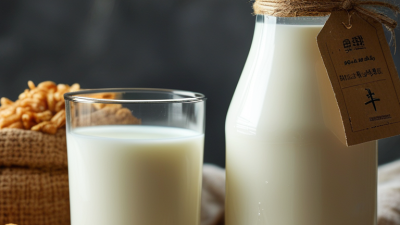
China Best Daily Milk Suppliers for Global Buyers?
Choosing reliable milk suppliers requires more than comparing prices on a product list. Global buyers need consistent quality, verified production capacity, and dependable delivery. This guide explores China’s leading daily milk suppliers and the standards that can separate a strong partner from a risky choice.
Practical evaluation starts at the factory. Buyers should review processing equipment, hygiene controls, laboratory testing, and traceability records. A professional supplier should provide clear specifications for fat content, protein, shelf life, packaging, and storage conditions. Independent audits can add valuable confidence. So can recent certificates and batch-level certificates of analysis.
Cold-chain performance matters greatly for pasteurized milk. One delayed shipment may affect taste, safety, and customer trust. UHT milk offers longer shelf stability, but it still requires careful packaging and inventory planning. Buyers should confirm minimum order quantities, private-label options, export experience, and response times. Ask for samples. Test them under realistic conditions.
No supplier is perfect. Some product pages may look impressive but reveal little about actual performance. That gap deserves attention. A careful sourcing process should compare factory evidence, customer references, sample results, and contract terms. This article aims to support informed decisions with practical observations rather than exaggerated claims. Supplier rankings may change as capacities, certifications, and market conditions develop. That is an important limitation. The best partner is not always the largest company. It is the supplier that can repeatedly deliver safe, compliant, and commercially suitable milk for your market.
What Defines a Leading Chinese Daily Milk Supplier?
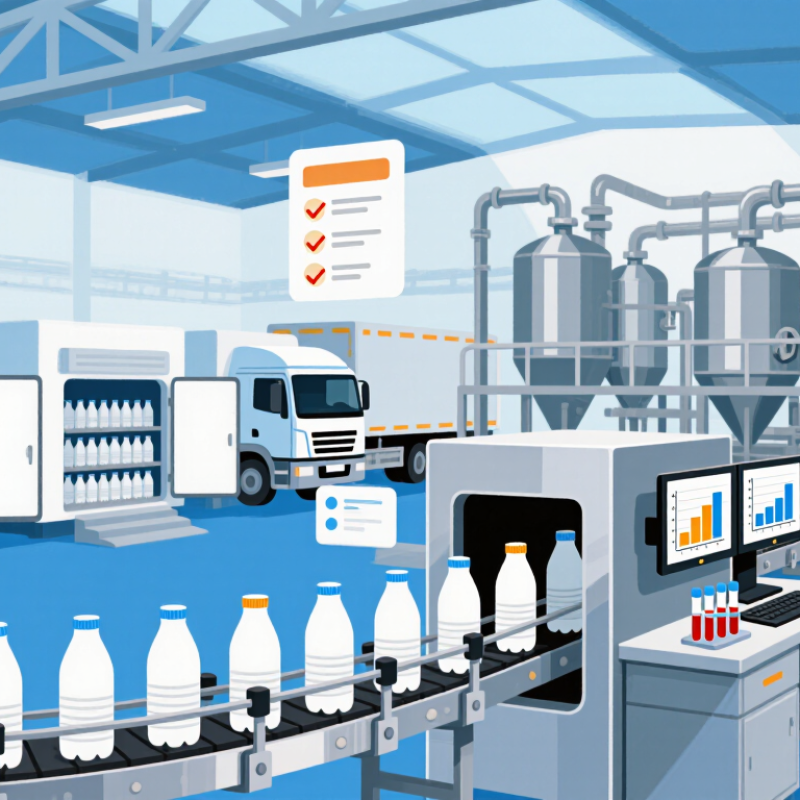
A leading Chinese daily milk supplier offers more than competitive pricing. It provides clear farm-to-factory traceability for every production batch. Buyers should be able to check the source, processing date, and storage conditions. Real reliability appears in small details, such as sealed cartons and readable batch codes.
Cold-chain control is equally important. Fresh milk should remain within a carefully monitored temperature range during processing, storage, and delivery. Responsible suppliers use calibrated sensors and keep temperature records for inspection. Their laboratories test fat content, protein, microbial levels, and possible residues before shipment. Food safety systems, trained staff, and documented corrective actions show practical expertise.
No supplier is flawless. A strong supplier admits weaknesses instead of hiding them. A delayed test result or missing temperature record deserves an honest explanation. It also requires a documented remedy. Global buyers should inspect factory hygiene, review audit reports, and request recent quality records. Communication matters too. Clear English documents, stable response times, and realistic delivery schedules reduce purchasing risks. Some suppliers promise too much during negotiations. That is worth questioning. The better choice is usually the supplier that gives precise answers, supports independent verification, and improves its process when evidence reveals a problem.
Key Criteria for Comparing China’s Milk Suppliers
Choosing China’s Best Daily Milk Suppliers for Global Buyers
Choosing China’s best daily milk supplier requires more than comparing prices. A reliable review starts with product identity, milk source, processing method, and intended shelf life. Ask for recent laboratory reports covering microbiological safety, fat content, protein, and additives. Check whether test results match the exact production batch. They should. Supplier certificates matter, but current evidence matters more. Buyers should verify licensing, export experience, and factory audit records through official or independent channels.
Production capacity must fit your real demand, not an attractive presentation. Review monthly output, minimum order quantity, filling formats, and backup arrangements. Cold-chain control deserves close attention. Request temperature records from factory loading to port delivery. Study packaging details too, including seals, carton strength, expiry printing, and language accuracy. A small sample shipment can reveal leakage, flavor changes, or delays before a larger order. Samples are not enough, though. On-site or video audits may expose gaps in hygiene routines and staff training.
Communication is another comparison criterion. Clear replies, traceable documents, and stable lead times reduce costly surprises. Ask who handles complaints and how corrective actions are recorded.
Price still matters, but the lowest quote may hide testing, logistics, or replacement costs. No supplier looks perfect on paper. I would record weaknesses openly, including slow replies or incomplete documents, rather than explain them away. A careful scoring sheet can compare quality, compliance, service, logistics, and total landed cost fairly.
Major Types of Daily Milk Suppliers in China
China Best Dairy Milk Suppliers for Global Buyers?
Major Types of Dairy Milk Suppliers in China
China’s dairy supply base has several distinct supplier types. Large integrated producers combine farms, processing plants, laboratories, and cold-chain distribution. Regional processors usually source milk from nearby farms and serve local retail or food-service buyers. According to China’s National Bureau of Statistics, China produced about 41.97 million tonnes of milk in 2023. This scale supports both domestic demand and export-oriented sourcing.
Fresh chilled milk suppliers focus on short shelf life, refrigerated transport, and strict delivery timing. UHT milk suppliers offer longer storage and simpler shipping, which may suit distant buyers. Powder and ingredient suppliers serve bakeries, beverage manufacturers, and institutional kitchens. Some suppliers also provide contract processing or private-label production. These categories can overlap. A processor may operate its own farms while purchasing additional milk from approved cooperatives.
Tips: Ask for recent laboratory reports, production capacity, export experience, and temperature-control records. The 2024 USDA Foreign Agricultural Service China Dairy and Products Annual highlights continuing pressure from changing demand and uneven raw-milk supply. Buyers should therefore compare stable supply, not only quoted prices. Check protein, fat, microbiological limits, packaging strength, and certificate validity. One practical weakness remains: published capacity may not equal available capacity during peak seasons. Confirm it in writing before signing.
How Global Buyers Can Evaluate and Select Suppliers
China Best Daily Milk Suppliers for Global Buyers?
Global buyers should evaluate suppliers through evidence, not attractive catalogs. Start by confirming product specifications, milk source, processing method, shelf life, and storage requirements. Request recent laboratory reports for microbial safety, antibiotics, allergens, and nutritional values. Documents should match the actual shipment. A polished website proves little.
Visit the facility when possible, or arrange an independent audit. Check milking conditions, pasteurization controls, filling lines, cold-chain equipment, and batch coding. Ask how the supplier handles temperature failures, delayed containers, and customer complaints. Reliable suppliers explain these processes clearly. They should also show traceability from farm collection to final delivery. Confirm certifications against the destination market’s applicable standards. Do not accept copied certificates or unclear issuing bodies. I have found that small communication gaps can become costly after loading.
Tips: Compare three suppliers using one scorecard. Include quality records, production capacity, minimum order quantity, lead time, payment terms, and export experience. Request samples from different batches, not only one attractive carton. Test arrival condition after realistic transport. Keep written records of every promise. No checklist is perfect. Leave room for human error, seasonal milk changes, and your own assumptions. A lower price may hide weaker temperature control or inconsistent supply. Ask direct questions, then verify the answers with records, inspections, and trial orders.
How Global Buyers Can Evaluate and Select Daily Milk Suppliers
Codex composition benchmarks provide a practical first screening step for cow’s milk suppliers. Buyers should also verify microbiological quality, antibiotic-residue compliance, traceability, cold-chain controls, and delivery consistency.
Benchmark values: minimum milk fat 3.0%, minimum milk protein 2.9%, and minimum milk solids-not-fat 8.2%, based on Codex Alimentarius Standard for Milk and Milk Products (CXS 206-1999). For additional supplier screening, EU raw-milk hygiene criteria include a plate count of no more than 100,000 CFU/ml and a somatic cell count of no more than 400,000 cells/ml, calculated as geometric averages.
Sources: FAO/WHO Codex Alimentarius · European Commission Regulation (EC) No 853/2004
Export Standards, Documentation, Logistics, and Risk Control
China Best Daily Milk Suppliers for Global Buyers?
Export Standards, Documentation, Logistics, and Risk Control
Reliable daily milk sourcing depends on verified standards, not attractive quotations alone. Suppliers should provide production licenses, quality certificates, batch records, and clear allergen information. Export products must meet Chinese requirements and the destination market’s food regulations. A certificate accepted in one country may fail inspection elsewhere. Buyers should confirm limits for bacteria, antibiotics, residues, and shelf life before signing contracts.
Core documents usually include a commercial invoice, packing list, certificate of origin, health certificate, laboratory test report, and bill of lading. Each document should show matching batch numbers, quantities, dates, and consignee details. Small inconsistencies can delay customs clearance. Ask for digital copies before loading. Then compare them with the final shipment.
Cold-chain control needs practical evidence. Chilled milk commonly requires stable temperatures near 0–4°C, while transport plans depend on product specifications. Use insulated loading areas, calibrated temperature loggers, and reefer container records. Confirm the port route, transit time, and emergency contact before dispatch. Insurance should cover temperature damage, leakage, and delayed delivery. Payment milestones can reduce exposure after inspection and document approval.
Factory audits should review hygiene zoning, water quality, cleaning records, pest control, and recall procedures. Traceability must connect raw materials to finished cartons. This sounds basic. It is often incomplete.
Independent pre-shipment testing adds confidence, but it is not perfect. Sampling can miss isolated problems. Buyers should keep retain samples and define complaint procedures, replacement terms, and dispute jurisdiction in writing. Suppliers with transparent records may be safer, even when their prices are not the lowest.
Related Posts
-
China Top 10 Real Milk Suppliers for Global Buyers?
-
2026 Best Fresh Milk Options for Health and Taste?
-
Best Unsalted Butter for Baking Which Brands to Choose?
-
Top 10 Benefits of Using European Butter for Your Recipes?
-

7 Best Plant Butter Suppliers for Global Buyers
-
How to Order Milk Online for Global Buyers?