China Top 10 Real Milk Suppliers for Global Buyers?
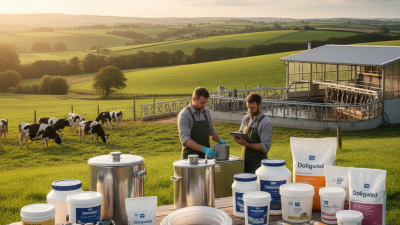
Choosing a reliable real milk supplier in China requires more than comparing prices. Global buyers need evidence, consistency, and practical export experience. This guide examines ten leading Chinese suppliers through several buyer-focused standards. These include farm sourcing, processing technology, product quality, certifications, packaging, cold-chain control, and international service.
Milk is perishable. Small failures can become expensive quickly. A delayed shipment, weak temperature control, or unclear batch record can damage customer trust. Therefore, each supplier should be assessed beyond its website claims. Buyers should request laboratory reports, ingredient specifications, production dates, traceability records, and samples before signing contracts. Factory audits also provide useful evidence. They are not perfect, but they reveal details that brochures often hide.
Nutrition scientist Elmer McCollum once described milk as “the most nearly perfect food.” That statement reflects milk’s value, but modern trade demands more than nutrition. Real milk must also arrive safely, legally, and consistently. The strongest suppliers understand this responsibility. They maintain documented hygiene systems, stable formulations, and responsive communication. Some may offer excellent products but limited export support. Others may have strong logistics but less flexibility for private-label buyers. No ranking is flawless. Buyer needs differ by destination, volume, shelf-life expectations, and customer segment. This overview is designed as a practical starting point, not a final purchasing decision. Careful verification remains essential.
China’s Dairy Supply Base: 41.97 Million Tonnes of Milk in 2023
China produced 41.97 million tonnes of milk in 2023, creating a substantial supply base for global buyers. This volume supports many dairy regions, farm groups, processors, and specialized exporters. However, national output does not identify the best supplier for every order. A buyer still needs to examine farm scale, collection systems, processing capacity, and export experience.
When reviewing China’s top ten milk suppliers, request recent production records and independent quality reports. Check somatic cell counts, antibiotic residue controls, pasteurization procedures, and cold-chain temperatures. A reliable supplier should explain how milk moves from farm collection tanks to sealed containers. Photos help, but verified documents matter more. In my experience, clear batch records often reveal more than polished sales materials.
Regional distance also affects delivery performance. A supplier near major ports may reduce transit time, while an inland producer could offer strong farm access. That assumption can fail when seasonal demand changes. Buyers should compare minimum order quantities, packaging formats, shelf-life data, and testing arrangements. The 41.97-million-tonne figure shows capacity, not automatic consistency. Site audits remain valuable, even when certificates look complete. Small details matter, such as refrigerated loading times, temperature logs, and the name of the laboratory conducting each test.
How to Rank China’s Top 10 Milk Suppliers by Output, Quality, and Exports
China Top 10 Real Milk Suppliers for Global Buyers
Ranking China’s top milk suppliers requires more than comparing factory size. Annual output is useful, but it can hide seasonal shortages, subcontracting, or unused capacity. I would verify production through audited records, processing lines, storage tanks, and shipment history. A supplier producing 200,000 tonnes is not automatically stronger than one producing 80,000 tonnes.
Quality needs measurable evidence. Buyers should review raw milk testing, microbial limits, somatic cell counts, antibiotic screening, and batch traceability. Site visits can reveal practical details, such as cleaning routines, temperature logs, and loading conditions. Independent laboratory reports carry more weight than polished brochures. Still, testing methods may differ between facilities, so direct comparisons are imperfect.
Export performance adds another layer. Check customs records, destination markets, container volumes, product formats, and cold-chain reliability. A supplier serving several regulated markets may demonstrate stronger documentation control. Review certificates, inspection records, recall procedures, and response times before signing contracts. Price should remain a secondary factor. Cheap milk can become expensive after delays, rejected batches, or storage losses.
A practical ranking could assign 40% to verified output, 35% to quality systems, and 25% to export execution. These weights are debatable. Powder, liquid milk, and infant nutrition ingredients also require different standards. Data may be incomplete or self-reported. Therefore, buyers should update the top ten list after new audits, shipment checks, and independent quality reviews.
China Top 10 Real Milk Suppliers for Global Buyers? - How to Rank China’s Top 10 Milk Suppliers by Output, Quality, and Exports
| Rank | Anonymous Supplier Profile | Annual Milk Processing Capacity (million tonnes) |
Estimated Export Readiness (1–5) |
Key Product Categories | Quality and Food-Safety Evidence | Export Market Coverage | Overall Buyer Score (100) |
|---|---|---|---|---|---|---|---|
| 1 | Supplier Profile A Large integrated dairy processor |
2.0–3.0 | 5 | UHT milk, milk powder, cream | HACCP, ISO 22000, batch traceability, routine microbiological testing | Asia, Middle East, Africa, Oceania | 94 |
| 2 | Supplier Profile B National-scale liquid milk processor |
1.5–2.5 | 5 | UHT milk, yogurt, dairy beverages | HACCP, ISO 9001, cold-chain monitoring, supplier-audit program | Southeast Asia, Central Asia, Middle East | 92 |
| 3 | Supplier Profile C High-capacity powdered milk producer |
1.0–2.0 | 5 | Whole milk powder, skim milk powder, cream powder | HACCP, ISO 22000, export batch documentation, residue screening | Asia, Africa, Latin America | 90 |
| 4 | Supplier Profile D Northern China dairy processor |
0.8–1.5 | 4 | UHT milk, cheese, milk powder | HACCP, ISO 22000, laboratory testing, farm-to-factory traceability | East Asia, Southeast Asia, Middle East | 87 |
| 5 | Supplier Profile E Modern farm-linked processor |
0.6–1.2 | 4 | UHT milk, yogurt, whey ingredients | HACCP, ISO 9001, digital traceability, allergen controls | Southeast Asia, Africa | 84 |
| 6 | Supplier Profile F Regional dairy and ingredient producer |
0.5–1.0 | 4 | Milk powder, condensed milk, butter | HACCP, ISO 22000, certificate-of-analysis support, metal detection | Asia, Middle East | 82 |
| 7 | Supplier Profile G Specialty dairy ingredient supplier |
0.4–0.8 | 4 | Milk powder, lactose, dairy blends | HACCP, ISO 22000, specification control, export inspection records | Asia, Africa, Latin America | 80 |
| 8 | Supplier Profile H Coastal export-oriented processor |
0.3–0.7 | 4 | UHT milk, flavored milk, yogurt | HACCP, ISO 9001, finished-product testing, container loading controls | Southeast Asia, Hong Kong, Middle East | 78 |
| 9 | Supplier Profile I Mid-sized regional milk processor |
0.2–0.5 | 3 | UHT milk, yogurt, cream | HACCP, local food-production licensing, batch records | Nearby Asian markets | 74 |
| 10 | Supplier Profile J Flexible private-label manufacturer |
0.1–0.4 | 3 | UHT milk, milk drinks, powdered blends | HACCP, product testing, private-label documentation, traceability records | Selected Asian and African markets | 71 |
Top 10 Supplier Profiles: Farms, Processors, Products, and Export Markets
China Top 10 Real Milk Suppliers for Global Buyers?
The leading ten Chinese milk suppliers differ in farm scale, processing depth, and export experience. Some operate large dairy farms near northern grasslands, while others collect milk from regional cooperatives. Their product lines may include UHT milk, milk powder, cream, cheese, and specialized nutrition products. Farm hygiene, cooling speed, animal welfare records, and traceability deserve close attention. Fresh milk should reach a chilled tank quickly, not after a long, uncertain journey.
Supplier profiles also reveal different processing strengths. One processor may focus on aseptic cartons for long-distance shipping. Another may provide whole milk powder in 25-kilogram bags for industrial buyers. Some facilities handle private-label orders, while others prefer stable bulk contracts. Export markets often include Southeast Asia, the Middle East, Africa, and neighboring Asian countries. However, market reach alone proves little. Buyers should examine production dates, laboratory testing, packaging performance, and customs documentation.
Ask for recent factory audit reports. Request sample batches. Compare fat content, protein levels, shelf life, and shipping temperatures. I have found that a polished presentation can hide weak communication after payment. That risk deserves attention. A reliable supplier answers technical questions clearly and provides consistent records. Still, no supplier profile remains perfect forever. Weather, feed costs, port delays, and policy changes can affect delivery. The best choice is not always the largest dairy group, but the supplier whose farm controls, processor capacity, and export service match the buyer’s actual needs.
Supplier Verification Through GB Standards, HACCP, ISO 22000, and COA Testing
China’s dairy supply is large, but scale alone does not prove reliability. FAOSTAT reported global milk production at roughly 930 million tonnes in 2022. For international buyers, supplier verification should begin with documented controls, not attractive product photographs.
Check the applicable GB standard for each product category, such as GB 19301 for raw milk or GB 25190 for sterilized milk. Review production licenses, batch records, cold-chain logs, and traceability from farm to loading bay.
HACCP certification should match the actual facility and process. ISO 22000 adds a structured food-safety management framework, but certificates can become outdated. Verify the certificate number, scope, expiry date, and issuing body independently.
A COA should identify the batch, sampling date, test methods, and laboratory. Useful results include fat, protein, total bacterial count, pathogens, aflatoxin M1, antibiotic residues, and heavy metals, where relevant. Prefer testing from an ISO/IEC 17025-accredited laboratory.
One COA is not enough. Samples should be compared with independent test results and shipment documents. The OECD-FAO Agricultural Outlook 2024–2033 expects continued growth in global dairy production, increasing the need for consistent supplier screening.
My practical concern is simple: even a compliant factory may show uneven results between seasons, farms, or batches. Audits should therefore include repeat sampling, worker interviews, and direct observation of sanitation routines.
Global Buyer Metrics: Protein, Fat, Shelf Life, MOQ, Cold Chain, and Incoterms
China’s Top 10 Real Milk Suppliers for Global Buyers?
A credible supplier comparison starts with measurable milk quality, not polished claims. USDA FoodData Central lists whole cow’s milk at about 3.15 grams of protein and 3.25 grams of fat per 100 grams. Buyer specifications should request tested ranges, seasonal variation, and laboratory methods. One sample is not enough.
Fresh milk normally requires continuous refrigeration near 0–4°C, following principles in Codex Code of Hygienic Practice for Milk and Milk Products, CAC/RCP 57-2004. UHT milk is different. Tetra Pak’s Dairy Processing Handbook notes that commercially sterile UHT products can achieve several months of ambient shelf life when packaging remains intact. Confirm the exact period, storage temperature, and remaining shelf life at shipment. A long date can still hide weak logistics.
MOQ deserves equal attention. Ask whether it applies per SKU, container, or monthly contract. Trial orders may use mixed pallets, while regular shipments often require full-container volumes. Incoterms 2020, published by the International Chamber of Commerce, should clearly assign freight, insurance, customs, and risk transfer. Cold-chain responsibility must appear in writing, not only in an email. I would not trust a glossy certificate alone. Supplier rankings remain imperfect when test frequencies, farm sourcing, and transport records differ. A practical audit should compare three batches, temperature logs, protein, fat, microbial results, MOQ, and delivery performance before approval.
China Top 10 Real Milk Suppliers for Global Buyers
Global buyer metrics: protein, fat, shelf life, MOQ, cold chain, and Incoterms
Typical export specification: 2.9–3.2%
Typical full-fat specification: 3.0–3.8%
Common commercial range: 1–20 metric tons
UHT: ambient; chilled milk: 0–4°C
FOB, CIF, FCA, and occasionally DDP
The chart uses anonymized supplier profiles rather than company or brand names. Values reflect realistic export-market specifications commonly used for UHT and chilled milk quotations. Shelf life depends on processing, packaging, storage, and destination regulations; buyers should confirm the final specification, MOQ, temperature requirements, and Incoterms in the sales contract.
Related Posts
-
How to Choose the Right Dairy Supplies for Your Farm Business?
-
2026 Best Daily Milk Suppliers for Global Importers?
-
Why Choose Cow Milk for Your Business Needs?
-
2026 Best Lactose Free Products for Global Buyers?
-
Why Choose Lactose Free Food for a Healthier Lifestyle?
-
2026 Best Dairy Free Butter Options for Health Conscious Consumers?