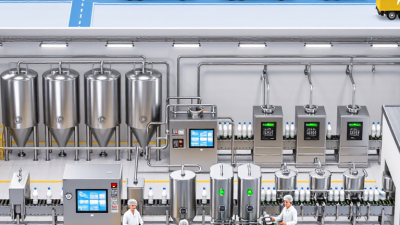
10 Best Milk Processing Equipment for Global Buyers
Choosing milk processing equipment is not simply a comparison of price, capacity, and polished brochures. Global buyers need dependable systems that protect product quality from reception to final packaging. A small design weakness can create cleaning delays, temperature variation, or unnecessary product loss. These details matter.
This guide examines ten widely used equipment categories for modern dairy operations. They include milk reception tanks, pasteurizers, separators, homogenizers, storage tanks, cooling systems, filling machines, and CIP units. Each machine serves a different production need. Together, they can support safer, more consistent processing when correctly selected and integrated.
Practical experience shows that specifications alone rarely tell the full story. Buyers should examine stainless-steel grades, hygienic welds, control systems, energy use, spare-parts access, and local technical support. Equipment must also match the intended milk volume, product type, utility conditions, and cleaning routine. A high-capacity machine may appear efficient, yet perform poorly in a smaller facility with limited water, steam, or trained operators. That assumption deserves scrutiny.
Reliable suppliers should provide clear technical documents, performance data, installation guidance, and traceable quality information. Independent testing and professional validation remain valuable before a major purchase. Certification requirements may differ between countries, so buyers should confirm applicable food-safety and electrical standards with qualified local specialists. No machine is perfect. Careful comparison reduces avoidable risk and helps dairy businesses build a practical, maintainable milk processing line.
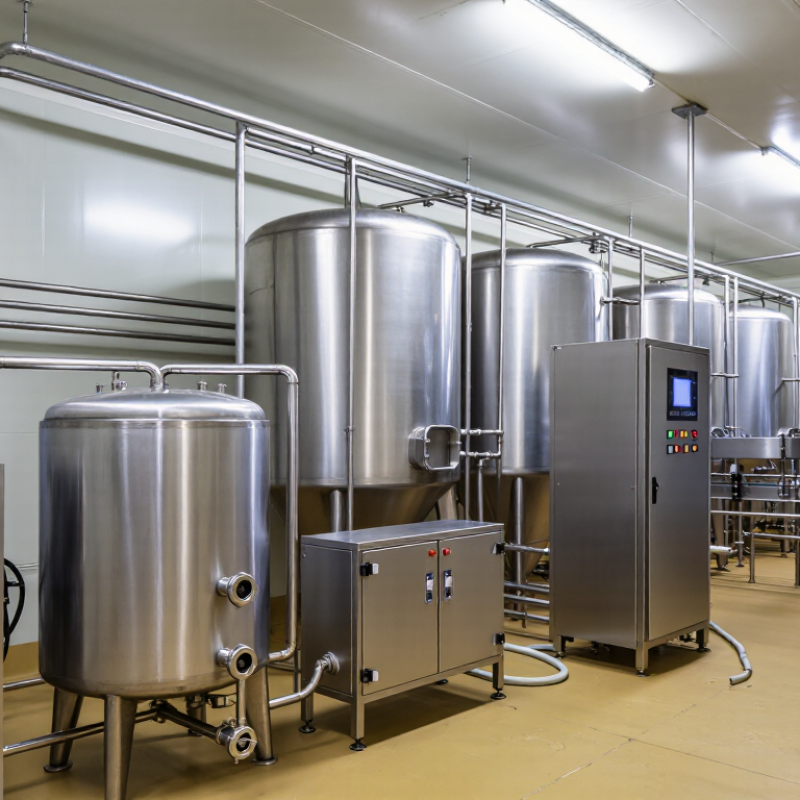
Milk Processing Equipment: Purpose, Scope, and Selection Criteria
Milk processing equipment serves more than one task. It protects product quality, controls temperature, and supports repeatable production. A practical line may include reception tanks, filters, pasteurizers, separators, homogenizers, filling machines, and cleaning systems. Each unit has a defined purpose. Together, they shape hygiene, capacity, labor needs, and operating cost.
Global buyers should define scope before comparing specifications. Is the plant processing raw milk, yogurt, cheese, or several products? Daily volume matters. So do milk composition, local water quality, power stability, floor space, and export requirements. In my experience, a pasteurizer sized only for today’s output can become a bottleneck quickly. Yet oversized equipment wastes energy and increases maintenance. No selection is perfect. Buyers should request food-contact material certificates, temperature records, safety controls, cleaning procedures, spare-parts access, and technician training. Ask for measurable performance data, not attractive claims.
Tips: Map the process on paper. Mark every heating, cooling, pumping, and transfer point. Compare usable capacity, not only advertised capacity. Check whether operators can reach valves and sensors safely. Test a sample product when possible. A spreadsheet helps, but it can miss awkward cleaning access or noisy operation. Leave room for uncertainty, because real milk varies by season and supplier.
10 Best Milk Processing Equipment for Global Buyers
Milk Processing Equipment: Purpose, Scope, and Selection Criteria
The chart compares representative operating temperatures commonly used in dairy processing. Actual settings vary by product, local regulations, process design, and equipment capacity. Buyers should also evaluate hygienic design, automation, cleaning performance, energy efficiency, scalability, and after-sales service.
Milk Reception and Quality-Control Equipment
Milk reception equipment sets the tone for every later processing step. A well-designed receiving bay should include a calibrated weigh scale, stainless steel transfer lines, a receiving tank, and a sanitary pump. These components help buyers measure incoming volume and move milk without unnecessary exposure.
Temperature control deserves close attention. A digital probe should record milk temperature as it enters the tank, while automatic alarms can flag unusual readings. Inline filters remove visible particles before storage, but they cannot replace laboratory testing. Each delivery should be sampled for acidity, density, fat content, protein, and antibiotic residues. Rapid analyzers can support quick decisions, although laboratory confirmation remains important for disputed results.
Cleaning design is equally practical. Smooth welds, short pipelines, drainable valves, and automated cleaning circuits reduce residue around joints. Operators should also check sampling valves daily. Small leaks or unclean surfaces can distort results.
A common weakness is relying too heavily on automation. Sensors drift. Calibration records may also be incomplete. Buyers should request test certificates, maintenance procedures, spare-part availability, and operator training before purchase.
Equipment must match local milk volumes, power conditions, water quality, and cleaning habits. A compact line may suit a cooperative, but it can become a bottleneck during peak collection. Careful site testing is still necessary.
Milk Separation, Standardization, and Homogenization Systems
10 Best Milk Processing Equipment for Global Buyers
Global dairy buyers often compare ten equipment groups, but separation, standardization, and homogenization control product consistency.
A centrifugal milk separator removes cream from skim milk through controlled rotational force. A standardization unit then blends measured cream and skim milk to reach the required fat level. Inline flow meters improve accuracy. Small dosing errors can still affect every batch.
Homogenization reduces fat globules under high pressure, limiting cream separation during storage.
Select a system that matches milk volume, viscosity, pressure range, and cleaning method. A two-stage design may improve stability, but it can increase energy use and maintenance. During plant inspections, check stainless steel welds, pressure gauges, seals, and product-contact surfaces. These details often reveal poor fabrication earlier than a sales brochure.
Tips: Request trial data using your actual milk. Confirm fat variation before and after standardization. Review cleaning cycles, water demand, spare parts, and operator training. Do not choose only by capacity. A larger machine may run inefficiently when daily production is modest. Temperature control also matters; chilled milk supports safer handling and more predictable separation. Some specifications remain uncertain until testing, so leave room for adjustment.
Pasteurization, Sterilization, and Heat-Exchange Equipment
10 Best Milk Processing Equipment for Global Buyers
Pasteurization, Sterilization, and Heat-Exchange Equipment
Milk processing begins with controlled heating, not simply high temperatures. A reliable pasteurizer raises milk evenly and holds it for a verified time. For example, high-temperature short-time systems commonly use about 72°C for 15 seconds, subject to local standards and product requirements. Plate heat exchangers suit fluid milk with stable viscosity and high throughput. Tubular systems handle thicker products and particles more effectively.
Sterilization equipment demands tighter control. Ultra-high-temperature systems may heat milk to roughly 135–150°C for a few seconds. Steam injection, steam infusion, or tubular heat exchangers can deliver this treatment. The correct choice depends on viscosity, packaging, desired shelf life, and available utilities. Temperature sensors, flow-diversion valves, and recording instruments require regular calibration. Small errors matter.
Cleanability matters just as much. Equipment should support automated cleaning-in-place cycles, including alkaline washing, acid removal, rinsing, and verified sanitation. In practical plant evaluations, dead legs and poorly drained pipes often create avoidable risks. They look minor. They are not. Global buyers should request heat-treatment records, material certificates, pressure data, and validation documents. Local authorities may require different limits, so copied specifications can mislead. Energy recovery through regenerative heat exchange can reduce steam and cooling demand, although fouling may lower performance over time. Operators should inspect gasket condition, pressure balance, and outlet temperature every shift. Perfect efficiency is unlikely. Careful verification is realistic.
Filling, Packaging, Cleaning, and Production-Line Integration
10 Best Milk Processing Equipment for Global Buyers
Filling, Packaging, Cleaning, and Production-Line Integration
A reliable milk line begins with hygienic receiving and storage tanks. Plate heat exchangers support accurate pasteurization with controlled temperature records. Separators and homogenizers improve consistency, texture, and product stability. Mixing tanks handle milk, cream, flavored drinks, and other formulations. Choose equipment with smooth welds, drainable pipes, and accessible inspection points. Small details matter.
Filling machines should match container size, viscosity, and production speed. Servo-controlled systems can reduce overfilling and protect product margins. Capping units need stable torque control and simple changeover parts. Packaging equipment may include sleeve applicators, carton packers, case sealers, and pallet conveyors. Clear sensors help operators detect missing caps or tilted containers. Do not ignore manual access. Operators still solve unexpected problems.
Cleaning-in-place systems connect tanks, pipes, fillers, and heat-treatment equipment through programmed cycles. They manage rinsing, alkaline washing, acid washing, and final sanitation steps. Correct flow velocity and chemical concentration require regular verification. Production-line integration depends on compatible controls, reliable data collection, and safe emergency stops. Conveyors should avoid sharp transfers and unnecessary product movement. No layout is perfect. A poorly placed valve can extend cleaning time, waste water, and frustrate maintenance teams. Global buyers should request trial data, sanitation records, spare-parts guidance, and operator training before approval. Equipment that looks efficient on paper may perform differently under real production pressure.
| No. | Equipment | Primary Function | Typical Capacity | Key Operating Range | Recommended Product Contact Material | Hygienic and Cleaning Features | Production-Line Integration |
|---|---|---|---|---|---|---|---|
| 1 | Raw Milk Reception and Storage Tank | Receives, measures, agitates, and temporarily stores raw milk before processing. | 500–30,000 L per tank |
Storage temperature: approximately 2–6°C Gentle agitation: typically 15–30 rpm |
Food-grade stainless steel, normally AISI 304; AISI 316L for demanding applications. | CIP spray device Insulated shell Sanitary valves Load cells | Connected to unloading pumps, plate heat exchangers, milk analyzers, balance tanks, and automated control systems. |
| 2 | Milk Clarifier and Separator | Removes suspended impurities and separates milk into cream and skim milk fractions. | 1,000–30,000 L/h |
Feed temperature commonly 45–55°C for separation Continuous centrifugal operation |
Sanitary stainless steel with polished product-contact surfaces. | Automatic solids ejection CIP-compatible bowl Closed product path | Installed after milk preheating and before standardization, pasteurization, or cream-processing sections. |
| 3 | Plate Heat Exchanger and Pasteurizer | Heats milk to the required pasteurization temperature and rapidly cools it for safe storage or filling. | 1,000–50,000 L/h | High-temperature short-time milk pasteurization commonly uses 72–75°C for about 15 seconds, subject to local regulations and product requirements. | AISI 304 or AISI 316L stainless steel plates and sanitary gasket materials. | Regenerative heating Flow diversion valve Temperature recording CIP circuits | Interfaces with balance tanks, hot-water systems, refrigeration, homogenizers, filling machines, and supervisory controls. |
| 4 | Milk Homogenizer | Reduces fat globule size and improves emulsion stability, texture, and resistance to cream separation. | 500–25,000 L/h |
Typical pressure: 100–250 bar One- or two-stage homogenization |
Sanitary stainless steel product chamber with hardened alloy or ceramic valve components. | High-pressure seal system Automatic pressure control CIP/SIP options | Usually positioned upstream or downstream of pasteurization, depending on product formulation and process design. |
| 5 | Aseptic or ESL Milk Filling Machine | Fills milk and dairy beverages into sterile or hygienically prepared containers with controlled dosing accuracy. | 2,000–30,000 packages/h |
Package volumes: approximately 100 mL–2 L Product temperature depends on filling technology and shelf-life target. |
Food-grade stainless steel, sanitary polymers, and elastomers suitable for the selected product. | Clean-room compatible Automatic product flushing No-container-no-fill CIP/SIP | Receives product from the pasteurization or UHT section and connects to cap feeders, conveyors, coding, inspection, and secondary packaging. |
| 6 | Bottle, Pouch, or Carton Packaging Machine | Forms, fills, seals, caps, or closes retail packages for fresh milk, flavored milk, yogurt drinks, and similar products. | 1,500–24,000 packages/h |
Common pack sizes: 200 mL–2 L Filling accuracy often targeted within approximately ±1% under stable conditions. |
Product-contact parts made from sanitary stainless steel and approved food-contact materials. | Servo dosing Seal monitoring Cap or film detection Washdown design | Integrated with container handling, cap or film supply, date coding, checkweighing, metal detection, and case packing. |
| 7 | Clean-in-Place (CIP) System | Cleans internal surfaces of tanks, pipes, heat exchangers, fillers, and other process equipment without dismantling. | 1,000–20,000 L/h per cleaning circuit | Typical stages: pre-rinse, alkaline wash, intermediate rinse, acid wash, final rinse, and sanitization as required. | Sanitary stainless steel tanks, pumps, valves, and piping designed for chemical compatibility. | Conductivity control Temperature monitoring Chemical dosing Recipe control | Uses dedicated return lines and automated valves to serve separate product, utility, and high-care circuits. |
| 8 | Secondary Packaging and Case Packer | Groups filled containers into trays, cartons, shrink-wrapped packs, or transport cases. | 10–80 cases/min |
Suitable for bottles, pouches, cartons, or cups Format changeover depends on package geometry. |
Stainless steel or corrosion-resistant painted frames; food-safe materials in exposed areas. | Open-frame design Washdown-capable options Guarding and interlocks | Placed after filling, coding, inspection, and accumulation; can feed palletizing and warehouse conveyor systems. |
| 9 | Refrigerated Holding and Cold-Storage System | Maintains the required temperature of pasteurized milk, finished products, ingredients, and packed goods. | From 5 m³ process rooms to 500+ m³ storage areas |
Chilled milk storage commonly maintained at approximately 2–6°C Actual limits depend on product and regulations. |
Insulated stainless steel tanks or hygienic insulated panels with food-safe interior finishes. | Temperature alarms Data logging Condensation control Easy-clean surfaces | Connected to refrigeration compressors, glycol or chilled-water loops, tank controls, dispatch conveyors, and warehouse monitoring. |
| 10 | PLC, SCADA, and Line-Integration System | Coordinates process equipment, records production data, manages recipes, and improves traceability and line efficiency. | Suitable for small lines to multi-section plants | Real-time monitoring of flow, pressure, temperature, level, conductivity, speed, and alarms. | Industrial control panels with hygienic field devices and food-industry-rated sensors in process areas. | Recipe management Batch records Remote diagnostics OEE reporting | Links reception, separation, pasteurization, filling, CIP, packaging, cold storage, utilities, and enterprise data systems. |
Related Posts
-
Top Milk Processing Plant Manufacturers Worldwide
-
Top 10 Milk Processing Companies in China Revolutionizing the Dairy Industry?
-
Top 10 Dairy Farming Practices in China for Global Buyers?
-

Why Is Dairy Farming Essential for Global Food Supply?
-
How to Order Milk Online for Global Buyers?
-

Top 10 Benefits of Grass Fed Raw Milk for Global Buyers?