Top 10 Bulk Butter Suppliers for Global Buyers?
Choosing a reliable bulk butter supplier is not simply a price exercise. It is a quality and continuity decision.
Global buyers need more than a polished catalogue. They need clear butterfat percentages, moisture limits, milk origin, production dates, and storage instructions. A shipment may look excellent on arrival, yet perform poorly in a bakery or food plant. Texture changes. Flavor shifts. Production schedules suffer.
Dr. David M. Barbano, a respected dairy science expert, has stated, “Quality cannot be inspected into a product; it must be built into the process.” That principle guides this review of the top 10 bulk butter suppliers for global buyers. Their performance should be judged across product consistency, food safety systems, traceability, export experience, packaging, and cold-chain discipline.
The practical details matter. Consider 25-kilogram cartons, pallet stability, refrigerated loading, and port handling. Ask whether the supplier can maintain specifications across several containers, not just one sample. Request certificates, laboratory results, and references from comparable buyers. Some suppliers appear highly competitive until freight, insurance, customs delays, or rejected pallets enter the calculation.
There is no perfect supplier. Even experienced exporters can face seasonal milk shortages or unexpected shipping disruptions. That deserves honest attention. A strong supplier explains risks early and offers workable alternatives.
This guide highlights companies that show credible capability in bulk butter supply. It does not replace independent due diligence. Buyers should verify current certifications, contract terms, import requirements, and product samples before committing. Small checks prevent expensive surprises.
Defining Bulk Butter and Its Role in Global Food Supply Chains
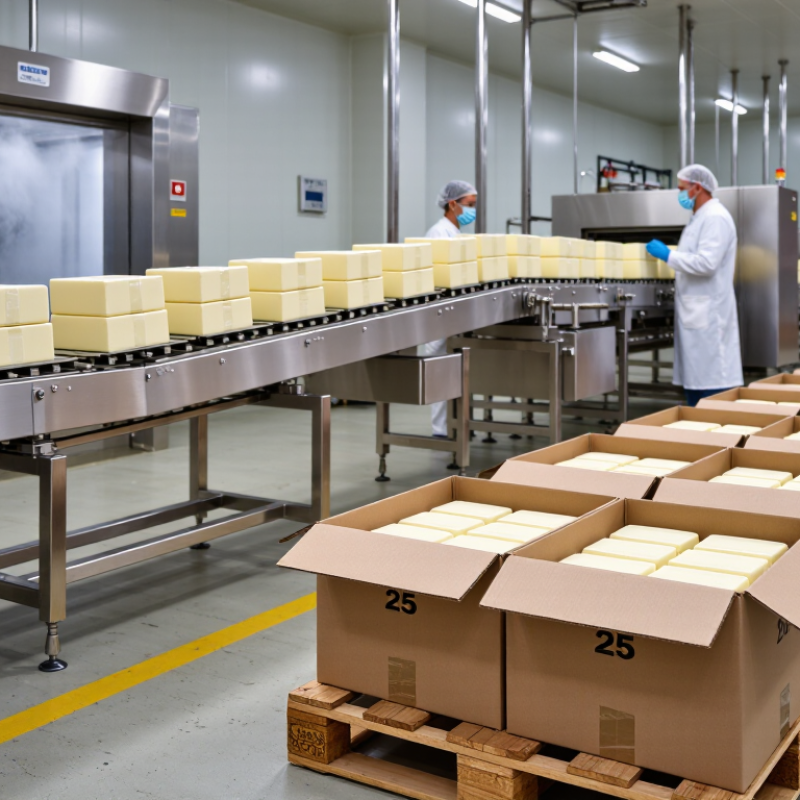
Bulk butter is butter purchased in commercial quantities, usually in 25-kilogram cartons, blocks, or larger food-service packs. It contains concentrated milk fat and must meet clear standards for moisture, salt, flavor, and texture. Global buyers use it in bakeries, confectionery plants, sauces, frozen meals, and dairy processing.
Its supply-chain role is practical and easy to underestimate. A bakery may receive several pallets, store them below 5°C, and portion the butter directly into mixers. Temperature records, lot numbers, production dates, and microbiological certificates help buyers trace each shipment. Refrigerated transport is essential, because heat can soften the product, damage its structure, and increase handling losses. Port delays make this risk more serious.
When comparing the top 10 bulk butter suppliers for global purchasing, buyers should examine more than price. Stable fat content supports consistent recipes. Reliable export documentation reduces customs delays. Flexible packaging can also limit waste during factory use. In my experience, a supplier’s response during a delayed shipment reveals more than a polished specification sheet. Still, even careful purchasing plans can fail when weather disrupts milk production or exchange rates shift unexpectedly. Buyers should review backup sources, storage capacity, and realistic delivery windows before signing long-term agreements. Consistency matters. Perfect forecasts do not exist.

Key Criteria for Evaluating International Butter Suppliers
Top 10 Bulk Butter Suppliers for Global Buyers
Evaluating international butter suppliers requires more than comparing price per metric ton. USDA Foreign Agricultural Service’s Dairy: World Markets and Trade report places global butter production above 11 million metric tons, with international trade near 1.2 million tons. That scale creates choice, but also uneven quality. Ask for recent certificates of analysis, production records, and full batch traceability. Check butterfat, moisture, free fatty acids, peroxide values, and microbiological limits. Small specification gaps can affect texture, shelf life, and bakery performance.
Cold-chain control deserves direct attention. Review storage temperatures, loading procedures, container monitoring, and contingency plans for port delays. Request evidence from independent audits, not only supplier declarations. International Dairy Federation guidance can support testing and sampling decisions. The OECD-FAO Agricultural Outlook 2024-2033 also highlights continuing growth in global dairy demand, which may increase pressure on supply consistency. Capacity claims need proof. A supplier may promise 500 tons monthly, yet struggle during seasonal milk shortages.
Tips: Build a weighted scorecard before requesting quotations. Give quality, traceability, delivery reliability, and documentation clear scores. Compare at least three production lots, not one attractive sample. Confirm Incoterms, insurance, payment terms, and recall procedures in writing. Visit the facility when the purchase is strategic. Photos are not enough. I would also leave room for uncertainty; forecasts can miss weather, feed costs, and border disruptions. A lower price may simply hide greater operational risk.
Top 10 Bulk Butter Suppliers by Product Range and Market Reach
Top 10 Bulk Butter Suppliers for Global Buyers
The strongest suppliers differ by product range and market reach, not just price. A practical top-ten shortlist should include suppliers offering salted, unsalted, cultured, clarified, and anhydrous butter. Some also provide blocks, rolls, sheets, and foodservice portions. These formats suit bakeries, hotels, manufacturers, and retail distributors.
Market coverage matters equally. Reliable suppliers usually support regional warehouses, export documentation, temperature-controlled shipping, and flexible minimum order quantities. Buyers should examine milk origin, fat percentage, moisture levels, shelf life, and seasonal consistency. A clear certificate of analysis is essential. So is traceability from dairy collection to final pallet. In my experience, communication during a delayed shipment reveals more than a polished sales presentation. No supplier performs perfectly across every region. That is worth admitting.
Tips: Compare product specifications before comparing prices. Request sample cartons and inspect texture, aroma, packaging strength, and delivery temperature. Ask whether the supplier can maintain the same specification across multiple production sites. Check lead times for both standard and customized formats. A supplier with fewer product types may still be stronger in a specific market. Also, confirm storage requirements with your local logistics team. Small temperature mistakes can damage an entire shipment.
Top 10 Bulk Butter Suppliers for Global Buyers? - Top 10 Bulk Butter Suppliers by Product Range and Market Reach
| Rank | Anonymous Supplier Profile | Primary Supply Origin | Main Product Range | Typical Butterfat Specification | Commercial Formats | Cold-Chain Capability | Typical Export Reach | Common Buyer Segments | Market Positioning |
|---|---|---|---|---|---|---|---|---|---|
| 01 | Profile A | New Zealand | Unsalted butter, salted butter, anhydrous milk fat, butter blends | Usually 80%–84%; anhydrous products generally above 99% milk fat | 25 kg cartons, 200 kg drums, bulk food-service blocks | Frozen and chilled export programs | Asia-Pacific, Middle East, North Africa, Europe, North America | Food manufacturers, bakeries, ingredient distributors, retailers | Large-scale dairy ingredient supply |
| 02 | Profile B | Ireland | Grass-fed butter, unsalted butter, salted butter, specialty butter | Commonly around 82% butterfat for standard table butter | 10 kg and 25 kg cartons, retail-ready blocks, food-service cases | Chilled and frozen distribution | United Kingdom, European Union, Middle East, Asia, North America | Premium bakery, hospitality, retail, foodservice | Premium and grass-fed positioning |
| 03 | Profile C | Germany | Sweet cream butter, cultured butter, salted butter, bakery butter | Generally 82% or higher for standard European butter specifications | 25 kg cartons, 10 kg blocks, industrial slabs | Chilled and frozen supply options | European Union, Central and Eastern Europe, Middle East, Asia | Industrial bakeries, confectionery producers, foodservice wholesalers | Broad European product coverage |
| 04 | Profile D | France | Cultured butter, sweet cream butter, AOP-style regional butter, clarified butter | Typically about 82%–84% for premium table butter | 10 kg and 25 kg cartons, bakery sheets, food-service blocks | Chilled and frozen logistics | European Union, United Kingdom, Middle East, North America, Asia | Pastry manufacturers, gourmet retail, hotels, restaurants | Specialty and premium culinary applications |
| 05 | Profile E | Netherlands | Unsalted butter, salted butter, butter oil, customized bakery butter | Usually 82%–84%; butter oil commonly exceeds 99% milk fat | 25 kg cartons, drums, bulk blocks, private-label formats | Integrated European chilled and frozen distribution | European Union, Africa, Middle East, Asia-Pacific | Ingredient traders, industrial processors, retail and foodservice | Logistics-oriented international supply |
| 06 | Profile F | Denmark | Sweet cream butter, salted butter, organic butter, butter portions | Commonly around 82% butterfat for conventional butter | 25 kg cartons, 10 kg blocks, portion packs, food-service cases | Chilled and frozen export handling | Nordic region, European Union, Middle East, Asia | Retailers, hotels, restaurants, institutional catering | Reliable Northern European dairy supply |
| 07 | Profile G | United States | Grade AA butter, grade A butter, salted butter, unsalted butter, butter oil | U.S. butter standards generally require at least 80% milk fat | 25 kg cartons, 68 lb blocks, drums, food-service packs | Chilled and frozen domestic/export programs | North America, Asia, Middle East, Latin America | Industrial food production, bakery, foodservice, retail | High-volume standardized supply |
| 08 | Profile H | Australia | Salted butter, unsalted butter, cultured butter, butter oil | Typically around 80%–82% for standard commercial butter | 25 kg cartons, bulk blocks, drums, retail and food-service packs | Chilled and frozen shipping, with strong regional distribution | Asia-Pacific, Middle East, Southeast Asia, selected African markets | Foodservice, bakery, processors, supermarkets | Regional Asia-Pacific accessibility |
| 09 | Profile I | Argentina | Sweet cream butter, salted butter, unsalted butter, dairy fat ingredients | Generally 80%–82% for conventional butter products | 25 kg cartons, industrial blocks, drums, food-service packaging | Frozen export supply is common | South America, Latin America, Middle East, North Africa, selected Asian markets | Industrial bakeries, wholesalers, food manufacturers | Competitive regional and commodity supply |
| 10 | Profile J | Uruguay | Unsalted butter, salted butter, sweet cream butter, dairy fat ingredients | Commonly around 80%–82% for standard butter | 25 kg cartons, bulk blocks, industrial packaging | Frozen export distribution | South America, Latin America, Middle East, North Africa | Ingredient importers, bakeries, foodservice distributors | Regional export and value-oriented supply |
Comparing Quality Standards, Packaging Options, and Certifications
Top 10 Bulk Butter Suppliers for Global Buyers
Selecting among the top ten bulk butter suppliers requires more than comparing price per metric ton. Experienced buyers inspect milk origin, fat content, moisture, salt levels, and sensory consistency. A reliable supplier should provide recent laboratory results for every production lot. The butter should have a clean aroma, firm texture, and even pale-yellow color. Small variations can affect pastry layers and industrial recipes.
Quality systems matter. Look for HACCP plans, ISO 22000 certification, and documented allergen controls. Dairy-specific approval can add confidence, but certificates must be verified with the issuing body. Halal or kosher certification may support certain markets. Importantly, certification does not replace an independent audit. I have seen paperwork look impressive while traceability remained unclear. Ask for farm-to-batch records, recall procedures, and temperature logs.
Packaging choices reveal operational experience. Twenty-five-kilogram cartons suit bakeries, while bulk blocks or lined pallets support large factories. Food-grade wrapping should resist moisture, odors, and freezer damage. Confirm pallet dimensions, container loading patterns, and storage temperatures before ordering. Frozen butter often travels at stable subzero temperatures, but each supplier may specify different limits. Buyers should also test a retained sample after transport. A perfect factory sample may not represent the product after weeks at sea. Supplier comparison is useful, yet real performance can still expose gaps.
How Global Buyers Can Select and Import Bulk Butter Successfully
Top 10 Bulk Butter Suppliers for Global Buyers?
How Global Buyers Can Select and Import Bulk Butter Successfully
Selecting a bulk butter supplier requires more than comparing prices. Buyers should check butterfat content, moisture, salt levels, origin, production dates, and packaging formats. These details affect taste, processing performance, shelf life, and customs classification. Request current specifications, laboratory reports, allergen statements, and traceability records before placing a large order. A factory audit or verified third-party inspection can reveal storage weaknesses that documents may miss.
Cold-chain planning is equally important. Confirm loading temperatures, reefer container settings, pallet dimensions, and delivery responsibilities under the agreed Incoterm. Ask how the supplier handles temperature records and damaged cartons. Import rules differ between markets, so buyers should confirm labeling, veterinary documents, certificates, and clearance requirements with local authorities. A sample shipment is sensible, although it cannot predict every seasonal variation.