How to Source Grassland Butter Globally in 2026?
Sourcing grassland butter globally in 2026 requires more than finding a rich, golden product. It requires evidence, patience, and careful attention to how milk reaches the churn. Buyers must examine pasture practices, animal welfare records, seasonal production, ingredient declarations, and origin documents. A bright yellow block may look convincing, but colour alone proves little.
Patrick Holden, founder of the Sustainable Food Trust, has said, “There is no such thing as sustainable food, only sustainable food systems.” His words matter here. Grassland butter should be evaluated within its complete system, from grazing fields in Ireland or New Zealand to temperature-controlled delivery in Singapore or Toronto. A reliable sourcing plan should include farm audits, batch testing, traceability codes, and verified cold-chain records. It should also respect local import requirements and recognised food-safety standards.
The process is not neat. Weather can reduce milk supply. Drought can change butterfat levels. Transport delays can damage quality. These details are easy to underestimate. I may be too cautious, but a supplier’s beautiful brochure cannot replace independent verification. Experienced buyers should request production dates, storage temperatures, certification scope, and corrective-action records. They should compare claims across several seasons, not one convenient shipment. This guide explores practical ways to identify dependable grassland butter suppliers, manage quality risks, and build sourcing relationships that remain credible in 2026.
Defining Grassland Butter and Its Global Market in 2026
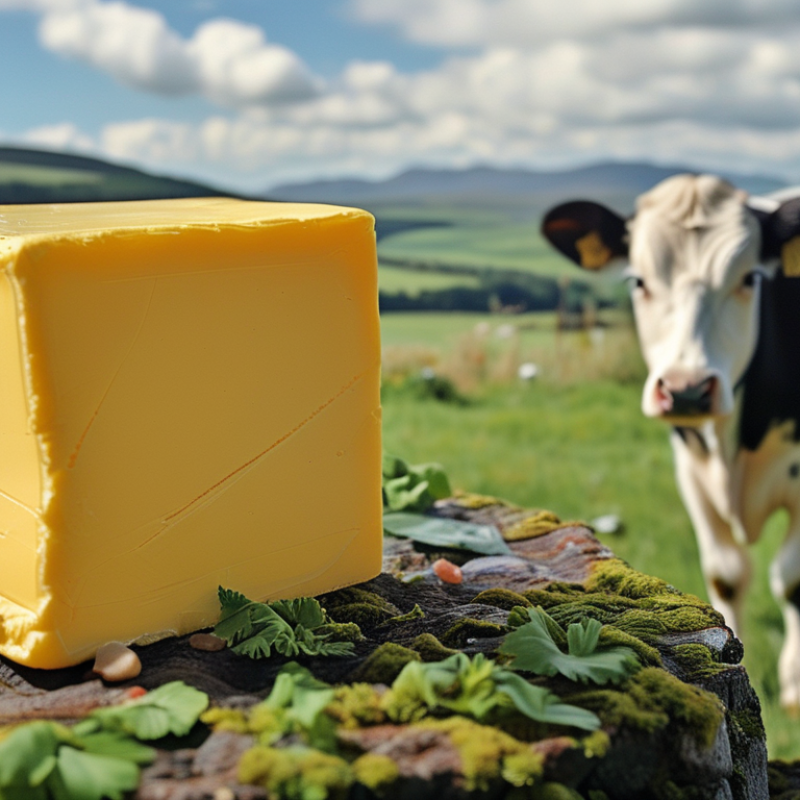
Grassland butter comes from milk produced by cows with meaningful access to pasture. However, the term is not globally standardized. Some suppliers require year-round grazing, while others accept seasonal pasture feeding. This difference matters. A clear specification should state grazing periods, feed sources, animal welfare practices, and butterfat levels. It should also separate “grass-fed” claims from verified grassland production.
In 2026, the global market is shaped by premium retail, foodservice demand, and stronger traceability expectations. European and Southern Hemisphere suppliers may offer different seasonal advantages. Climate conditions can still disrupt grass growth, milk volumes, and shipping schedules. Buyers should compare farm records, independent certifications, laboratory results, and cold-chain performance. In supplier reviews, I would check pasture evidence before trusting attractive packaging language. The label alone is weak proof.
Quality assessment should include color, aroma, texture, moisture, and free fatty acid levels. A clean, creamy aroma suggests careful handling, while rancid notes indicate possible storage failure. Import rules also differ by destination, so documentation must match each market’s requirements. Digital traceability is useful, but it is not flawless. Paper records may still reveal gaps that software hides. A practical sourcing plan should include multiple approved origins, seasonal volume estimates, and corrective actions for inconsistent batches. Not every premium claim survives close inspection.
How to Source Grassland Butter Globally in 2026?
Defining Grassland Butter and Its Global Market in 2026
Grassland butter refers to butter made from milk supplied by cows whose diets are based primarily on pasture, grazing, or forage. Because international statistical agencies do not publish a standardized “grassland butter” category, the chart uses total butter production as a market-size proxy for sourcing analysis.
The regional figures are rounded 2023 production estimates in million metric tonnes, aggregated from public FAOSTAT and USDA agricultural statistics. They indicate the scale of regional butter supply, not certified grassland-butter output. Buyers should validate pasture share, feed records, animal-welfare standards, traceability, and certification at supplier level.
Mapping Suitable Grassland Butter-Producing Regions
A reliable 2026 sourcing map begins with pasture, not factory capacity. Grassland butter performs best where dairy cattle graze on diverse, clean forage. Suitable regions often combine moderate rainfall, fertile soils, open land, and cool seasonal temperatures. Coastal meadows, upland valleys, and temperate plains deserve close attention. Some maps lie.
Satellite imagery can identify persistent grass cover, but it cannot confirm butter quality. Buyers should compare vegetation data with farm visits, milk records, and seasonal weather reports. Look for pasture availability across spring, summer, and winter. A green landscape in September may become dry and feed-dependent by January. That difference affects flavor, fat composition, and supply reliability.
Regional screening should also examine water security, animal health controls, transport access, and dairy testing systems. In field assessments, small details matter: muddy collection yards, distant cooling centers, and inconsistent electricity can create hidden risks. Local laboratories should verify moisture, milk fat, microbiological safety, and residue compliance. Traceability must connect each butter lot to farms, grazing periods, and processing dates. This is where sourcing plans become practical rather than attractive maps.
No region is perfect. Climate volatility may shift pasture quality within one season. A responsible buyer should keep two or three qualified areas under review, rather than relying on one famous grassland zone. Independent audits, producer interviews, and repeated sampling can challenge early assumptions. That discipline makes global sourcing slower, but more defensible.
Evaluating Farms, Dairies, and International Suppliers
How to Source Grassland Butter Globally in 2026?
Evaluating farms begins with the pasture, not the label. Visit farms when possible. Check grazing records, winter feed, veterinary controls, and soil management. FAOSTAT places global milk output above 900 million tonnes in recent years. That scale hides major differences in animal welfare, rainfall, and feed quality. A supplier should provide farm-level traceability, not only a polished certificate. Ask for seasonal milk-fat results. Butter texture can change after wet summers. It happens.
Dairies need equal scrutiny. Review pasteurisation controls, churning temperatures, cold-room records, and allergen procedures. USDA Foreign Agricultural Service, in Dairy: World Markets and Trade, reported global butter production above 12 million tonnes in 2024. International suppliers can offer volume, but shipping adds risk. Confirm container temperature, loading dates, customs documents, and backup routes before signing. The International Dairy Federation stresses robust food-safety systems and traceability across dairy chains. Still, audits are snapshots. A strong report may miss a weak night shift or delayed maintenance.
Tips: Request three recent batch certificates. Compare moisture, salt, fat, and free-fatty-acid results. Ask who owns the farm data. Use an independent laboratory for the first shipment. Test a small lot before scaling. Build a landed-cost model with storage, insurance, duties, and possible delays. Do not treat “grass-fed” as a complete quality definition; its meaning and verification vary by market.
| Source Model | Representative Origin | Grassland Verification | Typical Butterfat Specification | Indicative Supply Scale | Typical 2026 Lead Time | Key Documents to Request | Main Strength | Primary Risk | Best Use Case |
|---|---|---|---|---|---|---|---|---|---|
| Farm-direct collection network | New Zealand, Ireland, United Kingdom | Requires farm-level grazing records, pasture-management logs, feed declarations, and independent audit evidence; “grass-fed” is not uniformly defined worldwide. | Usually 82–84% milk fat for premium butter; confirm salt, moisture, and free-fat limits in the product specification. | Small to medium; commonly suitable for pilot volumes or specialty production. | 8–16 weeks, depending on aggregation, testing, and export readiness. | Farm list, pasture audit, HACCP plan, certificate of analysis, veterinary declarations, and traceability procedure. | High traceability and strong storytelling potential. | Inconsistent volume, seasonal milk composition, and complex collection logistics. | Premium retail, foodservice trials, and provenance-led products. |
| Regional cooperative dairy | Western Europe and Oceania | Cooperative-wide grazing standard, member declarations, feed controls, and periodic third-party verification. | Typically 82–84%; cultured and unsalted formats may be available by contract. | Medium to large; generally capable of regular pallet or container programs. | 6–14 weeks for established export products. | Grazing policy, quality manual, allergen statement, microbiological results, origin statement, and export registration. | Better consistency and purchasing efficiency than individual farms. | Blending across farms may reduce single-farm provenance. | Multi-country retail and food manufacturing with recurring demand. |
| Certified organic dairy processor | European Union, United Kingdom, Australia, and New Zealand | Organic certification controls feed inputs, animal-management practices, and audit frequency; organic certification alone does not guarantee a specific percentage of grazing. | Generally 82–84%; organic and cultured versions are commonly specified separately. | Medium to large, subject to organic milk availability. | 8–18 weeks, including certification and import-document checks. | Valid organic certificate, transaction certificate where applicable, ingredient statement, pesticide-residue results, and batch traceability. | Strong compliance profile and clear premium positioning. | Higher cost and possible shortages during low-milk periods. | Organic retail, natural-food channels, and regulated private-label programs. |
| Large export dairy processor | New Zealand and Australia | Use a written grassland claim supported by supplier declarations, feed records, audit scope, and lot-level traceability; request the exact claim definition. | Usually 82–84%, with standardized moisture and salt ranges. | Large; suitable for full-container or scheduled annual contracts. | 5–12 weeks after production allocation and export booking. | Product specification, certificate of analysis, health certificate, origin documents, production-code format, and food-safety audit. | Reliable export infrastructure and predictable quality controls. | Long ocean routes, foreign-exchange exposure, and less farm-level customization. | High-volume manufacturing and stable international programs. |
| Pasture-focused European processor | Ireland, France, Denmark, and the Netherlands | Verify grazing-period requirements, minimum pasture access, winter-feed rules, and whether the claim applies to all milk or only a segregated stream. | Usually 82–84%; European butter commonly follows an 82% minimum-fat standard. | Medium to large, with good access to European cold-chain networks. | 4–10 weeks within Europe; longer for overseas destinations. | Grazing calendar, milk-segregation controls, EU food-safety registration, allergen declaration, and batch certificate of analysis. | Shorter regional transit and strong cultured-butter expertise. | Weather-driven milk variation and stricter claim scrutiny in destination markets. | European distribution and premium bakery or culinary applications. |
| South American pasture dairy | Uruguay, Argentina, and southern Brazil | Request pasture acreage records, feed-ration history, animal-welfare controls, and confirmation that the product is not blended with non-qualifying milk. | Typically 80–83%; confirm whether the specification meets the destination country’s minimum butterfat rule. | Medium to large, with availability varying by export allocation. | 8–16 weeks, including production scheduling and ocean freight. | Health certificate, origin certificate, residue testing, traceability plan, packaging specification, and customs classification. | Competitive cost base and extensive pasture systems. | Claim definitions and export documentation may differ from North American or European requirements. | Cost-sensitive sourcing with documented pasture credentials. |
| Specialty cultured-butter producer | Europe, Oceania, and North America | Confirm the milk-origin claim separately from the fermentation process; cultured butter is not automatically grass-fed. | Commonly 82–84%; flavor profile depends on culture, ripening time, and salt level. | Small to medium; limited production slots are common. | 10–20 weeks for custom development or private-label production. | Culture specification, pH or acidity controls, shelf-life validation, microbiological testing, and grassland-origin evidence. | Distinctive flavor and high differentiation for premium applications. | Higher unit cost, limited capacity, and tighter temperature control. | Gourmet retail, pastry, restaurants, and chef-led product lines. |
| Trader or international consolidator | Global sourcing route | Require producer-level evidence; a trader’s certificate alone does not prove grazing practices or segregation. | Usually 80–84%, depending on origin and contract specification. | Flexible; can combine smaller lots from multiple approved producers. | 6–14 weeks when stock is available; longer for new production. | Original manufacturer details, lot traceability, certificates of analysis, health documents, import permits, and chain-of-custody records. | Simplifies cross-border purchasing and can provide market intelligence. | Reduced visibility, possible relabeling risk, and mixed-origin inventory. | Spot buying, market testing, and fragmented demand. |
| Domestic importer with bonded cold storage | North America, East Asia, and the Middle East | Validate the original producer’s pasture claim and ensure imported cartons remain linked to the audited production lot. | Usually aligned with the exporting country’s standard; verify local labeling and minimum-fat requirements. | Small to large, depending on warehouse inventory and import quotas. | 2–8 weeks from domestic stock; 10–20 weeks for a new import program. | Import license, customs documents, cold-chain records, local-language label approval, shelf-life evidence, and recall procedure. | Shorter local delivery and easier regulatory coordination. | Inventory age, storage fees, and dependence on import regulations or quotas. | Buyers needing rapid replenishment without managing ocean freight. |
| Private-label contract manufacturer | Europe, Oceania, and North America | Define the claim in the supply contract, including grazing threshold, approved feed, audit frequency, segregation, and label wording. | Customizable, commonly 82–84%; salt, pack size, carton design, and cultured profile can be specified. | Medium to large, subject to minimum order quantities and production windows. | 12–24 weeks for new packaging, validation, and first production. | Technical agreement, approved-supplier list, artwork approval, allergen controls, shelf-life study, audit reports, and finished-product testing. | Strong control over specifications, packaging, and market positioning. | Higher development cost and minimum-order commitments. | Retailers and foodservice operators building a differentiated 2026 range. |
Verifying Quality, Sustainability, and Regulatory Compliance
How to Source Grassland Butter Globally in 2026?
Global sourcing begins with proof, not attractive pasture photographs. Buyers should verify the farm origin, grazing records, milk collection dates, and processing location. Each batch needs a clear lot code and documented chain of custody. A certificate alone is not enough.
Quality checks should cover butterfat, moisture, salt, sensory condition, microbiological safety, and unwanted residues. Independent laboratories can test retained samples against destination-market requirements. Review the supplier’s cold-chain records, especially during port delays and summer transport. Keep temperature evidence. Small gaps matter.
Sustainability claims require equally practical evidence. Ask how grazing rotations protect soil, how animals access pasture, and how winter feed is sourced. Satellite images may support records, but they cannot replace farm-level audits. No audit is perfect. A spreadsheet can still hide a weak link. In 2026, buyers should also check renewable-energy claims, water management, packaging materials, and realistic greenhouse-gas data.
Regulatory compliance varies by importing country. Confirm approved facilities, health certificates, allergen declarations, labeling language, origin statements, and permitted additives before contracting. Customs classification and documentary rules can change. Use current government guidance and qualified local specialists. Build corrective-action procedures into the purchase agreement. If a supplier cannot explain one missing document, pause the shipment. Reliability is tested before the container moves.
Managing Contracts, Logistics, Imports, and Supply Risks
How to Source Grassland Butter Globally in 2026?
Grassland butter sourcing starts with a contract that defines more than price and volume. Specify milk production standards, seasonal variations, moisture limits, packaging, and testing methods. Grass-fed claims require careful verification because definitions differ between markets. Request farm records, laboratory results, and traceability documents before signing. A practical contract should also cover payment terms, inspection rights, rejected loads, currency changes, and force majeure events. Keep every detail measurable.
Cold-chain planning protects both quality and margins. Set the required storage temperature, loading procedure, transit time, and temperature-monitoring responsibilities. Use data loggers inside selected cartons, not only on the truck. Ports can create delays. Build buffer days into delivery schedules and maintain refrigerated storage near the destination port. Insurance should address temperature damage, theft, and shipping disruption. Small details matter here.
Import compliance needs local expertise. Confirm tariff classification, labeling rules, health certificates, origin documents, and customs requirements before shipment. Requirements may change during the contract period. Recheck them. A supplier portfolio should include qualified alternatives across different regions, but switching sources can alter flavor, color, and texture. That risk deserves pilot testing. My own planning would still leave room for error, especially during peak seasons. Overconfident forecasts can turn a stable butter program into an expensive emergency purchase. Maintain safety stock, review supplier performance monthly, and record every corrective action.
Related Posts
-
2026 Top Benefits of Grass Fed Butter for Your Health and Diet?
-
Best Unsalted Butter for Baking Which Brands to Choose?
-
Top 10 Benefits of Using European Butter for Your Recipes?
-
How to Choose the Best Dairy Supplies for Your Needs?
-
Top 10 Benefits of Grass Fed Raw Milk for Global Buyers?
-
Top Types of Animal Farm Butter and Their Unique Benefits?