Top 10 Grass Fed Milk Suppliers Worldwide
Grass-fed milk is shaped by more than a pasture label. It depends on forage quality, grazing seasons, animal management, and how clearly suppliers document their sourcing. For buyers, those details can mean the difference between a verifiable claim and a marketing phrase. The distinction matters.
The FAO Dairy Market Review and the OECD-FAO Agricultural Outlook provide useful context on global milk production, trade, and changing demand. However, neither offers a single, comparable worldwide count of grass-fed milk suppliers. Definitions and verification practices vary by market, so supplier claims cannot always be compared directly. The comparison is imperfect.
This Top 10 overview therefore considers more than company size. It examines published sourcing standards, independent certifications where available, geographic reach, product range, and supply-chain transparency. A supplier with fewer public details may still have strong pasture-based operations; readers should treat missing information as a limitation, not proof of poor practice. That matters.
The profiles also consider practical signs of provenance: farm-level records, grazing requirements, seasonal feed policies, and traceability from farm to processing facility. These factors help readers assess whether grass-fed milk claims are specific and supportable. They do not, by themselves, guarantee identical farming practices or product quality.
A global ranking cannot remove every uncertainty. Reporting standards differ, and supplier disclosures change. Use this list as a structured starting point, then confirm current certifications, sourcing policies, and product availability directly with each company.
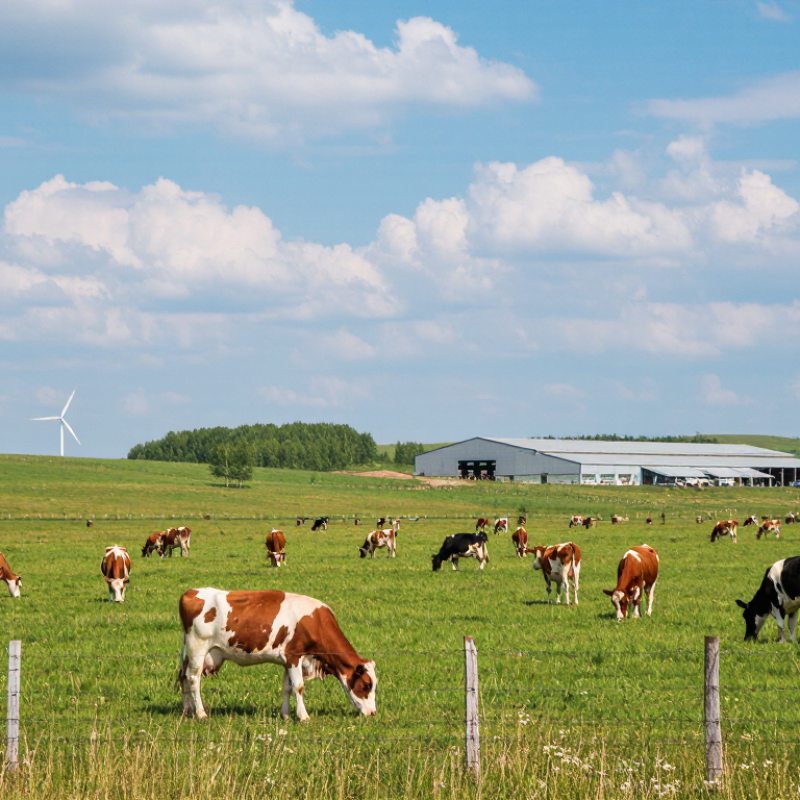
Global Dairy Context: FAO Reported 930 Million Tonnes of Milk in 2022
FAO reported that global milk production reached about 930 million tonnes in 2022. This figure describes milk from many animal species, not cow’s milk alone. It also does not show how much came from grass-fed herds. That distinction matters. A large global total can provide context, but it cannot verify a supplier’s feeding practices or pasture conditions.
Milk production varies with climate, land, animal breeds, and access to feed. In pasture-based regions, seasonal rainfall can change grass quality and milk volumes. During dry periods, farms may rely more on stored forage. Practices differ from farm to farm. The label “grass-fed” may also be defined differently across markets, so buyers should ask what animals eat throughout the year and how that claim is checked.
For anyone comparing worldwide suppliers, production scale is only one useful measure. Ask for the farm’s location, feeding records, and details about independent verification, where available. Check whether the data refer to a single farm, a cooperative, or an entire country. These are not interchangeable. Global statistics offer a broad frame, while supplier-level evidence reveals the details. And sometimes the records are incomplete; that deserves an honest answer, not a polished claim.
Defining Grass-Fed Milk: A 100% Forage Diet and Verifiable Pasture Practices
Grass-fed milk starts with the cow’s diet, not a picture of green pasture. A 100% forage diet means cows eat grasses and other forage plants, either fresh or preserved as hay or silage. It excludes grain as a feed ingredient. That distinction matters. Winter feeding may rely on stored forage, so “grass-fed” does not necessarily mean cows graze outdoors every day of the year.
Reliable claims need evidence beyond a pasture photograph. Look for written feeding criteria, dated ration records, grazing logs, and independent farm checks. These details help show what cows actually eat and how pasture is managed. Weather, soil, and seasonal growth affect grazing time, even on well-run farms. A supplier should explain those limits plainly. The term can also vary between programs, so buyers should check the exact standard rather than assume every label means the same thing. Photos are not proof. Records can be incomplete, too, and an audit is only useful when its scope is clear. A careful definition makes comparison between suppliers more meaningful.
The Top 10 Worldwide Suppliers: Regions, Herds, and Production Models
A worldwide comparison of grass-fed milk suppliers should start with geography, not ranking claims. Temperate, rainfall-rich regions can support longer grazing seasons, while colder or drier areas often rely more on stored forage. Herd size also varies: family farms may pool milk through cooperatives, while larger operators can manage centralized collection and processing. These models affect traceability, seasonal supply, and how consistently grazing practices are documented.
Scale needs context. The FAO Statistical Yearbook 2023 reports about 930 million tonnes of global milk production in 2022, with roughly four-fifths coming from cattle. That figure covers all production systems, not grass-fed milk alone. There is no single worldwide dataset that cleanly ranks grass-fed suppliers by pasture-fed volume. Compare published grazing-season records, feed policies, herd counts, and third-party audits. A large herd does not automatically mean more pasture-based production. Records can be uneven; that matters.
Tips: Ask suppliers for the percentage of annual feed obtained from pasture, the grazing months, and the method used to verify claims. Check whether figures describe one farm or an entire supply network. Small details count. The OECD-FAO Agricultural Outlook also tracks changing dairy production and trade, but its broad market totals should not be mistaken for grass-fed estimates.
Top 10 Grass Fed Milk Suppliers Worldwide - The Top 10 Worldwide Suppliers: Regions, Herds, and Production Models
Regional supplier profiles, not a ranked list of companies. “Grass-fed” practices and labeling standards vary by country and producer; these regions include pasture-based dairy systems, but not every farm or milk supply in each region is grass-fed.
| No. | Supplier Region | Typical Herd Profile | Pasture and Production Model | Seasonality and Supply Considerations |
|---|---|---|---|---|
| 1 | New Zealand | Pasture dairy herds commonly include Holstein-Friesian, Jersey, and crossbred cows. | A strongly pasture-oriented system, with cows generally grazing outdoors and supplementary feed used when pasture is limited. | Calving and milk production are often seasonal, aligning peak lactation with spring pasture growth. |
| 2 | Ireland | Predominantly Holstein-Friesian dairy herds, alongside crossbred herds on some farms. | Many farms use rotational grazing, moving cows between grass paddocks and housing them during parts of the winter. | Seasonal calving is common; wet weather and winter conditions can shorten the grazing period. |
| 3 | Australia: Victoria and Tasmania | Holstein-Friesian and Jersey cows are common in the established southern dairy regions. | Pasture grazing is widely used, with conserved forage and other supplementary feeds used as seasonal conditions require. | Rainfall and pasture growth vary by location and year; drought can increase reliance on supplementary feed. |
| 4 | Uruguay | Holstein is widely used in commercial dairy herds; herd size and grazing access vary between farms. | Dairy production commonly incorporates grazing on planted pastures, with conserved forage and concentrates used to balance feed supply. | Pasture availability responds to seasonal rainfall and temperature, so feed planning is important through dry or cold periods. |
| 5 | Argentina: Pampas region | Holstein herds are common in the country’s principal dairy areas. | Systems may combine grazing on pastures with silage, hay, and grain or other concentrates; the balance differs by farm. | Weather, pasture conditions, and feed costs influence how much of the ration comes from grazing. |
| 6 | United Kingdom: Wales and southwest England | Holstein-Friesian cows are widespread, with Jersey and crossbred cows also present. | Pasture-based farms often use rotational grazing in the growing season and conserved grass forage when cows are housed. | Grazing duration varies with rainfall, soil conditions, and farm management; year-round milk production is also practiced. |
| 7 | France: Brittany and Normandy | Holstein is prominent; other dairy breeds, including Normande in its home region, are also raised. | Dairy farms use combinations of grazing, silage, and other feeds; the proportion of pasture varies considerably by farm. | Mild, maritime conditions support grass growth, while winter housing and conserved forage are common on many farms. |
| 8 | United States: Northeast and Upper Midwest | Holstein is the leading dairy breed nationally; Jersey and other breeds are also found in pasture-focused herds. | Some farms use managed rotational grazing, while many regional dairies use mixed systems with pasture, stored forage, and concentrates. | Cold winters limit year-round grazing; pasture access and grass-fed claims depend on farm practices and the standard being used. |
| 9 | Brazil: Southern states | Holstein and crossbred dairy cows are used; breed mix and production intensity differ across farms. | Pasture-based and mixed-feed systems operate in the south, with forage crops and supplements used according to local conditions. | Seasonal temperature and rainfall affect forage growth; farm-level feeding practices should be verified for any grass-fed specification. |
| 10 | South Africa: Western and southern coastal dairy regions | Holstein and Jersey cows are among the breeds used in commercial dairy herds. | Pasture grazing is practiced in suitable coastal areas, alongside systems that rely more heavily on conserved forage and supplementary feeds. | Rainfall and water availability differ substantially by region and season, affecting pasture supply and production models. |
Note: Herd descriptions are regional profiles, not specifications for every farm. Confirm grazing requirements, permitted supplementary feeds, seasonality, and certification criteria directly with each supplier.
Comparing Suppliers: Certifications, Traceability, Processing, and Export Reach
Top 10 Grass Fed Milk Suppliers Worldwide
Comparing suppliers means looking beyond pasture photos. Check whether grass-fed claims are backed by independent audits, clear feed rules, and current certificates. Ask how often farms are inspected and whether records show grazing periods, ration changes, and animal movements. FAO reported global milk production of about 944 million tonnes in 2023, making consistent, verifiable sourcing important at scale. The OECD-FAO Agricultural Outlook notes that only a small share of milk production enters international trade, so export experience should be assessed product by product.
Traceability should connect farm records to tanker loads and finished batches. Request sample documentation: farm origin, collection date, processing site, and batch code. Processing matters, too. Chilled fresh milk needs dependable temperature control; UHT milk travels farther but has a different taste. Compare testing protocols for residues and microbiological quality, and confirm that certifications cover the actual product and facility. A certificate alone is not the whole story. Some supplier data may be incomplete, so treat polished claims with care.
Tips: Ask for a recent audit summary, a traceability test, and export-market references. Check whether stated destinations are active shipments or merely sales targets. A small paperwork gap can reveal a larger weakness—or just an untidy filing system. Verify before judging.
Grass-Fed Milk Supplier Comparison: Evidence Checklist
This chart is a comparison framework, not a ranking of suppliers. Values count suggested evidence checks: certifications (4), traceability (4), processing (3), and export reach (3). Verify each item with the supplier and for the relevant destination market.
Market Access: Labeling Rules, Cold-Chain Logistics, and Supply Constraints
“Grass-fed” has no single worldwide definition; buyers should verify local claim rules, wording, and evidence requirements before contracting. In the EU, Regulation (EU) No 1169/2011 bars misleading food information; pasture imagery cannot replace auditable records. Keep farm feed logs, grazing dates, and lot codes linked to every shipment.
Details matter.
A credible supplier should disclose how drought feeding or mixed diets affect the claim.
Cold-chain discipline is equally decisive. Codex advises cooling raw milk to 6°C or below when collection is daily. For less frequent collection, its guidance recommends 4°C or below. Temperature loggers, pre-cooled tanks, insulated loading bays, and backup power can flag breaks before arrival. FAO’s 2019 State of Food and Agriculture estimated that 14% of food is lost between post-harvest and retail. That is not dairy-specific, but it underscores how weak logistics reduce saleable supply.
Not a small risk.
Seasonal pasture yields, drought, and dispersed farms can limit steady volumes. Long routes add cost and spoilage exposure. Buyers should test delivery windows against farm calendars, not annual capacity alone.
Related Posts
-
Top Grass Fed Milk Suppliers for Global Buyers?
-
2026 Best Grass Fed Milk Suppliers for Global Buyers?
-
Top 10 Benefits of Grass Fed Raw Milk for Global Buyers?
-
How to Source High Quality Grass Fed Raw Milk Globally?
-

China Top 10 Cream Milk Manufacturers for Global Buyers?
-

What is the Best Way to Order Milk Online?