Top Grass Fed Milk Suppliers for Global Buyers?
Global buyers are showing stronger interest in grass fed milk, but sourcing it reliably requires more than reading a pasture-based label. Farms may use different grazing systems, feed supplements, animal welfare practices, and certification standards. These differences affect flavor, nutrition claims, seasonal volume, and export documentation.
Dr. Jude Capper, a respected dairy sustainability scientist, has said, “There is no one-size-fits-all solution to sustainable dairy farming.” Her point matters when comparing suppliers. A farm with green pastures may still face drought, limited winter forage, or inconsistent milk collection. Those details are easy to miss in polished marketing materials. They also influence supply continuity.
This guide examines leading grass fed milk suppliers for global buyers. It considers pasture management, traceability, testing, cold-chain control, certifications, and production capacity. Buyers should request feed records, laboratory reports, audit documents, and clear definitions of “grass fed.” Some suppliers may provide excellent transparency. Others may offer incomplete evidence. That weakness deserves attention.
The strongest partnerships usually begin with practical questions. How many months do cows graze outdoors? What happens during extreme weather? Can the supplier maintain specifications across several shipments? Are origin records available from farm to final package?
Quality is not only about taste.
It is also about evidence, consistency, and honest communication. This overview may not answer every regional requirement. It should, however, help importers compare suppliers more carefully and recognize where further verification remains necessary.
What Is Grass-Fed Milk and How Is It Defined?
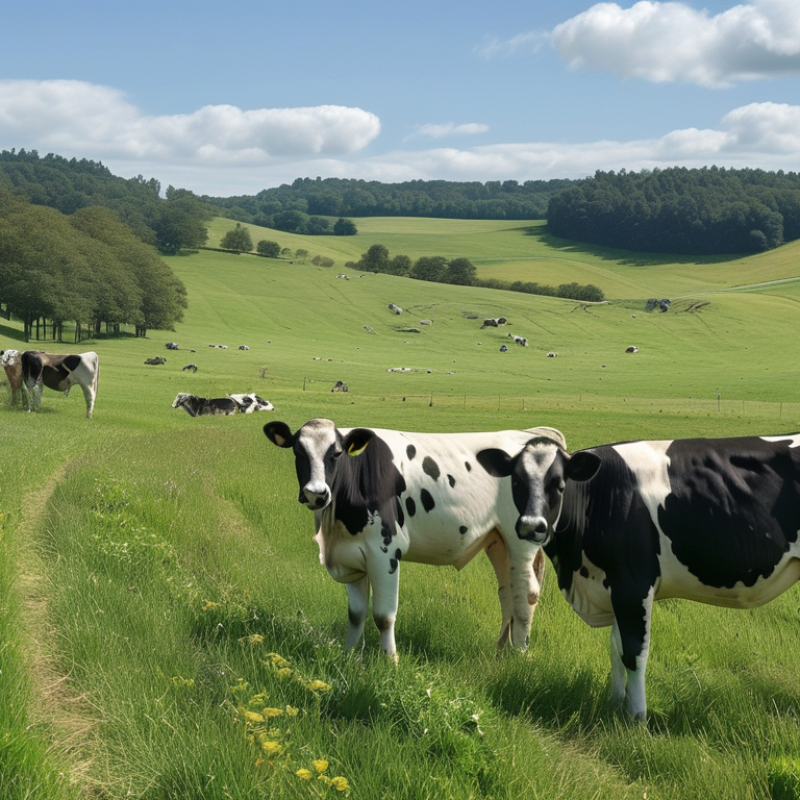
Grass-fed milk comes from cows whose diet is based mainly on grass, pasture plants, hay, or other forage. The definition is not identical worldwide. Some standards allow limited grain, while stricter programs prohibit grain completely. Buyers should never rely on the front label alone.
A reliable definition includes more than green fields. It covers the cow’s daily feed, pasture access, seasonal changes, and farm records. During winter or drought, cows may eat stored hay instead of fresh grass. That can still fit a grass-fed standard, depending on the certification rules. Supplier documents should explain these details clearly.
In global sourcing, ask for feed policies, audit reports, traceability records, and certification scope. The certification must apply to the actual farm and product, not only the processing facility. Milk composition can vary with breed, climate, forage quality, and lactation stage. Laboratory testing may support quality checks, but it cannot always prove a cow’s complete diet. That part is often overlooked.
The label sounds simple. The supply chain is not.
A careful buyer should compare definitions across countries before signing a contract. Claims such as “pasture-raised” and “grass-fed” may describe different practices. I would also question vague statements about “natural feeding.” They sound reassuring, but they provide little evidence without records, inspections, and clear percentages. The most dependable supplier is transparent about exceptions, seasonal limitations, and certification boundaries.
Key Standards for Evaluating Global Milk Suppliers
Top Grass Fed Milk Suppliers for Global Buyers?
Key Standards for Evaluating Global Milk Suppliers
Global buyers should assess grass fed milk suppliers through verifiable standards, not attractive claims. Request farm records showing grazing periods, feed controls, animal health practices, and stocking levels. “Grass fed” can mean different things across markets. Define the term in the purchase contract. Check whether independent auditors review these records regularly.
Traceability is equally important. Each shipment should connect to farms, processing dates, laboratory results, and storage conditions. Ask for batch identification and recall procedures. Test reports should cover microbial safety, antibiotics, aflatoxins, pesticide residues, and nutritional specifications. Samples must come from sealed batches, not selected showcase products. Small details matter.
Cold-chain performance often reveals operational experience. Review temperature logs from collection through port delivery, including delays and power failures. Evaluate processing hygiene, employee training, certification status, and export documentation. A reliable supplier explains weaknesses clearly and provides corrective actions. Perfect paperwork can still hide poor farm practices. That deserves skepticism. Buyers should also examine payment terms, production capacity, seasonal variation, and contingency plans before signing long-term agreements. A supplier may meet laboratory standards yet struggle with consistent volume. That practical gap is easy to underestimate.
Top Grass Fed Milk Suppliers for Global Buyers? - Key Standards for Evaluating Global Milk Suppliers
| Evaluation Dimension | Recommended Global Benchmark | Evidence to Request | Why It Matters to Buyers | Suggested Weight |
|---|---|---|---|---|
| Grass-Fed Production Definition | A clearly documented feeding policy based primarily on pasture and forage. Because “grass-fed” has no single worldwide legal definition, the supplier should state permitted feeds, confinement periods, and any grain supplementation. | Written feed policy, farm declarations, pasture records, feed-purchase records, and independent claim verification where available. | Prevents inconsistent interpretation of the grass-fed claim across export markets. | 15% |
| Animal Feed Safety | Feed should be traceable and controlled for contaminants, prohibited materials, pesticides, mycotoxins, and unintended animal-origin inputs in accordance with applicable destination-market rules. | Approved-feed-supplier list, feed-testing results, batch records, contamination-control plan, and recall procedure. | Feed safety directly affects milk safety and import clearance. | 10% |
| Food Safety Management | A documented HACCP-based system, preferably supported by certification to a recognized food-safety scheme such as ISO 22000 or another GFSI-recognized program. | Valid certificate, latest audit report, corrective-action records, HACCP plan, sanitation program, and product-recall test results. | Reduces microbiological, chemical, and physical food-safety risks. | 15% |
| Raw Milk Microbiological Quality | Routine testing should demonstrate compliance with the importing market’s limits for standard plate count, somatic cell count, coliforms, pathogens, and other required indicators. | Recent laboratory results, sampling plan, test methods, laboratory accreditation, and trend reports covering at least several production cycles. | Consistent microbiological quality supports shelf life and regulatory acceptance. | 15% |
| Veterinary Drug and Antibiotic Controls | Milk must comply with the maximum residue limits and withdrawal periods required by the destination country. “No antibiotic residue” claims should be supported by testing rather than marketing language alone. | Treatment records, withdrawal controls, residue-screening results, farm-veterinarian procedures, and non-conformance actions. | Residue violations can cause border rejection, recalls, and legal exposure. | 12% |
| Traceability and Chain of Custody | The supplier should be able to trace milk from farm or collection point through processing, storage, transport, and final shipment, with documented lot identification. | Lot-code structure, farm-to-batch records, mass-balance records, supplier approval files, and mock-recall results. | Enables targeted recalls and verifies the origin of grass-fed claims. | 10% |
| Animal Welfare | Documented welfare procedures should cover pasture access, housing, stocking density, handling, transport, veterinary care, and humane treatment. | Animal-welfare policy, farm audits, mortality and injury records, transport procedures, and corrective-action reports. | Supports ethical sourcing requirements and protects supply continuity. | 8% |
| Organic or Other Certified Claims | If organic status is required, certification must comply with the regulations of the target market. Organic certification and grass-fed status are separate claims and should not be treated as interchangeable. | Current certificate, scope of certification, transaction documents, annual inspection report, and approved-label documentation. | Protects buyers from unsupported or non-recognized claims. | 5% |
| Cold Chain and Shelf-Life Control | Temperature controls, validated storage conditions, hygienic loading, and documented transport monitoring should be maintained from processing to delivery. | Temperature logs, container or vehicle qualification, loading procedures, shelf-life studies, and deviation reports. | Maintains product safety and quality during international transport. | 5% |
| Laboratory and Testing Reliability | Testing should use validated methods, suitable detection limits, documented sampling plans, and laboratories competent for the relevant analyses. | Laboratory accreditation details, method references, certificates of analysis, proficiency-testing records, and sample-retention policy. | Improves confidence in certificates of analysis and regulatory compliance. | 3% |
| Export and Regulatory Readiness | The supplier should understand destination-country requirements for labeling, certificates, health documentation, allergen declarations, packaging, customs, and import permits. | Previous export documentation, health certificates, product specifications, label review, customs records, and regulatory contact details. | Reduces shipment delays and documentation errors. | 2% |
| Total Evaluation Weight | 100% | |||
Leading Regions and Supplier Types in the Grass-Fed Milk Market
Top Grass Fed Milk Suppliers for Global Buyers?
Leading Regions and Supplier Types in the Grass-Fed Milk Market
Grass-fed milk supply is concentrated in pasture-rich regions with moderate climates. New Zealand and Australia offer large-scale dairy exports and established cold-chain systems. Ireland and the United Kingdom provide seasonal pasture production, often supported by detailed farm audits. Uruguay is also gaining attention for its open grazing systems and export-oriented dairy sector. However, regional claims can differ widely. Buyers should verify feed records instead of relying on country reputation alone.
Supplier types vary across the market. Large dairy cooperatives can combine milk from hundreds of farms and maintain stable shipment volumes. Family-owned farms may offer stronger traceability, but their monthly capacity can change with weather.
Specialized processors collect certified grass-fed milk, conduct residue testing, and produce chilled milk, milk powder, or concentrated ingredients. Trading companies can simplify international purchasing, although buyers should confirm the original farm source and processing location.
Reliable sourcing requires more than a pasture photograph. Ask for feeding policies, grazing records, animal welfare procedures, laboratory results, and certification details. Check whether “grass-fed” permits limited grain supplementation under the stated standard. This point is often unclear. Temperature logs should follow the product from collection to port delivery. Seasonal shortages can also affect fat content, pricing, and shipping schedules. A practical supplier trial may include sample testing, documentation review, and one controlled shipment before signing a larger contract. No region is perfect. Weather, transport delays, and inconsistent interpretation of standards still require careful review.
How Global Buyers Compare Quality, Pricing, and Certifications
Global buyers compare grass-fed milk suppliers through measurable quality, landed pricing, and credible certification. FAOSTAT data cited in the OECD-FAO Agricultural Outlook 2024–2033 place global milk output near 965 million tonnes in 2023. This scale makes traceability essential. Buyers should request farm-level feeding records, seasonal production data, and lot-specific testing. Useful indicators include fat, protein, somatic cell count, bacterial load, aflatoxin M1, and antibiotic-residue results. Small details matter. A clean tanker seal can protect a shipment’s credibility.
Certification requires careful reading. Organic approval does not automatically prove a fully grass-fed diet. Grass-fed definitions also differ between countries and private schemes. Buyers should verify pasture requirements, permitted supplements, audit frequency, and chain-of-custody controls. Food-safety systems aligned with HACCP and ISO 22000 can strengthen supplier evaluation, while independent laboratory reports provide practical evidence. The 2024 Global Dairy Trade data show that dairy prices can shift sharply across trading events, so one quotation is weak evidence of long-term value.
Price comparisons should use landed cost, not only the supplier’s export price. Freight, refrigeration, insurance, tariffs, testing, and payment terms can change the final figure. Protein and fat levels also affect usable value in processing. Experience suggests that cheaper milk may create higher costs through rejections or inconsistent solids. Still, certification alone is not proof of superior milk. Audits may miss weak farm records, and sampling can be limited. Buyers should compare at least three shipment histories, then reassess after the first delivery. Data helps, but judgment remains imperfect.
Import, Logistics, and Compliance Factors for International Buyers
Top Grass Fed Milk Suppliers for Global Buyers?
Global buyers should assess suppliers beyond a grass-fed claim. Request farm-level traceability, feeding records, production dates, and laboratory results. Verify whether the claim matches recognized rules in both markets. Definitions can differ. A generic certificate is not enough. Ask who issued it, which batch it covers, and when it expires. Supplier response time also reveals operational maturity.
Product format affects import planning. Fresh chilled milk needs validated temperature control, data loggers, and backup routing. UHT milk and milk powder travel more easily, but heat and humidity still threaten quality. Confirm packaging strength, pallet design, container conditions, and expected port delays. The importer of record should confirm customs classification, permits, and tariff treatment. Incoterms must clearly assign insurance, delivery, and damage risks. Small details matter.
Compliance documents may include veterinary certificates, certificates of analysis, allergen statements, facility registration, and destination-specific labels. Check microbiological criteria, residue limits, language rules, and shelf-life requirements before shipment. Independent pre-shipment inspection can identify weak seals or incorrect paperwork. It costs more.
Even careful plans fail. A missing stamp can hold a container for days. Port congestion can reduce remaining shelf life. Buyers should review each shipment after arrival, not merely blame the supplier. That feedback can improve future forecasts, packaging, and supplier selection.
Related Posts
-
Is Grass Fed Raw Milk the Best Choice for Global Buyers?
-
2026 Top Benefits of Grass Fed Butter for Your Health and Diet?
-
How to Choose the Best Grass Fed Butter for Your Healthy Diet?
-
Top 10 Benefits of Grass Fed Raw Milk for Global Buyers?
-
Best Grass Fed Raw Milk Benefits for Global Buyers?
-
2026 How to Choose the Best Dairy Delivery Service?