2026 Top Unsalted Butter Suppliers for Global Buyers
Choosing an unsalted butter supplier is not just a price comparison. Global buyers must assess butterfat content, moisture, flavor, packaging, and consistency across shipments. A sample may taste clean and creamy, yet performance can change when butter is used in pastries, sauces, or large-scale food production. Small differences matter.
This 2026 guide introduces suppliers serving international markets and outlines practical factors buyers can verify before requesting a quote. These include product specifications, available formats, cold-chain capabilities, export experience, and documentation for food safety and traceability. Buyers should confirm details directly with each supplier, since product ranges and shipping conditions can change. A polished website is useful, but it is not proof of dependable delivery.
Look closely. Ask for current specifications, sample availability, minimum order quantities, and clear information about storage and transport. Compare total landed cost, not just the quoted price. That figure may include freight, temperature-controlled handling, and destination-specific requirements. No supplier is ideal for every buyer. A bakery may prioritize predictable creaming performance, while a distributor may care more about carton size and reliable lead times. This list can help narrow the field, but it cannot replace product trials or careful due diligence. Even established suppliers may have limits. The right unsalted butter partner is the one whose documented capabilities match your needs—and continue to do so after the first shipment.
Understanding Unsalted Butter and Its Global Supply Market
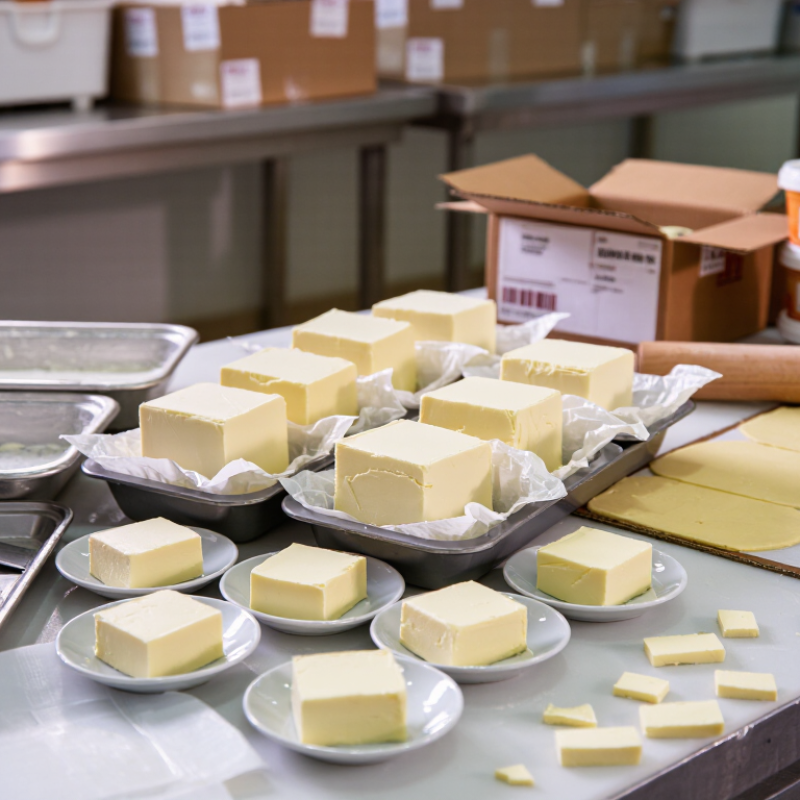
Unsalted butter is churned cream with no salt added, giving bakers and food manufacturers more control over seasoning.
It is not a low-fat product. Its appeal lies in predictable flavor and formulation, especially in pastries, sauces, and prepared foods. A small difference in salt can change dough texture and the balance of a finished dish.
Buyers should check the product specification, including fat content, moisture, packaging, and storage temperature. Details matter.
The supply market is tied closely to milk production, cream availability, and cold-chain performance. The OECD-FAO Agricultural Outlook 2024–2033 projects global milk production to grow by about 1.6% annually over the outlook period.
That growth does not guarantee steady butter supply in every region. Milk seasonality, processing capacity, energy costs, and shipping delays can still affect delivery schedules and prices.
Butter also needs careful temperature control; a warm loading bay is not a minor issue.
Importers comparing suppliers should review recent production records, batch documentation, and temperature-handling procedures, not just quoted price.
Trade data can be imperfect, and product categories may differ across reporting systems. That deserves a second look.
Key Criteria for Evaluating Unsalted Butter Suppliers
When evaluating unsalted butter suppliers, look beyond the quoted price. Ask for product specifications covering milkfat percentage, moisture, salt-free formulation, and permitted ingredient treatments. Request recent certificates of analysis and confirm that batch numbers match the shipment documents. Details matter.
A dependable supplier can explain how cream is sourced, pasteurized, churned, and packed. Ask how production lots are traced and how temperature is monitored during storage and transport. Butter can soften or absorb odors if handling slips, even when the paperwork looks complete. Check whether insulated packaging and temperature records are available for your route.
Consistency is practical, not just a sales claim. Compare samples from different production dates for color, aroma, texture, and melting behavior in your own recipes. A pale sample may perform differently in laminated dough than expected. I would not judge from one tasting alone. Ask about minimum order quantities, lead times, packaging sizes, and procedures for reporting defects. Clear answers help, though no supplier can remove every transport risk. Verify current food-safety certifications with the issuing body, and make sure the supplier’s capacity suits seasonal demand. A small trial order can reveal problems that a polished presentation will not.
Leading Unsalted Butter Suppliers for International Buyers in 2026
For international buyers in 2026, selecting reliable unsalted butter suppliers requires more than comparing prices. Importers should examine milk origin, production controls, storage conditions, and export experience. Consistent butter usually has a clean aroma, pale color, and firm texture at chilled temperatures. These details matter during long ocean shipments.
Ask suppliers for recent laboratory reports, allergen statements, traceability records, and production dates. A dependable supplier should explain how butter is packed, frozen, transported, and monitored. Confirm specifications for butterfat, moisture, salt content, carton weight, and shelf life. Small differences can affect bakery recipes and foodservice performance. Documentation may look routine. It is often where reliability becomes visible.
Tips: Request samples from several suppliers before signing contracts. Test them in your actual recipes, not only on a tasting spoon. Check container temperatures and arrival conditions with each shipment. Do not trust a perfect quotation alone. I have seen buyers focus on low costs and overlook delivery delays, weak packaging, or unclear claims. A more careful review may take extra days, but it can prevent expensive production problems. Even experienced purchasing teams should revisit their standards when markets, freight routes, or dairy regulations change.
Comparing Supplier Capabilities, Certifications, and Product Specifications
For global buyers, comparing unsalted butter suppliers means looking beyond price. The FAO’s Food Outlook projected world milk production at about 964 million tonnes in 2024, up 1.4% from 2023. That scale does not guarantee steady butter supply. Ask suppliers for production capacity, seasonal availability, lead times, and cold-chain records. A small gap in temperature control matters.
Product specifications should be precise. Codex Alimentarius Standard CXS 279-1971 sets butter at no less than 80% milk fat, with no more than 16% water and 2% milk solids-not-fat. Request a current specification sheet and a representative certificate of analysis. Confirm that “unsalted” is clearly stated, and check moisture, fat, sensory quality, and packing format. Certifications can support traceability and food-safety controls, but verify their scope, issuing body, and validity. Paperwork alone is not proof of consistent batches.
Tips: Compare samples from more than one production lot. Check carton lining, block dimensions, storage temperature, and thawing instructions against your process. Ask how deviations are handled. One detail buyers sometimes miss: a technically compliant sample may not reflect routine shipments. Recheck before committing to volume.
How to Source, Import, and Store Unsalted Butter Globally
For global buyers, sourcing unsalted butter starts with a clear specification: milk source, fat content, moisture, packaging, and intended use. Request a recent certificate of analysis and confirm lot traceability before placing an order. The USDA Foreign Agricultural Service’s Dairy: World Markets and Trade reports track butter production and trade across major exporting regions, helping buyers compare supply patterns rather than rely on a single quotation. Still, reported trade volumes do not guarantee availability in a particular month. That part takes checking.
Before import, compare quotations on a landed-cost basis, including freight, insurance, duties, and cold-chain handling. Ask suppliers for production dates, shelf-life details, carton dimensions, and temperature records during transit. Build in time for document review and port delays. A small discrepancy in net weight can complicate receiving. It happens. The OECD-FAO Agricultural Outlook provides longer-term context on dairy markets, but its projections are not a substitute for current supplier and freight checks.
On arrival, inspect seals and packaging, record product temperatures, and move cartons quickly into refrigerated or frozen storage according to the supplier’s validated instructions. Keep butter away from strong-smelling goods; it can absorb odors. Use clean, dry handling tools and follow first-in, first-out rotation. Frozen storage can extend holding time, but repeated thawing and refreezing can damage texture. Buyers should confirm storage limits against product specifications and applicable destination requirements, not assume every shipment behaves the same.
Related Posts
-
How to Source Unsalted Butter Globally in 2026?
-
How to Source Grassland Butter Globally in 2026?
-
What Is Bulk Butter and How Do Global Buyers Source It?
-
2026 Best Real Butter Suppliers for Global Buyers?
-
Best Unsalted Butter for Baking Which Brands to Choose?
-

2026 Best Cow Milk Suppliers for Global Buyers Guide?