How to Source Fresh Milk for Global Buyers?
Sourcing fresh milk for global buyers requires more than finding a competitive price. It demands verified farms, controlled logistics, and clear product specifications. Milk can leave a clean facility and still lose quality during a delayed shipment. That reality should shape every purchasing decision.
The process begins with suppliers that can prove origin, hygiene controls, and production capacity. Buyers should request farm records, processing certificates, laboratory results, and traceability procedures. A site audit can reveal details that documents miss, such as poorly sealed tanks or crowded loading areas. Fresh milk also requires strict temperature management from collection through delivery. A calibrated temperature logger provides useful evidence, but it cannot replace trained staff and reliable contingency plans.
Import requirements vary by destination. Buyers must confirm health certificates, labeling rules, permitted shelf life, and approved facilities with competent authorities. Independent testing can verify fat content, protein levels, microbial safety, antibiotics compliance, and other agreed specifications. Clear contracts should define sampling methods, rejection conditions, delivery temperatures, and responsibility for losses.
Small details matter.
A supplier may offer excellent milk but lack experience with international transport. Another may have strong certifications but inconsistent volumes during dry seasons. Forecasts can fail, especially when weather affects feed quality or farm output. This is where careful communication and backup sourcing become essential. No procurement system removes every risk. However, documented checks, realistic lead times, and regular supplier reviews can reduce costly surprises. This guide examines practical methods for building a dependable fresh milk supply chain with professional judgment and transparent expectations.

Define Fresh Milk Specifications and Buyer Requirements
How to Source Fresh Milk for Global Buyers?
Fresh milk sourcing begins with a precise specification, not a supplier list. Buyers should define fat and protein ranges, acidity, sensory profile, shelf life, and permitted processing methods. Codex Standard for Milk and Milk Products identifies milk as a natural secretion, without added substances, and supports clear compositional controls. These details matter when milk travels across borders.
Temperature is equally important. Many procurement teams specify delivery below 6°C, while some require a tighter internal limit. The exact threshold must follow the destination market and transport plan. Buyers should request testing for total bacterial count, somatic cell count, antibiotic residues, aflatoxin M1, and pathogens. Test results should include sampling time and laboratory method. A clean certificate is not enough.
According to the OECD-FAO Agricultural Outlook 2024-2033, global dairy demand will continue rising with population and income growth. FAO’s Food Outlook also shows dairy markets remain exposed to feed costs, weather, and logistics disruptions. Therefore, buyers should confirm the farm collection point, cooling records, loading temperature, transit time, and backup route. Short shelf life changes everything. A 10-day product may lose two days before customs clearance. That is risky.
One practical mistake is over-specifying every parameter. It can raise costs without improving usability. I would compare supplier data against the buyer’s recipe, process, and local rules. Some specifications still need revision after the first shipment. That is normal. Reliability comes from repeated records, not attractive brochures.
Identify Reliable Dairy-Producing Regions and Suppliers
How to Source Fresh Milk for Global Buyers?
Reliable sourcing begins with the producing region, not the lowest quotation. The OECD-FAO Agricultural Outlook 2024-2033 projects global milk production to grow about 1.6% annually. Growth will remain strongest in South Asia, while Europe, North America, and Oceania offer mature collection systems. Buyers should compare regional rainfall, feed availability, herd health, electricity reliability, and distance to processing plants. A productive region can still fail during heatwaves or transport delays.
Look for suppliers operating within organized dairy clusters. These clusters usually provide chilled collection points, veterinary support, laboratory testing, and backup transport. Fresh milk should reach controlled cooling quickly after milking. Ask for records covering temperature, somatic cell count, bacterial load, antibiotic screening, and farm-level traceability. The FAO Dairy Market Review emphasizes that quality consistency and supply-chain resilience increasingly influence international dairy trade. Paperwork alone is not enough.
Visit the collection route when possible. Check the thermometer, sampling procedure, cleaning records, and loading schedule. Supplier audits should include peak summer conditions, not only comfortable seasons. A supplier may show excellent samples for one month, then struggle when feed prices rise. That risk deserves a written contingency plan. Also remember that raw milk is highly perishable; many long-distance transactions require nearby processing, validated cold storage, and compliance with the destination market’s food-safety rules.
Verify Farm Standards, Certifications, and Milk Quality
Global buyers need more than a competitive milk price. Fresh milk sourcing begins with farm-level evidence. Request veterinary records, animal welfare procedures, feed controls, water tests, and cleaning logs. Verify the farm’s registration and traceability system. Each tanker should connect to a farm, milking time, batch, and transport route. Certifications can support confidence, but certificates alone are not proof. Check their scope, expiry dates, audit findings, and issuing-body details. Standards should match the destination market and product use. Requirements differ across countries.
Milk quality can change within hours. Ask for documented testing of antibiotic residues, bacterial counts, somatic cell counts, fat, protein, acidity, and temperature. Independent laboratories should use recognized methods and calibrated equipment. During loading, inspect seals, tanker hygiene, and chilling records. Maintain cold-chain control from collection to delivery, with alarms for temperature deviations. Sample retention helps investigate disputes. No checklist is perfect. A failed reading should trigger quarantine, root-cause review, and corrective action. I would compare several deliveries before approving a long-term supplier.
Tips: Visit farms when possible, and interview the quality manager without notice. Match certificates against actual routines. Ask for raw data, not polished summaries. Define rejection rules in writing. Review seasonal variation, because summer heat can expose weak cooling systems. Keep communication documented and require prompt notification of changes. Small gaps matter. Even strong controls cannot remove every biological risk.
| Verification Dimension | Recommended Acceptance Benchmark | Evidence to Request from the Supplier | Verification Method | Buyer Priority |
|---|---|---|---|---|
| Farm Registration and Traceability | Every farm, collection point, tanker, and processing batch should have a documented identification and traceability link. | Farm register, supplier approval records, lot-coding procedure, collection logs, and a written product-recall procedure. | Review records and conduct a backward-and-forward traceability test using a selected milk batch. | Critical |
| Animal Health Controls | Herd health, vaccination, disease monitoring, veterinary treatment, and withdrawal-period controls must be documented and routinely implemented. | Veterinary records, animal identification list, treatment register, mortality records, and livestock-health certificates where required. | Compare treatment records with herd inventories and verify that treated animals are excluded from the milk supply during the required withdrawal period. | Critical |
| Milking Hygiene and Farm Practices | Milking equipment, water, personnel hygiene, udder preparation, cleaning chemicals, and pest-control procedures should be controlled through documented sanitation programs. | Standard operating procedures, cleaning schedules, chemical specifications, water-test results, employee training records, and sanitation verification logs. | On-site farm audit, visual inspection, review of cleaning records, and periodic microbiological testing of water and equipment surfaces. | Critical |
| Cooling and Cold Chain | As a regulatory example, the U.S. Grade “A” Pasteurized Milk Ordinance requires raw milk to be cooled to 10°C or below within 4 hours of the start of the first milking and to 7°C or below within 2 hours after milking; importing-country rules may differ. | Bulk-tank temperature charts, calibrated thermometer records, tanker loading times, transport temperature logs, and receiving-temperature records. | Check continuous temperature data, calibration certificates, tanker seals, and milk temperature at collection and destination. | Critical |
| Bacterial Quality | For raw cow milk under European Union hygiene criteria, the plate count at 30°C is generally limited to a rolling geometric average of 100,000 colony-forming units per millilitre (CFU/mL). Contract limits may be stricter. | Recent accredited laboratory reports showing sampling date, method, sample identity, result, and laboratory accreditation status. | Use independent sampling and a validated plate-count method; evaluate trends rather than relying on a single result. | Critical |
| Somatic Cell Count | For raw cow milk under European Union hygiene criteria, the somatic cell count is generally limited to a rolling geometric average of 400,000 cells/mL. National rules and buyer specifications may differ. | Somatic cell count reports, herd-level monitoring data, mastitis-control plan, and corrective-action records. | Review rolling averages and investigate sudden increases by farm, collection route, or delivery batch. | Critical |
| Antibiotic and Veterinary-Drug Residues | No milk should exceed the maximum residue limits or action levels applicable in the destination market. Testing must cover substances relevant to the production system and import rules. | Residue-control plan, treatment records, withdrawal-period procedure, screening results, confirmatory laboratory reports, and non-conformance history. | Apply risk-based screening at farm, tanker, and receiving stages; confirm positive findings with a validated laboratory method. | Critical |
| Contaminants and Adulteration | Milk should comply with applicable limits for contaminants such as aflatoxin M1, heavy metals, pesticide residues, and prohibited additives; added water or unauthorized neutralizers must not be present. | Risk-based contaminant testing plan, feed-control records, water-quality reports, authenticity results, and corrective-action documentation. | Use accredited laboratory testing, density or freezing-point checks for added water, and targeted testing based on origin and feed risks. | Critical |
| Food-Safety Management Certification | Prefer a valid, independently audited food-safety management certification based on internationally recognized principles, supported by HACCP implementation. | Current certificate, scope of certification, audit report, corrective-action status, and certification-body accreditation details. | Confirm certificate validity directly through the certification body or recognized certification database and check that the scope covers milk handling. | Important |
| Organic or Special-Claim Verification | Organic, grass-fed, animal-welfare, non-GMO, or similar claims should be accepted only when supported by a valid certificate or legally recognized control system in the destination market. | Current certificate, production standard, permitted-input list, mass-balance records, segregation procedure, and claim-supporting audit documents. | Check certificate scope, expiry date, product category, and chain-of-custody records; do not rely solely on supplier declarations. | Important |
| Laboratory Competence | Testing should be performed by a competent laboratory using validated methods with documented sampling, calibration, quality-control, and reporting procedures. | Laboratory accreditation certificate, method list, proficiency-testing records, calibration certificates, and sample chain-of-custody documents. | Verify accreditation scope and confirm that the selected methods are appropriate for raw or pasteurized milk and the intended market. | Important |
| Import and Documentation Readiness | The supplier should be able to provide documents required by the destination authority, including health certificates, commercial documents, batch records, and temperature data. | Sample export document pack, certificate-of-analysis template, health certificate process, packing list, invoice data, and transport records. | Run a pre-shipment document review and verify that product description, lot numbers, origin, quantities, and dates are consistent across all documents. | Critical |
| Supplier Performance Monitoring | Use documented key performance indicators such as delivery temperature, bacterial count, somatic cell count, residue failures, rejected loads, complaint rate, and corrective-action closure time. | At least 6–12 months of trend data, complaint records, rejected-load reports, internal-audit results, and corrective-action verification. | Score suppliers monthly or quarterly and require root-cause analysis for repeated deviations. | Ongoing |
| Reference note: Acceptance limits must always be checked against the laws of the destination market, the product type, and the buyer’s contract. Common reference frameworks include Codex food-hygiene principles, European Union hygiene legislation, and the U.S. Grade “A” Pasteurized Milk Ordinance. The benchmarks above are procurement guidance and do not replace official regulatory verification. | ||||
Plan Cold-Chain Logistics, Customs, and Delivery Schedules
How to Source Fresh Milk for Global Buyers?
Fresh milk sourcing depends on disciplined cold-chain control, not only supplier price. In practical procurement, keep milk chilled continuously from collection to unloading. Codex food-hygiene guidance supports strict temperature control for perishable foods. Many import programs target storage near 4°C, but local rules may differ. Use calibrated data loggers inside every shipment. A single warm pallet can affect the whole load. The Global Cold Chain Alliance’s 2020 report recorded about 719 million cubic meters of refrigerated warehouse capacity worldwide. Capacity is growing, yet access remains uneven across ports and inland regions.
Customs planning should begin before loading. Confirm health certificates, laboratory results, origin documents, labeling rules, and import permits. Ask the buyer’s broker to pre-check every document. Delays at inspection can damage a short shelf-life product. Build delivery schedules around port congestion, border hours, and final-mile distance. Keep a backup truck and alternate receiving slot. Perfect timing is rarely realistic. I would also challenge a common assumption: the fastest route may not be the safest if it has unreliable refrigeration. The 2024 World Bank Logistics Performance Index shows that customs and infrastructure performance still varies significantly between economies.
Tips: Set a maximum transit time, not just an arrival date. Share temperature alerts immediately. Record seal numbers, loading temperatures, and unloading times. Review exceptions weekly; repeated “small” delays often reveal a broken process.
How to Source Fresh Milk for Global Buyers?
Cold-chain logistics, customs, and delivery schedule planning
This indicative air-freight planning model allocates a 72-hour end-to-end window for chilled fresh milk: rapid farm consolidation, export documentation, international transport, import clearance, and final delivery. Actual timing depends on route, inspection requirements, transport mode, product shelf life, and destination regulations.
Temperature control should follow the product specification and applicable food-safety regulations. Raw milk is commonly cooled promptly after milking, while chilled dairy products require a validated refrigerated chain throughout handling.
Evaluate Costs, Contracts, and Ongoing Supplier Performance
Fresh milk sourcing begins with a cost model, not a supplier list. The OECD-FAO Agricultural Outlook 2024–2033 projects global milk production to grow by about 1.6% annually. That growth does not guarantee stable prices for buyers. Freight, chilling, testing, insurance, duties, and product loss can change the delivered cost sharply. A practical model should compare cost per usable litre, not cost per shipped litre. Small details matter.
Contracts should define fat content, protein levels, microbial limits, temperature requirements, collection windows, and rejection procedures. The Codex General Standard for Milk and Milk Products provides a useful technical reference for quality specifications. Payment terms also need attention. A 30-day credit period may be cheaper than a lower price with strict prepayment. Currency adjustment clauses can reduce disputes, but vague formulas create new risks. I would avoid contracts that promise volume without matching seasonal supply evidence.
Supplier performance requires measurable records. Track on-time delivery, rejected loads, temperature deviations, test failures, and complaint response time each month. The International Dairy Federation highlights the importance of hygienic control and cold-chain management across dairy operations. A supplier scoring system should trigger corrective action before termination. Still, performance data can mislead when buyers measure only delivery speed. A fast shipment with weak microbiological results is not success. My own assessment should remain provisional when farm-level records are incomplete. Audit samples, independent laboratory checks, and quarterly contract reviews expose gaps that polished presentations may hide.
Related Posts
-
Top 10 Ways to Enjoy Fresh Milk in Your Daily Diet?
-
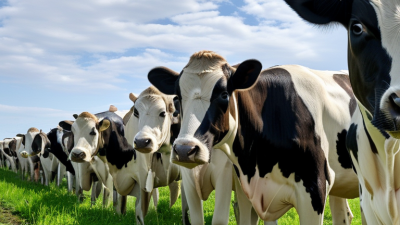
How to Source Fresh Milk for International Buyers?
-
Why Choose Cow Milk for Your Business Needs?
-
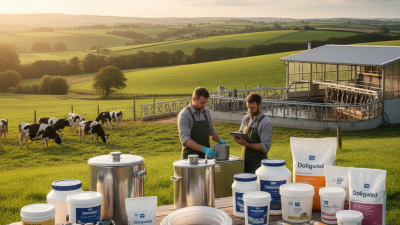
How to Choose the Right Dairy Supplies for Your Farm Business?
-
What is the Best Daily Milk to Drink in 2026?
-
What Are the Health Benefits of Grass Fed Raw Milk?