How to Source European Butter in 2026?
Sourcing european butter in 2026 requires more than comparing prices on a supplier spreadsheet. Buyers must connect origin, quality, seasonality, and delivery performance before approving a contract. A lower quote can become expensive when cartons arrive soft, labels need revision, or production dates are unclear. Cold-chain discipline matters.
This guide follows practical purchasing questions used by dairy importers, food manufacturers, and professional kitchens. It examines butter type, milk origin, butterfat percentage, moisture, salt levels, packaging, shelf life, and available certifications. Supplier verification should include current specifications, laboratory results, traceability records, and an audit or credible third-party assessment. Samples should travel under controlled conditions and be tested after arrival, not judged only from photographs. Ask for production capacity during peak demand. Also ask how shortages are handled.
Details matter.
In 2026, responsible sourcing also means checking current customs, labeling, food-safety, environmental, and trade requirements with qualified advisers and relevant authorities. These requirements can vary by destination and may change. Do not treat a familiar supplier as automatically reliable. Review performance over time, including temperature records, complaint responses, delivery accuracy, and corrective actions. European butter can offer distinctive flavor and dependable functionality, but quality is not guaranteed by geography alone. I have seen purchasing plans overvalue a famous region while overlooking packing conditions. That is a useful warning. The strongest approach combines documented evidence, sensory testing, realistic logistics, and a willingness to revise assumptions before the first full shipment.
Define European Butter Standards, Grades, and Product Types
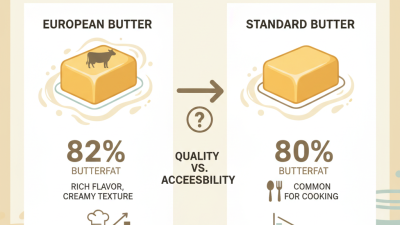
European butter is not one uniform product. Start with its legal identity and physical specification. Under European Union marketing standards, butter generally contains at least 80% milk fat, no more than 16% water, and no more than 2% non-fat milk solids. Reduced-fat products follow different limits and should not be labeled simply as butter.
“Grade” often causes confusion. Europe does not use one universal premium-to-basic grading scale for all butter. Buyers usually compare commercial specifications, including fat content, moisture, acidity, salt level, color, microbiological results, and sensory quality. A reliable supplier should provide a current certificate of analysis and traceability records. Extra and premium claims need careful checking. They may reflect local contracts, not a continent-wide legal grade.
Product type matters during sourcing. Sweet-cream butter has a clean, mild profile, while cultured butter offers sharper, yogurt-like notes. Salted butter suits bakery and foodservice uses, but salt levels vary. Unsalted butter gives tighter recipe control. Block, sheet, and bulk formats also affect storage and processing. I once underestimated packaging losses; the specification looked right, but the format created avoidable waste.
Tips: Ask for the exact fat range, moisture limit, salt percentage, freezing history, and intended application. Request samples from different production lots. Compare texture after thawing, not only appearance. Check the destination market’s labeling rules before contracting. Premium is not always better. Fit matters more.
Identify Suitable European Butter-Producing Regions and Suppliers
In 2026, regional selection should match your butter’s intended use. Ireland offers strong grass-based dairy production, especially across its western and southern counties. Seasonal milk variation can affect color and flavor. Brittany and Normandy provide established dairy networks and access to ports. Their butter may suit bakery and foodservice applications. Denmark and the Netherlands are practical choices for consistent industrial volumes and efficient continental logistics. Alpine regions can offer distinctive butter, but supply may be smaller and less predictable. Season matters.
Supplier selection requires more than a polished website. Look for dairy cooperatives, independent processors, and specialized exporters with documented international experience. Ask for production capacity, minimum order quantities, lead times, and available butter formats. Confirm whether the butter is sweet cream, cultured, salted, or unsalted. Request specifications for fat content, moisture, microbiological limits, packaging, and shelf life. A certificate alone is not enough. Review HACCP systems, recognized food-safety certifications, traceability procedures, and destination-market labeling requirements.
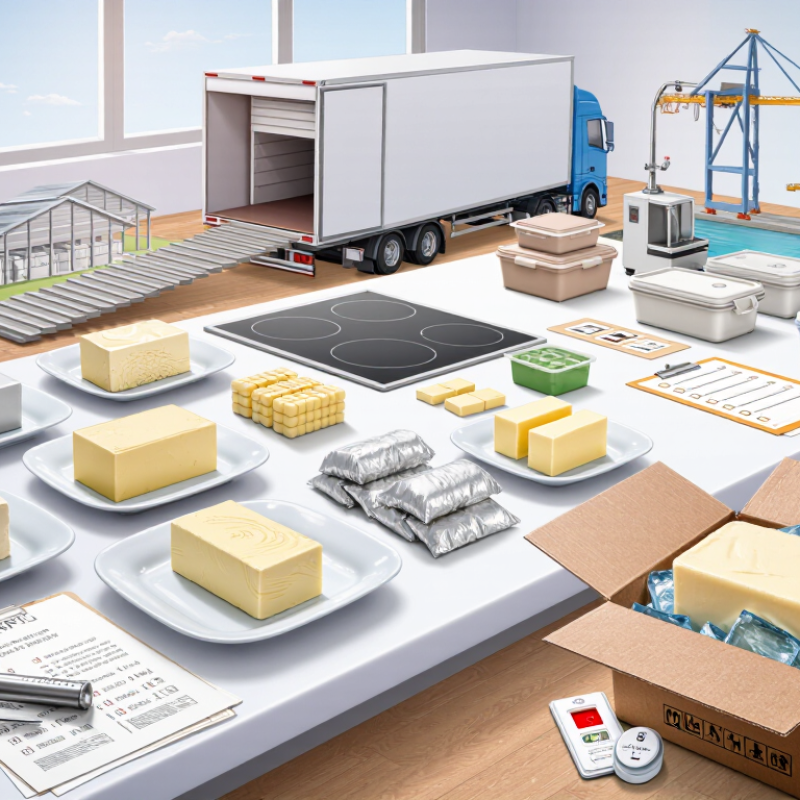
Before signing a contract, request samples from several production lots. Compare texture after refrigeration, melting behavior, aroma, and color consistency. I would also verify the cold-chain plan from factory loading to final delivery. Temperature records should be available, not merely promised. Some suppliers appear reliable during summer, then struggle during peak holiday demand. That risk deserves written service terms. A small pilot shipment can expose weak packaging, unclear documents, or uneven quality before larger volumes are committed.
How to Source European Butter in 2026?
Selected European butter-producing regions by estimated 2024 output, shown in thousand metric tonnes. Larger production bases may offer broader supplier options, while milk-fat availability, export logistics, certification, and contract capacity should also be assessed.
Data basis: 2024 national and EU dairy production estimates compiled from publicly reported Eurostat and USDA dairy-market statistics. Values are rounded estimates and represent country production, not any individual company or brand.
Verify Supplier Credentials, Certifications, and Export Compliance
How to Source European Butter in 2026?
A reliable sourcing process begins with the supplier’s legal identity. Request the registered company name, business address, VAT number, and EORI number. Confirm these details through official government or customs databases. The dairy establishment approval number should match the production site shown on invoices and certificates. Do not rely on a polished website alone.
Ask for current HACCP records, food safety certifications, recent audit results, and product specifications. Check butterfat content, moisture limits, salt level, allergens, shelf life, and storage temperature. Request independent laboratory results for microbiological and chemical testing. Traceability should work from finished cartons back to the milk collection stage. Test it with one batch. Small gaps matter.
Export compliance depends on the destination country. Confirm customs classification, country-of-origin rules, health certificates, commercial invoices, packing lists, and importer permits. Verify whether electronic certificates are accepted in 2026. Clarify Incoterms, cold-chain responsibility, and temperature records before signing. A refrigerated shipment can still fail if documents arrive late. Paperwork matters.
I would also inspect a sample shipment before committing to volume. Compare carton labels with the approved specification and transport documents. Review recall procedures and complaint response times. Certifications can expire, and suppliers may change facilities without clear notice. That risk is easy to underestimate. Keep written verification records, then reassess them before every seasonal contract.
| Verification Dimension | What to Verify | Required or Useful Evidence | 2026 Procurement Checkpoint | Acceptance Criteria |
|---|---|---|---|---|
| Legal supplier identity | Confirm the supplier is a legally registered food business established in an EU Member State or another approved European origin country. |
|
Revalidate the legal entity before signing a new contract or renewing an annual supply agreement. | All documents are current, consistent, and independently verifiable. |
| Approved establishment status | Verify that the dairy establishment is approved for handling or producing products of animal origin. |
|
Check the applicable national competent-authority database or request confirmation from the authority through the supplier. | Approval is active and covers dairy processing or butter production. |
| Butter composition | Confirm that the product legally qualifies as butter under EU marketing standards. |
|
For standard butter, verify the EU composition limits: at least 80% milk fat, no more than 16% water, and no more than 2% dry non-fat milk matter. | Analytical results and specifications meet the applicable EU standard for the declared product category. |
| Food-hygiene system | Assess whether the supplier operates documented hygiene controls based on HACCP principles. |
|
EU food businesses must comply with the applicable hygiene requirements, including Regulations (EC) No 852/2004 and 853/2004. | HACCP is implemented, records are maintained, and major audit findings are closed. |
| Third-party certification | Determine whether an independently audited food-safety certification is required by the buyer, retailer, or importer. |
|
Common voluntary schemes include BRCGS Food Safety, IFS Food, FSSC 22000, and ISO 22000. These do not replace legal compliance. | Certificate is valid, correctly scoped, and accepted by the intended customer or sales channel. |
| Traceability and recall readiness | Confirm one-step-back and one-step-forward traceability for milk, ingredients, packaging, and finished butter. |
|
Traceability should be maintained in accordance with Regulation (EC) No 178/2002 and tested through documented recall exercises. | The supplier can identify affected lots, quantities, customers, and production dates within its documented response process. |
| Product labeling | Check that the label and shipping artwork satisfy the destination-market rules. |
|
EU-market labeling generally falls under Regulation (EU) No 1169/2011; destination-country rules apply for non-EU imports. | Artwork is approved by the importer or regulatory reviewer before commercial shipment. |
| Cold-chain control | Verify that the declared storage and transport conditions protect product quality and safety. |
|
There is no single universal storage temperature for every butter format; the contractual product specification and destination requirements must control. | Temperature limits, monitoring frequency, deviation actions, and responsibilities are documented. |
| Export health documentation | Establish whether the destination requires an official veterinary or sanitary certificate for dairy products. |
|
For exports from the EU to non-EU markets, requirements are destination-specific. A relevant dairy-product certificate may be issued through the applicable official system, including TRACES NT where required. | Certificate format, statements, authority endorsement, and shipment details exactly match the destination requirement. |
| Customs classification | Confirm the correct tariff classification, customs value, origin, and import documentation. |
|
Butter is generally classified under HS heading 0405; the precise code can depend on the product form, fat content, and destination tariff schedule. | The importer, customs broker, or competent customs authority confirms the code before shipment. |
| Import eligibility | Check whether the destination permits imports from the specific origin country and approved establishment. |
|
Approval of the product category alone may not be sufficient; some markets require the individual production establishment to be listed or pre-approved. | Both the origin establishment and the product meet current destination-market eligibility rules. |
| Organic status | Use organic claims only when the product and supply chain are certified under the applicable organic legislation. |
|
EU organic production and labeling are governed by Regulation (EU) 2018/848; non-EU markets may impose additional certification or equivalence rules. | The certificate is valid on the shipment date and supports every organic claim used in the sales documentation. |
| Authenticity and adulteration controls | Assess controls against substitution, undeclared non-dairy fats, and inaccurate composition claims. |
|
Use risk-based testing for high-value or sensitive supply chains, particularly when the product is sold as pure butter. | Testing frequency is risk-based, results are acceptable, and out-of-specification actions are documented. |
| Microbiological and chemical testing | Verify that the supplier monitors relevant microbiological, chemical, and contaminant risks according to the product risk assessment. |
|
Testing should reflect the product, process, raw-material risk, legal limits, and destination-market requirements rather than relying on a single universal test panel. | Results meet applicable legal and contractual limits, with a documented response to adverse trends. |
| Packaging suitability | Confirm that packaging is suitable for fatty foods, protects the product, and complies with the destination-market requirements. |
|
For the EU market, food-contact materials must comply with the applicable EU framework and specific measures, including Regulation (EC) No 1935/2004 where relevant. | Packaging is food-contact compliant, fit for chilled or frozen logistics, and approved for the intended market. |
| Commercial contract controls | Define objective requirements for specification, delivery, claims, non-conformance, and recall costs. |
|
Incoterms® rules allocate delivery tasks, costs, and certain risks, but they do not replace customs, food-safety, or import-permit obligations. | All technical, regulatory, logistics, and financial responsibilities are written into the contract. |
| Supplier monitoring after approval | Maintain oversight after onboarding rather than treating certificates as permanent proof of compliance. |
|
Recheck credentials whenever the production site, ownership, formulation, certification status, export route, or destination regulation changes. | Supplier risk rating is current and overdue documents trigger a documented escalation. |
Compare Pricing, Packaging, Logistics, and Import Requirements
How to Source European Butter in 2026?
European butter pricing depends on more than the quoted tonnage. Compare butterfat content, grade, moisture limits, currency, and delivery terms. A low offer may exclude inland transport, duties, or cold-storage fees. Request prices for the same specification and shipment size. Monthly contracts can reduce volatility, but they may limit flexibility. Milk supply changes quickly.
Packaging affects both cost and product protection. Industrial buyers often choose 25-kilogram blocks in lined cartons. Smaller packs need stronger cases and more handling space. Confirm pallet dimensions, stacking limits, carton labels, and remaining shelf life. The butter should stay within the agreed temperature range, commonly around 0–5°C. Test the packaging before placing a large order. Paperwork can still expose weak planning.
Use refrigerated transport with temperature records from collection to delivery. Compare full-load, partial-load, and port-based routes. Ask who controls insurance, customs clearance, and delivery risk under the chosen Incoterm. Import requirements vary by destination, so verify the current tariff code, health certificate, importer registration, labeling rules, and food-safety documents with the relevant authority. Keep supplier specifications, batch records, and certificates together. A perfect spreadsheet cannot predict every border delay. I would also leave time for inspections, because optimistic schedules often fail.
Establish Quality Checks, Contracts, and Long-Term Supply Terms
How to Source European Butter in 2026?
European butter sourcing should begin with measurable quality checks, not attractive quotations. EU butter must generally contain at least 80% milk fat, with water limited to 16%. Require a certificate of analysis for every lot. Check fat content, moisture, free fatty acids, peroxide value, microbiological results, and sensory condition. Inspect cartons for clean seals, frozen surfaces, and readable lot codes. A spreadsheet helps. It cannot detect every defect.
Supply planning also needs credible market data. Eurostat reported EU milk collection above 160 million tonnes in 2023, supporting a broad dairy supply base. The USDA Foreign Agricultural Service’s 2025 Dairy and Products outlook placed EU butter production near 2.6 million metric tons. These figures suggest scale, but not guaranteed availability. Regional weather, feed costs, and processing capacity still matter. I would qualify at least two approved suppliers and test pilot shipments before committing large volumes.
Contracts should define product specification, approved origin, packaging, shelf life, temperature records, delivery windows, and lot rejection rights. Add traceability documents within 24 hours of a quality complaint. For long-term terms, use volume bands rather than rigid annual quantities. Link pricing to a transparent dairy benchmark, with review triggers for major market changes. Include safety-stock expectations and a practical force-majeure process. This is where many agreements remain vague. Buyers should challenge their own assumptions, especially when relying on one country, one season, or one inspection report.
Sources: Eurostat Dairy Statistics, 2024; USDA Foreign Agricultural Service, Dairy and Products Annual, 2025; European Commission Milk Market Observatory, 2025.
Related Posts
-
What is European Butter and Why is it Different from Other Butters?
-
Top 10 Benefits of Using European Butter for Your Recipes?
-
Top Lactose Free Products for 2026 Global Buyers?
-
10 Best Raw Milk Delivery Services You Should Try?
-
Top Types of Animal Farm Butter and Their Unique Benefits?
-
Top Grass Fed Milk Suppliers for Global Buyers?