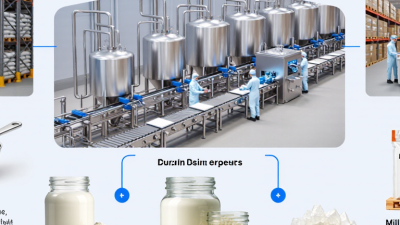
China Top 10 Cream Milk Manufacturers for Global Buyers?
Selecting China’s top 10 cream milk manufacturers requires more than checking factory size. Global buyers need dependable quality, export experience, transparent sourcing, and consistent cold-chain performance. A polished website is not enough.
The Food and Agriculture Organization reports that global milk production has remained above 900 million tonnes annually. Its dairy data also shows strong production concentration across Asia, Europe, and the Americas. The OECD-FAO Agricultural Outlook 2024–2033 expects continued growth in dairy consumption, especially in developing markets. These figures suggest opportunity, but they do not guarantee suitable suppliers.
This guide evaluates Chinese cream milk manufacturers through practical purchasing criteria. These include processing capacity, product customization, certifications, packaging formats, export records, and quality-control procedures. Factory audits still matter. Samples still matter more than promises.
Dairy technologist Dr. Harjinder Singh has described milk as “a complex food system, not simply a liquid.” That perspective is important for cream milk buyers. Fat stability, microbial control, texture, and storage conditions can change the final product significantly.
The companies featured here may differ in scale and market focus. Some serve retail brands, while others specialize in foodservice or industrial ingredients. No ranking is flawless. Public company data can be incomplete, and supplier capabilities may change after publication.
Buyers should verify current certifications, production dates, minimum order quantities, and destination-country requirements directly. A factory that performs well in one market may not suit another. Careful comparison remains essential.

China’s Cream-Milk Industry: 2023–2024 Production, Import, and Demand Data
China’s raw-milk output reached 41.97 million tonnes in 2023, then fell to 40.79 million tonnes in 2024, according to the National Bureau of Statistics. That is a decline of about 2.8 percent. For buyers, the change matters: domestic supply remains substantial, but falling output can tighten availability in some regions. Farm-gate milk is not the same product as processed cream milk, however. Processing capacity, fat content, and cold-chain access all affect what manufacturers can actually supply.
Imports add another layer. China brought in roughly 2.7 million tonnes of dairy products in each year, based on broad customs categories. This total includes products beyond liquid milk and cream, so it should not be treated as a cream-milk import figure. Check the product category and unit before comparing suppliers. Demand is also uneven: food manufacturers may value consistent fat levels and bulk delivery, while retail buyers often focus on taste, packaging, and shelf life. These are practical signals, not a complete measure of consumer demand. Production totals alone can mislead. A careful sourcing decision needs product-specific import data, regional demand checks, and verified factory specifications.
How to Select Manufacturers Using GB Standards, HACCP, and ISO 22000
Choosing among China’s top 10 cream milk manufacturers requires more than comparing prices. Start by checking whether the facility follows applicable GB standards for dairy processing, product safety, additives, testing, and labeling. Request the exact standard numbers, product scope, and latest inspection records. A certificate without matching production details proves little.
HACCP should show identified hazards, critical control points, monitoring limits, and corrective actions. ISO 22000 adds a wider food safety management structure, including communication, verification, and continual improvement. Ask how milk is received, chilled, pasteurized, filled, and transported. Review batch coding, laboratory results, allergen controls, and traceability exercises. A reliable manufacturer should explain these steps clearly, not hide behind certificates.
Tips: Compare at least three factories. Check certificate validity and issuing bodies. Request recent COAs and mock-recall records. If possible, arrange a video or onsite audit. Look closely at cleaning records and temperature logs. Small gaps matter. One practical weakness is relying too heavily on paperwork; documents can be outdated or incomplete. Recheck claims against production evidence, sample testing, and consistent communication. The best supplier is not always the largest. It is the one that can repeatedly deliver safe, compliant cream milk under your required specifications.
China’s Top 10 Cream-Milk Manufacturers Ranked by Capacity and Export Data
Ranking China’s cream-milk manufacturers by capacity and export data requires more than comparing factory size. Buyers should examine annual processing capacity, actual production, and shipment records separately. A large facility does not always run at full capacity. Export figures also change with demand and product specifications.
Useful evidence includes audited production reports, export declarations, and certificates showing product composition. Ask for recent figures, not broad claims. Check whether capacity refers to cream-milk products specifically or a wider dairy operation. That detail can shift a ranking. Small differences matter.
Export performance should be assessed by shipment consistency, destination markets, and cold-chain handling. Request sample documents and confirm that the reported data covers comparable periods. A manufacturer with steady monthly shipments may be a safer sourcing partner than one reporting a single high-volume year. Still, public data can be incomplete, and estimates deserve caution. A top-ten list is a starting point, not a final decision. Check the numbers directly.
Product Comparison: Fat Content, Shelf Life, Packaging, and MOQ Requirements
When comparing China’s top cream milk manufacturers, global buyers should examine fat content before price. “Cream milk” may mean a rich dairy beverage or a cream-based formulation. Confirm total fat, milk solids, protein, sugar, and stabilizer levels on the specification sheet. A 3.2% fat product feels lighter, while 6% or higher gives a thicker mouthfeel. Taste tests matter.
Shelf life depends on processing and distribution. UHT cream milk can often remain stable for six to twelve months when unopened. Chilled products may last only fifteen to thirty days. Ask for processing records, storage temperatures, microbiological results, and real batch samples. Packaging also affects performance. Aseptic cartons protect against light and oxygen, while PET bottles offer easier handling but may need stronger barrier layers. Check seal strength, leakage rates, pallet dimensions, and label compatibility with your market.
MOQ requirements can change the real purchase cost. Standard formulas may start from several hundred cases, while custom fat levels, printed packaging, or private formulas often require pallet-scale orders. Request separate quotations for product, packaging molds, testing, and freight. Do not compare only the factory price. One overlooked carton specification can disrupt a full shipment. Some supplier sheets also show broad shelf-life claims without enough storage evidence. That deserves a second review. A smaller trial order may be slower, but it reveals texture, filling accuracy, and packaging damage before larger production.
Cream Product Comparison for Global Buyers
Fat-content thresholds for selected cream categories; these are product standards, not rankings or specifications for individual manufacturers.
The chart shows minimum fat thresholds under U.S. standards of identity: half-and-half, 10.5%; light cream, 18%; light whipping cream, 30%; and heavy cream, 36%. Shelf life, packaging formats, and minimum order quantities are supplier- and product-specific, so buyers should confirm them directly rather than assume universal values. Source: U.S. FDA, 21 CFR Part 131.
Global Buyer Checklist: Certifications, Cold-Chain Logistics, and Trade Terms
When evaluating China’s cream milk manufacturers, global buyers should verify certifications before discussing prices. Request current HACCP and ISO 22000 certificates, factory audit reports, product specifications, and export health documents. Certification scope matters; it should cover the actual plant and dairy product. Check issuing bodies independently. A scanned certificate alone is weak evidence.
Cold-chain performance deserves equal attention. Ask for the required storage temperature, loading temperature, shelf life, and transport tolerance. Fresh cream milk commonly needs chilled handling, but the exact range depends on formulation and packaging. Review reefer records, temperature logger data, and loading photographs. A practical test shipment can reveal delays, damaged cartons, or unstable temperatures. Keep samples from each batch. Small details matter.
Trade terms must match operational control. Under FOB, the buyer usually manages the main ocean freight. CIF may simplify freight booking, but insurance coverage and destination charges need review. DAP can reduce coordination work, yet import clearance usually remains the buyer’s responsibility. Confirm payment milestones, inspection rights, claim periods, packaging standards, and documents before signing. Include batch codes and temperature requirements in the contract. A checklist can still miss port congestion or holiday delays. I would leave a buffer in the delivery plan, even when the supplier promises a perfect schedule.
Related Posts
-
What Are the Top 10 Milk Ingredients Suppliers in China?
-

What is Bulk Butter and How to Source It Effectively?
-
What Are the Essential Milk Ingredients You Should Know?
-

Top Benefits of Fresh Milk for Health and Wellness?
-
2026 Best Dairy Free Butter Options for Health Conscious Consumers?
-

What is Animal Farm Butter and Its Significance in Literature?