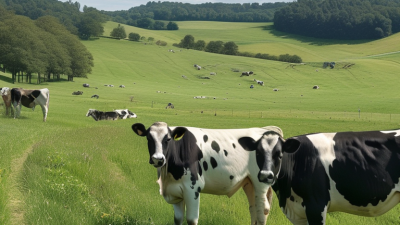
China Top Grass Fed Raw Milk Suppliers for Global Buyers
Global buyers evaluating China’s grass fed raw milk suppliers need more than a pasture claim. They need clear evidence of farm practices, milk handling, and batch traceability. The OECD-FAO Agricultural Outlook 2024–2033 examines continued growth in global dairy production and trade, while underscoring how production systems and regional conditions shape supply. Those differences matter. A supplier’s wording alone cannot confirm how cows are fed or how milk is collected.
Mark McAfee, a U.S. dairy producer and raw-milk advocate, has described raw milk as “a living food.” That phrase reflects a viewpoint, not a verified quality standard or safety guarantee. Buyers should treat it accordingly. Ask suppliers for feed records, veterinary protocols, laboratory results, refrigeration logs, and documentation linking each batch to its farm. A chilled sample and a clean collection tank are concrete details; neither replaces independent testing. Raw milk also carries food-safety risks, so buyers should review applicable requirements with qualified local authorities before making sourcing decisions.
This guide compares China-based suppliers through practical questions: What does “grass fed” mean on each farm? How is that claim documented? Can the supplier provide consistent specifications and transparent records? Some answers may remain incomplete. That is worth acknowledging. Careful due diligence helps global buyers distinguish a persuasive sales description from evidence they can actually assess.
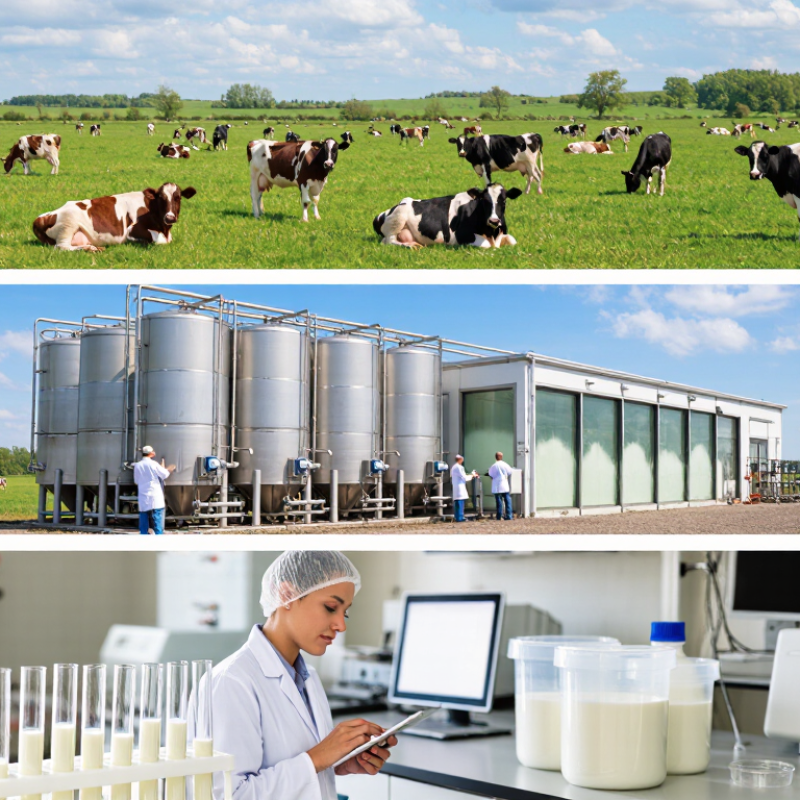
China’s Raw-Milk Market: 41.97 Million Tonnes in 2023 (NBS)
China Top Grass Fed Raw Milk Suppliers for Global Buyers
China produced 41.97 million tonnes of raw milk in 2023, according to the National Bureau of Statistics. This figure shows a substantial supply base for international buyers exploring grass-fed sourcing options. It also reflects China’s diverse dairy regions, from northern grasslands to temperate farming areas. Still, national output does not guarantee consistent farm-level quality.
Grass-fed claims need evidence. Buyers should request ration records, pasture access details, veterinary controls, and recent laboratory reports. Pasture photographs are not enough. A reliable supplier should explain milking hygiene, rapid cooling, batch identification, and transport conditions. Raw milk needs careful temperature control, often near 4°C, from collection through delivery.
In practical procurement, I would compare somatic cell counts, microbial results, antibiotic-residue testing, and seasonal production records. Import requirements differ by destination, so certificates and facility approvals must match the receiving country’s rules. The 41.97-million-tonne figure is a useful market reference, not proof of every supplier’s performance. That distinction matters. Some suppliers may describe farms as grass-fed while using significant supplementary feed, which requires honest clarification. Buyers should audit before signing long-term contracts and keep testing plans independent where possible. Mistakes can happen, especially when translated documents hide technical details.
China’s Raw-Milk Market: 41.97 Million Tonnes in 2023
China’s milk production increased steadily from 32.01 million tonnes in 2019 to 41.97 million tonnes in 2023, according to data from China’s National Bureau of Statistics (NBS). The sustained growth highlights the expanding scale of China’s dairy supply market for global buyers.
Source: National Bureau of Statistics of China. Figures represent annual milk production and are shown in million tonnes.
Grass-Fed Definitions: Feed Traceability and China’s GB 19301-2010 Standard
For global buyers, “grass-fed” should describe a verifiable feeding system, not a marketing phrase. In China, GB 19301-2010 sets food safety requirements for raw milk. However, it does not create one universal definition of grass-fed milk. Buyers should define the claim in writing. This may include pasture access, forage percentages, grain limits, and the qualifying period.
Reliable suppliers should connect each milk batch to farm-level records. Useful evidence includes pasture logs, feed purchase invoices, ration sheets, and animal identification records. These documents should match collection dates and transport records. On-site checks can reveal practical details, such as stored hay, feeding equipment, and clean milking areas. Small gaps matter.
Traceability should continue through testing and cold-chain control. Review laboratory results for microbiological, chemical, and contaminant risks under applicable requirements. Ask how nonconforming batches are isolated and investigated. A polished certificate is not enough.
Definitions still vary.
Some suppliers may use “grass-fed” for seasonal pasture access, while others require a predominantly forage-based diet. That difference can affect purchasing decisions and consumer claims. Buyers should confirm the current version and application of GB 19301-2010 with qualified regulatory professionals. Standards and local practices may change. Records can also be incomplete, despite good intentions. Cross-checking documents, farm observations, and batch data remains essential.
Supplier Regions: Herd Scale, Pasture Models, and Export Capacity
China Top Grass Fed Raw Milk Suppliers for Global Buyers
Supplier Regions: Herd Scale, Pasture Models, and Export Capacity
China’s grassland regions offer different sourcing conditions. Inner Mongolia has broad pasture areas and established dairy infrastructure. Xinjiang combines large farms with long-distance logistics. Qinghai’s high-altitude grazing systems may suit smaller, regionally focused suppliers. Conditions vary by season, so a map alone cannot confirm year-round pasture access.
Herd scale affects consistency and oversight. Large operations may provide steadier volumes, but buyers should ask how grazing days are recorded and feed changes are managed. Smaller herds can offer closer pasture control, though supply may shift with weather. Export readiness also depends on tested processing facilities, traceable batches, chilled transport, and documentation accepted by the buyer’s market. “Grass-fed” needs a clear definition; it should not replace evidence of feeding practices or milk testing. Raw milk requires especially careful checks for microbial quality and cold-chain control.
Tips: Request recent herd and pasture records, batch-level test results, and a written temperature-control plan. Confirm import requirements before contracting. A supplier’s export experience matters, but paperwork can still vary by shipment. And one detail is easy to miss: distant pastures can increase collection time, even with strong local production.
Quality Benchmarks: Protein, Fat, Bacteria, and SCC Testing Requirements
For global buyers, “grass-fed” is not a substitute for measurable milk quality. USDA FoodData Central lists typical whole cow’s milk at about 3.25% fat and 3.15% protein. These are useful reference points, not guaranteed specifications for raw milk. Season, breed, feed, and lactation stage can shift results. Request recent, farm-level test records and agree on sampling frequency before comparing suppliers. A chilled sample should be collected in a clean container and tested promptly; otherwise, handling can distort the result.
Bacterial counts and somatic cell count (SCC) need separate attention. ISO 4833-1 describes a colony-count method for aerobic microorganisms, while ISO 13366-1 covers microscopic SCC measurement. The methods support consistent testing; they do not set one universal buyer limit. The National Mastitis Council commonly treats 200,000 cells per millilitre as a useful cow-level indicator for possible udder infection, but this is not a shipment acceptance rule. Ask laboratories to state the method, units, detection limits, and sample temperature. Keep duplicate samples when practical. Small sampling errors matter. I would not accept a low SCC as proof of low bacterial load; they measure different risks. Publish thresholds in the purchase specification, then review actual seasonal data rather than relying on a single attractive certificate.
Global Buyer Due Diligence: Certifications, Cold Chain, and Trade Terms
China Top Grass Fed Raw Milk Suppliers for Global Buyers
Global Buyer Due Diligence: Certifications, Cold Chain, and Trade Terms
Choosing a grass-fed raw milk supplier requires more than reviewing a product sheet. Ask for current certificates and confirm their scope, issuing body, and expiry date. Check whether audits cover farms, processing sites, and transport partners. Request batch-specific test results, traceability records, and a clear description of the animals’ feed practices. Documents should match the shipment, not just the supplier’s general profile. Small gaps matter.
Cold-chain records deserve close attention. Ask how quickly milk is chilled after collection, what temperature range is maintained, and how readings are logged during transit. A temperature chart is more useful than a broad promise. Discuss packaging, loading procedures, expected transit time, and what happens if a shipment is delayed. Raw milk is highly perishable, so buyers should confirm that import requirements and handling plans are appropriate for the destination before placing an order. Trade terms should clearly assign responsibility for insurance, freight, inspections, and delivery risks. Ambiguity can become expensive.
Tips: Request a sample shipment record, including timestamps and temperature readings. Compare the stated production capacity with seasonal supply and lead times. Put agreed specifications, rejection procedures, and payment milestones in writing. If a document seems incomplete, ask again. That can feel awkward, but it is better than guessing.
China Top Grass Fed Raw Milk Suppliers for Global Buyers - Global Buyer Due Diligence: Certifications, Cold Chain, and Trade Terms
| Due Diligence Area | What Buyers Should Verify | Evidence to Request | Buyer Action |
|---|---|---|---|
| Product and legal definition | Confirm whether the product is raw milk, pasteurized milk, or another dairy product. Import rules differ by product and destination. | Product specification; processing-flow diagram; applicable product classification and regulatory documents. | Confirm import eligibility with the destination-country competent authority and customs broker before negotiating shipment. |
| Export and market access | Check that the exporting country, product category, and production establishment are eligible for the intended destination market. | Current establishment registration or approval details, where required; applicable bilateral protocol; export health or veterinary certificate requirements. | Verify status directly against official government or competent-authority sources. Do not rely solely on a supplier’s statement. |
| Food-safety management | Assess controls for hazards, sanitation, milking hygiene, water quality, personnel hygiene, and corrective actions. | Food-safety plan; hazard analysis; recent audit reports; sanitation and testing records. | Check the audit scope, site address, validity dates, and whether corrective actions have been closed. |
| Certifications | Distinguish management-system certifications from legal export approval and product-specific claims. HACCP, ISO 22000, and FSSC 22000 relate to food-safety management; they do not by themselves establish import eligibility. | Current certificates and scope statements; issuing-body details; product or farm certification records where a claim such as organic is made. | Validate certificates with the issuing or accreditation body and confirm that the certified site and activities match the proposed supply. |
| Grass-fed claim | Agree on the meaning of “grass fed,” including eligible feed, supplementation, grazing period, and verification method. Definitions and labeling rules vary by market. | Written claim specification; feed and grazing records; traceability documents; independent verification, if used. | Align the claim with destination-market labeling requirements and include the agreed definition in the contract. |
| Raw-milk microbiological controls | Review the supplier’s testing program and applicable limits for the destination market. Requirements vary by jurisdiction and product use. | Recent laboratory reports, sampling plan, methods used, laboratory accreditation details, and records of out-of-specification results. | Agree testing frequency, acceptance criteria, notification timelines, and disposition of non-conforming lots before shipment. |
| Residues and contaminants | Check controls for veterinary-drug residues, prohibited substances, and other contaminants required by the importing market. | Residue-monitoring plan; feed and treatment records; relevant test results; withdrawal-period procedures. | Confirm that test methods and limits meet destination requirements, and define responsibility for additional testing. |
| Cold chain | Establish the required temperature range and maximum time limits from milking through loading, transit, and delivery. Requirements depend on regulations, product specification, and validated process. | Cooling records; calibrated sensor records; storage and transport procedures; temperature-monitoring plan. | Set shipment-specific temperature limits and excursion procedures in writing. Do not assume one temperature standard applies in every market. |
| Packaging and transport | Confirm food-contact suitability, tanker or container sanitation, seal controls, and compatibility with the product and journey duration. | Packaging specifications; cleaning and sanitation logs; loading records; seal numbers; transport-provider procedures. | Agree who supplies and cleans equipment, how seals are recorded, and how the buyer receives temperature and delivery records. |
| Traceability and recall | Assess whether each shipment can be linked to the collection period, farm or source group, processing site, testing records, and transport unit. | Lot-coding procedure; sample traceability exercise; recall plan; contact and escalation list. | Request a documented mock-recall result and define rapid notification duties for safety incidents or regulatory alerts. |
| Trade terms and delivery point | State the selected Incoterms® 2020 rule and precise named place or port. The rule allocates specified costs, risks, and tasks; it does not replace the sales contract. | Quotation showing the rule, named place, shipment schedule, insurance arrangements where applicable, and document responsibilities. | Have the buyer and seller identify who handles export clearance, import clearance, freight, insurance, and unloading under the chosen rule. |
| Payment and quality claims | Set payment milestones, required documents, inspection rights, acceptance criteria, and procedures for shortages, temperature excursions, or failed tests. | Draft sales contract; agreed product specification; inspection and claims procedure; banking-document requirements. | Define claim deadlines, evidence requirements, remedies, governing law, and dispute-resolution mechanism before the first shipment. |
| Shipment documentation | Confirm the exact documents required by the destination authority and the commercial transaction. | Commercial invoice; packing or loading details as applicable; transport document; certificate of origin if required; official health or veterinary documents where applicable. | Share draft documents with the importer and customs broker for review before dispatch; requirements vary by destination and product. |
Buyer note: Import eligibility, certification, labeling, testing, and temperature requirements depend on the product and destination market. Confirm current requirements with the relevant competent authorities and qualified trade professionals before contracting or shipping.
Related Posts
-
Top Grass Fed Milk Suppliers for Global Buyers?
-
Top 10 Benefits of Grass Fed Raw Milk for Health and Wellness
-
10 Best Raw Milk Delivery Services You Should Try?
-
Top 10 Benefits of Grass Fed Raw Milk for Global Buyers?
-
Order Milk at the 139th Canton Fair for Global Sourcing?
-

Why Choose Plant Butter for Your Cooking Needs?