Top 10 PCB Manufacturers You Should Know About?
In the rapidly evolving electronics landscape, understanding the role of a PCB manufacturer is crucial. As technology advances, the demand for high-quality printed circuit boards grows. Dr. Sarah Thompson, a leading expert in PCB manufacturing, once stated, "A reliable PCB manufacturer is vital for innovation and efficiency." Her insights reflect the importance of selecting the right partner in this industry.
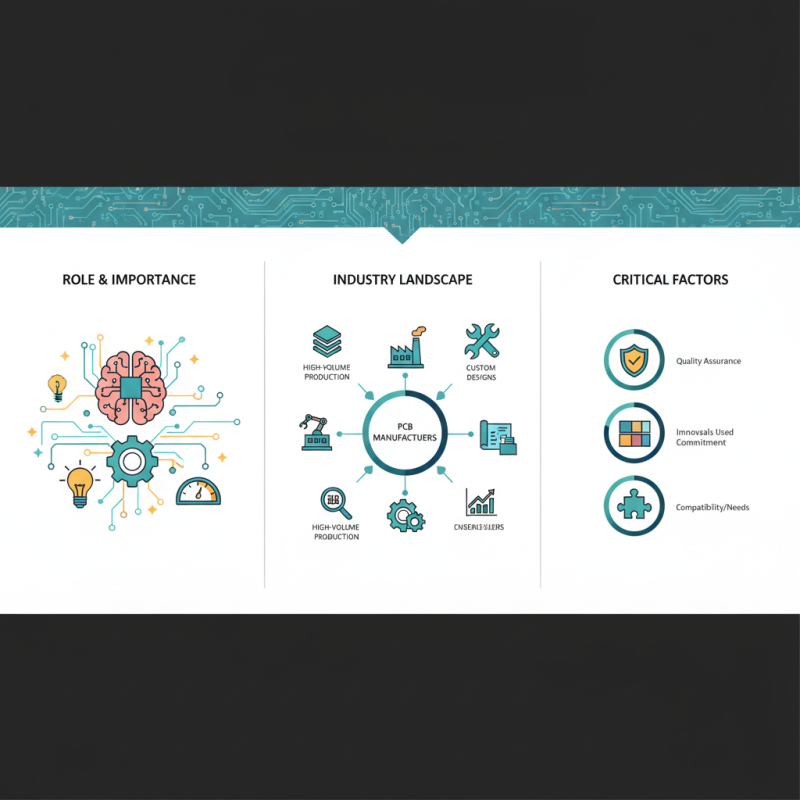
The PCB manufacturing sector is competitive, with several key players shaping the market. Companies vary in size and specialty, leading to a diverse array of products. Some focus on high-volume production while others prioritize custom designs. Each manufacturer has unique strengths and weaknesses, which can confuse buyers.
As we explore the top PCB manufacturers to consider, we must remain critical. It's essential to assess their capabilities beyond mere pricing. Compatibility with your specific needs matters greatly. Quality assurance, materials used, and their commitment to innovation are telling factors when choosing a PCB manufacturer. Ultimately, informed choices can drive success in your electronic projects.
Overview of PCB Manufacturing Industry
The PCB manufacturing industry plays a crucial role in electronics. It provides the backbone for numerous devices we use daily. The sector is marked by rapid advancements and increasing demand. As devices become more complex, so do the requirements for printed circuit boards. This creates both opportunities and challenges for manufacturers.
Many companies are investing heavily in research and development. This focus helps them keep up with technological trends. However, some struggle to adapt to these rapid changes. The diversity in projects, from small prototypes to large-scale productions, poses challenges in quality control. It’s vital for manufacturers to stay agile yet robust. Sustainability is another issue worth noting. The industry must find ways to reduce waste and improve efficiency.
Over time, the landscape of PCB manufacturing has shifted. New materials and technologies emerge frequently, often requiring a reevaluation of existing processes. This can lead to complications in supply chains and production timelines. While innovation is key, maintaining quality and reliability remains a constant challenge. It’s a delicate balance that the industry must navigate continuously.
Top 10 PCB Manufacturers You Should Know About?
| Rank | Manufacturing Location | Production Capacity (sq. ft.) | Key Technologies | Market Focus |
|---|---|---|---|---|
| 1 | China | 1,500,000 | HDI, Multilayer | Consumer Electronics |
| 2 | Taiwan | 900,000 | Thin Film, Rigid | Telecommunications |
| 3 | USA | 800,000 | High Frequency, Flexible | Aerospace |
| 4 | Germany | 600,000 | Multilayer, HDI | Industrial |
| 5 | Japan | 500,000 | Advanced Circuitry | Automotive |
| 6 | South Korea | 450,000 | Flexible Circuit, Rigid-Flex | Electronics |
| 7 | India | 400,000 | Multilayer, Rigid | Consumer Goods |
| 8 | Malaysia | 350,000 | High Density, Rigid | Computing |
| 9 | Italy | 300,000 | PCB Assembly | Medical Devices |
| 10 | Singapore | 250,000 | Rigid, Multilayer | Consumer Electronics |

Criteria for Selecting Top PCB Manufacturers
When selecting a top PCB manufacturer, several criteria play a critical role. Quality of materials is essential. High-quality materials ensure durability and performance. Manufacturers should provide certifications that guarantee their materials meet industry standards. This builds trust in their products.
Another vital factor is the manufacturer's experience. A longer track record often indicates reliability. Experienced manufacturers are more likely to understand complex requirements. They can adapt quickly to design changes. It’s important to review past projects. Look for similar applications to your needs.
Tips: Always ask for samples. This helps you evaluate quality directly. Don't hesitate to inquire about production capacity. Can they meet your demands in a timely manner? Be cautious of prices that seem too low; they may compromise quality. Remember, communication matters. Effective communication can streamline the entire process.
Choosing the right PCB manufacturer can be challenging. Not every option will suit your project's unique needs. Take the time to explore various manufacturers. Reflect on what aspects are most important to you. Balancing quality and cost is key in this decision.
Profiles of the Leading PCB Manufacturers
The world of printed circuit boards (PCBs) is vast. Numerous manufacturers specialize in producing these integral components. Understanding their profiles can aid in making informed choices. Leading firms often emphasize quality and innovation. They invest heavily in technology to stay ahead.
When selecting a manufacturer, consider your specific needs. Not every company excels in every area. Some might focus on high-volume production. Others may prioritize rapid prototyping or specialized materials. Quality assurance is crucial; examine their testing methodologies. Many manufacturers showcase certifications as proof of reliability.
Tips: Don’t overlook customer feedback. Speaking with other businesses can yield insights. This can reveal strengths and weaknesses in production processes. Equally important, evaluate lead times. A quick turnaround can often make or break a project. Think about long-term partnerships for sustained support. Make sure the manufacturer aligns with your team's capabilities.
Innovative Technologies in PCB Production
In the world of printed circuit boards (PCBs), innovative technologies are shaping production methods. Manufacturers are constantly seeking ways to enhance quality and efficiency. One exciting development is the use of advanced materials. These materials can lead to lighter and more durable PCBs. For example, alternatives to traditional copper are being tested. Some are promising but need further research.
Another significant trend is automation in the manufacturing process. Automated assembly lines reduce the chances of human error. This can result in a more consistent product. However, reliance on machines also raises concerns. Not all processes can be automated seamlessly. Some intricate designs may still require human oversight.
Furthermore, environmental concerns are pushing for greener practices. Companies are exploring eco-friendly materials and recycling old PCBs. This is a step forward but not without challenges. Innovative chemical processes are being developed, yet some still struggle to be fully effective. The balance between innovation and practicality remains a key focus. Each step forward invites reflection on its larger impact.
Future Trends in PCB Manufacturing and Market Growth
The PCB manufacturing industry is evolving rapidly. New technologies are pushing boundaries, enabling smaller and more efficient designs. As demand for smart devices rises, manufacturers must adapt quickly. Sustainability is also becoming key. Companies are exploring eco-friendly materials and processes. This reflects a growing concern for environmental impact.
Tips: Embrace flexibility in operations. Adapt to changing technologies and market demands.
Market growth is notable, particularly in sectors like automotive and healthcare. The rise of electric vehicles increases the need for advanced PCBs. This growth may create challenges in quality control. Manufacturers must ensure high standards while scaling production.
Tips: Invest in quality assurance measures. Train staff to maintain standards. Stay ahead of emerging trends.
Despite advancements, some companies may struggle. Those that resist change risk falling behind. Continuous innovation is necessary for success in a competitive landscape. Keeping an open mind to new ideas can foster improvement.
