10 Wind Flag Tips for Global Buyers?
Buying a Wind Flag for global markets involves more than choosing bright colors and a tall pole. Buyers must evaluate fabric quality, printing accuracy, wind performance, packaging, and supplier reliability. A flag that looks impressive indoors may fade quickly under strong sunlight or tear during coastal weather. Small details matter.
This guide presents ten practical tips for international buyers who need dependable display products. It considers polyester weight, edge stitching, dye methods, pole flexibility, base stability, and transport protection. Product samples should be checked outdoors, not only under warehouse lighting. Ask suppliers for material specifications, production photos, test records, and clear quality-control procedures. Experience shows that vague answers often create expensive problems later.
Climate changes everything. A lightweight base may work on a sheltered patio but fail beside an exposed road. Salt air can also affect metal components and printed surfaces. Buyers should compare supplier samples under realistic conditions, including sunlight, rain, and repeated assembly. Local labeling, packaging, and safety requirements also deserve attention before large orders are placed. That step is easy to overlook.
No supplier or material performs perfectly in every market. That limitation should be acknowledged. A lower-cost Wind Flag may offer acceptable value for short campaigns, while a reinforced version suits repeated outdoor use. The right decision depends on location, display duration, brand expectations, and maintenance plans. Careful questions, documented specifications, and transparent communication create a more reliable purchasing process. Looks can deceive. Performance matters more.
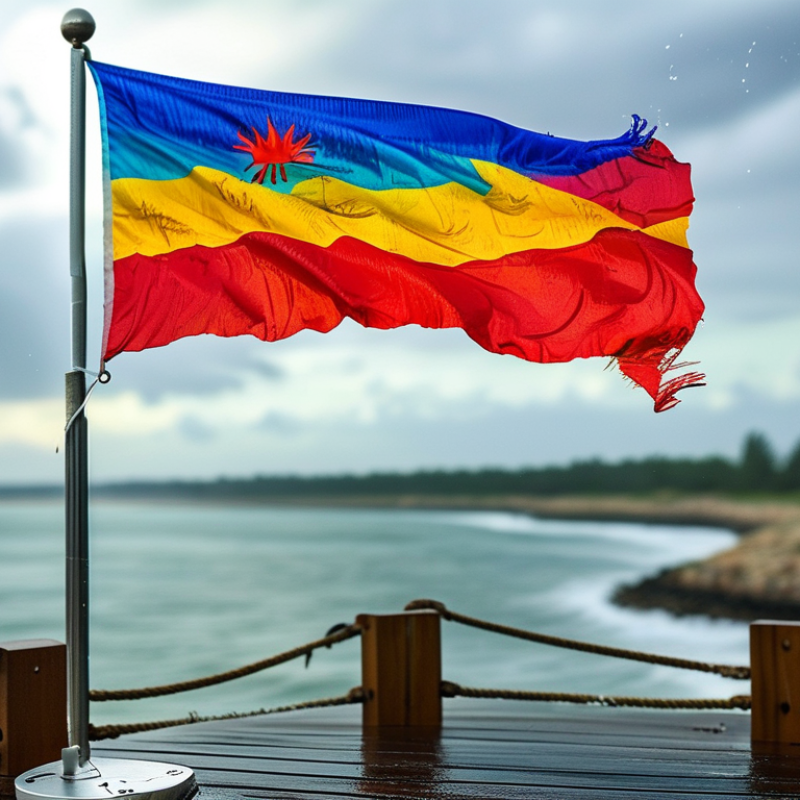
Understanding Wind Flag Types and Their Global Uses
Wind flags serve different purposes across markets, so type selection matters. Feather flags curve inward and remain readable from both sides. Teardrop flags hold a fuller graphic in changing wind. Rectangular flags provide more print space, but they need stronger poles. Vertical banners suit narrow shopfronts and crowded exhibition aisles. Beach flags use ground spikes, water bases, or cross bases. Choose the base after checking soil, pavement, and transport conditions.
The World Meteorological Organization reported that 2023 reached 1.45°C above the 1850–1900 average. Weather exposure is becoming harder to ignore. Buyers should request fabric weight, stitching details, UV testing, and a documented wind limit. ISO 105-B02 offers a recognized method for testing textile colour fastness under xenon light. It does not guarantee outdoor durability. That distinction is important. World Bank data shows roughly 57% of people lived in urban areas in 2023. Compact cities therefore favour lightweight flags, quick assembly, and small ballast systems. Retailers often choose teardrop styles for entrances, while event teams prefer feather flags for directional visibility. Construction and tourism sites may need rectangular formats with reinforced hems. A common mistake is treating every flag as universal. It is not. I have seen attractive displays fail because the base ignored wet ground, sudden gusts, or repeated folding. Slightly conservative sizing usually works better. Still, wind ratings should come from testing, not guesswork.

Defining Material and Construction Requirements
Global buyers should define wind flag requirements before discussing colors or logos. Start with fabric weight, weave, and finishing. A practical range is 110–150 gsm for polyester flags used outdoors. Lighter fabric moves better, but it can tear faster around the sleeve. The Textile Exchange Materials Market Report 2024 reported 124 million tonnes of global fiber production in 2023. Polyester represented about 57% of that volume, showing its industrial availability and consistent supply. Recycled polyester may support sustainability targets, but buyers should request verified content documentation.
Construction details decide field performance. Specify a knitted or woven polyester fabric, reinforced sleeve seams, and double stitching along exposed edges. Ask for colorfastness testing, especially when flags face strong sunlight. ISO 105-B02 can guide artificial light colorfastness evaluation. A practical target is at least grade 6 for demanding outdoor use, although testing methods and interpretations vary. That distinction matters.
Do not overlook the pole pocket. A 5–8 centimeter reinforced sleeve can reduce abrasion against fiberglass or aluminum poles. Add bar-tacked stress points at the top and bottom. Specify hem allowance, thread type, and acceptable dimensional tolerance in the purchase order. Small details matter. ASTM D751 seam-strength testing can help compare samples, but it does not fully predict storm damage. A larger base improves stability, yet increases shipping weight and storage cost. I have seen buyers over-specify fabric while ignoring the base connection. That is an expensive mistake. Suppliers should provide pre-production samples, wash or abrasion evidence, and photographs of seam construction before bulk approval.
Checking Size, Visibility, and Weather Resistance
10 Wind Flag Tips for Global Buyers: Checking Size, Visibility, and Weather Resistance
Size should match the viewing distance, mounting height, and expected wind exposure. A 2.5-meter flag may suit a shop entrance, while a 4-meter flag needs more open space and stronger hardware. Measure the full pole height, not only the printed fabric. The World Meteorological Organization reported that 2023 was about 1.45°C above the pre-industrial average, increasing pressure from heat, sunlight, and severe weather. Small details matter.
Visibility depends on contrast, fabric tension, and movement. Use large lettering and keep key messages short. At busy roads, drivers have limited attention, so dense text can disappear visually. The U.S. Federal Highway Administration recommends designing temporary traffic information for quick recognition and legibility.
A flag can look bright indoors but become dull outdoors. Test it from 20 to 30 meters away. Ask someone unfamiliar with the design to read it.
Weather resistance requires more than a waterproof claim. Check UV exposure data, tear strength, seam construction, and colorfastness testing. ASTM G154 and ISO 4892-3 provide recognized methods for accelerated ultraviolet exposure.
NOAA recorded 28 separate billion-dollar weather and climate disasters in the United States during 2023. That figure is not a global prediction, but it shows why outdoor products need realistic safety margins.
I would request test conditions, fabric weight, and replacement-part availability before ordering. Even then, forecasts remain uncertain. Loose stitching still happens.
Comparing Suppliers, Certifications, and Customization Options
10 Wind Flag Tips for Global Buyers
Comparing Suppliers, Certifications, and Customization Options
Choosing a wind flag supplier requires more than comparing quoted prices. Request a physical sample before approving a large order. Check stitching around the sleeve, fabric weight, print sharpness, and pole flexibility. A useful sample should survive repeated assembly and outdoor handling. Ask for production photos, inspection records, and references from comparable export projects. These details reveal consistency better than polished catalog images.
Certifications deserve careful checking. Confirm the certificate number, issuing organization, test scope, and expiration date. Quality management certification can indicate controlled production, but it does not guarantee perfect flags. Request fabric test reports for colorfastness, UV exposure, tearing strength, and restricted substances. Requirements differ by destination. Your customs broker or compliance specialist should confirm applicable documentation. Do not accept a scanned logo as proof.
Customization can include size, shape, sleeve position, base type, pole material, edge finishing, and packaging. Provide vector artwork with exact color references. Ask whether the supplier can match colors across repeat orders. Confirm minimum quantities, sample fees, replacement terms, and realistic lead times in writing. A double-sided flag may look stronger, yet it can increase weight and reduce wind movement. That trade-off is easy to overlook. No checklist is perfect. Recheck details after sampling, because a small hem change can affect installation.
Planning International Shipping, Installation, and Maintenance
10 Wind Flag Tips for Global Buyers
International shipping starts with accurate product data. UNCTAD’s Review of Maritime Transport 2024 reports that over 80% of global merchandise trade moves by sea. Confirm packed dimensions, gross weight, carton strength, and customs documents before booking space. Tip 1: Use moisture-resistant inner packaging. Tip 2: Add corner protection around poles and fittings. Tip 3: Photograph every packed carton. Tip 4: Keep spare flags in a separate package. Small omissions create expensive delays.
Installation needs local planning, not just attractive artwork. Check wind exposure, ground conditions, pole height, and access equipment before delivery. ISO 4892-3 testing shows why ultraviolet exposure matters for outdoor textiles, but laboratory results cannot perfectly predict every climate. Tip 5: Request fabric test evidence. Tip 6: Select corrosion-resistant hardware for coastal sites. Tip 7: Confirm anchor dimensions with a qualified local installer. Tip 8: Provide illustrated instructions in the local language. A rushed specification can still fail.
Maintenance should be written into the purchase order. The World Meteorological Organization reports that extreme weather risks are increasing, making inspection schedules more important for exposed displays. Tip 9: Inspect seams, clips, and anchors monthly during windy seasons. Tip 10: Remove damaged fabric early. Wash with mild detergent, dry completely, and store away from sharp tools. Maintenance advice is often too general. Record replacement dates, weather incidents, and cleaning results for better future decisions.
10 Wind Flag Tips for Global Buyers: Planning International Shipping, Installation, and Maintenance
Use the Beaufort wind-force scale below when reviewing packaging, installation timing, hardware selection, inspections, and removal plans. Wind-speed values are standard Beaufort-scale ranges; site rules and product specifications should always take priority.
Planning note: Wind flags should be installed only with suitable anchoring, properly rated poles and fittings, clear access for inspection, and a defined removal procedure for severe weather. During international shipping, protect fabric from moisture, compression, abrasion, and prolonged UV exposure.
