2026 Best Fresh Milk Options for Health and Taste?
In the quest for the best fresh milk options, health and taste are paramount. According to Dr. Emily Carter, a prominent dairy nutritionist, "Fresh milk is not just a drink; it's a nutrition powerhouse." With the rise of consumer awareness, the demand for high-quality fresh milk has surged.
Many people seek fresh milk that retains its natural flavor and nutritional benefits. Shoppers today often face a dizzying array of choices in dairy aisles. Organic, non-GMO, and pasture-raised labels flood the market. It's easy to feel overwhelmed. The challenge lies in choosing fresh milk that aligns with personal health goals while satisfying taste preferences.
However, not all fresh milk is created equal. The freshness, processing methods, and farm practices impact quality. Some brands prioritize taste but sacrifice nutrition, and others do the opposite. Balancing these factors is crucial for consumers. Exploring better fresh milk options can be a journey that requires reflection and discernment.
Characteristics of High-Quality Fresh Milk for Health Benefits
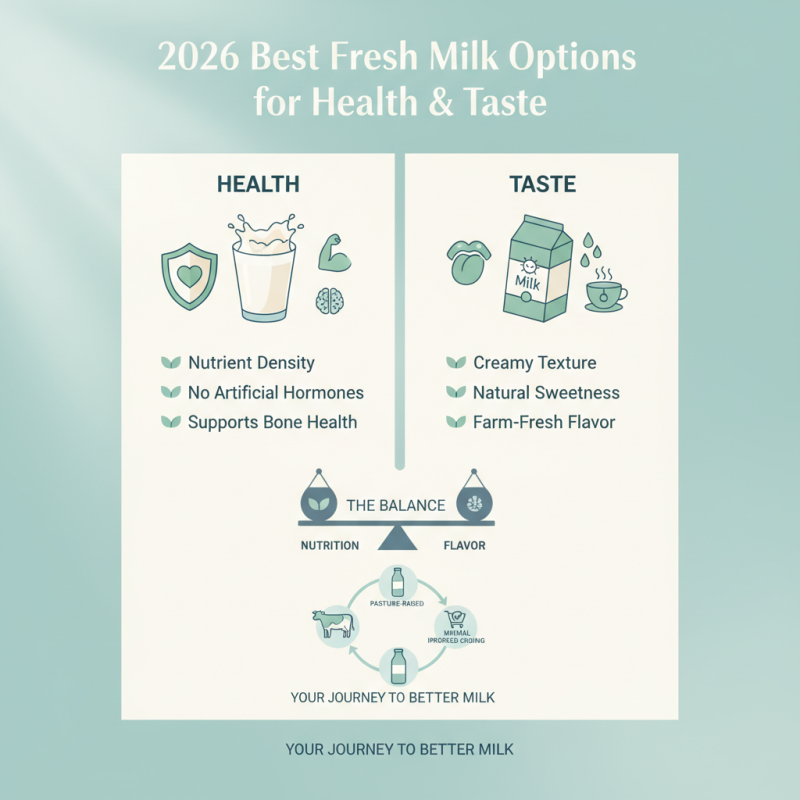
High-quality fresh milk offers numerous health benefits. It is essential to choose milk that meets specific criteria for optimum health. According to the Dairy Research Institute, milk with high fat content often provides more vitamins, such as A and D. These vitamins are crucial for bone health and immune support. Yet, not everyone can handle rich, full-fat milk; some individuals experience digestive distress.
Fresh milk should also be free from additives and preservatives. Many consumers prefer raw or minimally processed options. The Food and Agriculture Organization notes that pasteurization can reduce some beneficial nutrients. However, the risk of pathogens in unpasteurized milk is a serious concern. The balance between safety and nutritional value is a topic worth discussing.
Taste plays a role in milk quality as well. A fresher taste often indicates better processing standards. According to the International Dairy Federation, fresh milk should have a mild, pleasant flavor. Not everyone experiences taste the same way; some may find certain types unappealing. Exploring local dairies and farms can lead to better tasting and fresher options while questioning what really defines quality.
2026 Best Fresh Milk Options for Health and Taste
This chart represents the nutritional scores of different types of milk based on health benefits and taste. Whole milk scores the highest for its rich taste and nutrient profile, while almond milk offers a good alternative for those seeking a plant-based option.
Nutritional Comparison: Whole, Skim, and Plant-Based Fresh Milk Options
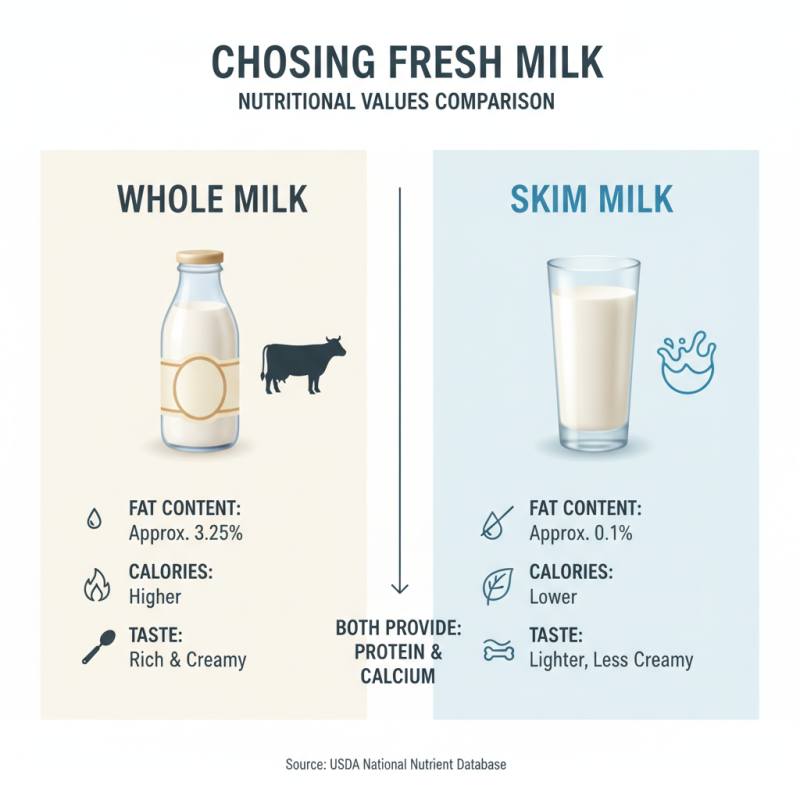
When choosing fresh milk options, it's essential to consider nutritional values. Whole milk is rich and creamy. It contains about 3.25% fat, leading to its higher caloric content. Skim milk, on the other hand, removes most of the fat. This results in fewer calories while still providing protein and calcium. However, some people miss the satisfying taste of full-fat milk.
Plant-based options offer unique benefits. Almond milk is light and nutty but lower in protein. Soy milk closely resembles cow's milk in protein content, making it a great alternative. Oat milk has a naturally sweet flavor but can contain more carbohydrates. Each option has its pros and cons based on dietary needs.
**Tips:** Consider trying a mix of different types. This can help you discover new flavors. Always check labels for added sugars and other ingredients. Balance is key in your diet; sometimes, it's okay to indulge. Your preferences might shift over time, so keep an open mind.
Taste Profiles of Popular Fresh Milk Varieties: An In-Depth Analysis
When exploring fresh milk options, taste profiles vary significantly. Whole milk offers a creamy, rich flavor, while skim milk is thinner and less intense. Some consumers enjoy the subtle sweetness of organic milk, which can taste fresher. According to a 2022 industry report, 45% of consumers prefer whole milk for its taste and mouthfeel.
In contrast, alternative milks like almond or oat can provide a nutty or slightly sweet note. These varieties appeal to those seeking lactose-free options. Some people find alternative milks can lack depth compared to traditional fresh milk. It’s essential to sample different types to find personal preferences.
Tips: When choosing fresh milk, consider how you plan to use it. Cooking and baking may benefit from whole milk's richness. Taste-testing various options can also lead to surprising favorites. Remember, freshness can impact flavor significantly. Try notable local dairies for potentially more vibrant options.
2026 Best Fresh Milk Options for Health and Taste
| Milk Type | Taste Profile | Health Benefits | Best For |
|---|---|---|---|
| Whole Milk | Creamy, rich flavor | Higher fat content, provides vitamins A & D | Cooking, baking, coffee |
| Low-fat Milk | Milder taste, less creamy | Lower calories, good source of protein | Drinking, cereal |
| Almond Milk | Nutty, slightly sweet | Low in calories, lactose-free | Smoothies, dairy-free diets |
| Oat Milk | Creamy, mild sweetness | Fiber-rich, good for digestion | Coffee, baking |
| Soy Milk | Creamy, slightly bean-like | High in protein, heart-healthy | Cooking, smoothies |
| Coconut Milk | Rich, tropical flavor | Contains medium-chain fatty acids | Curries, desserts |
Sourcing and Sustainability: The Best Practices for Fresh Milk Production
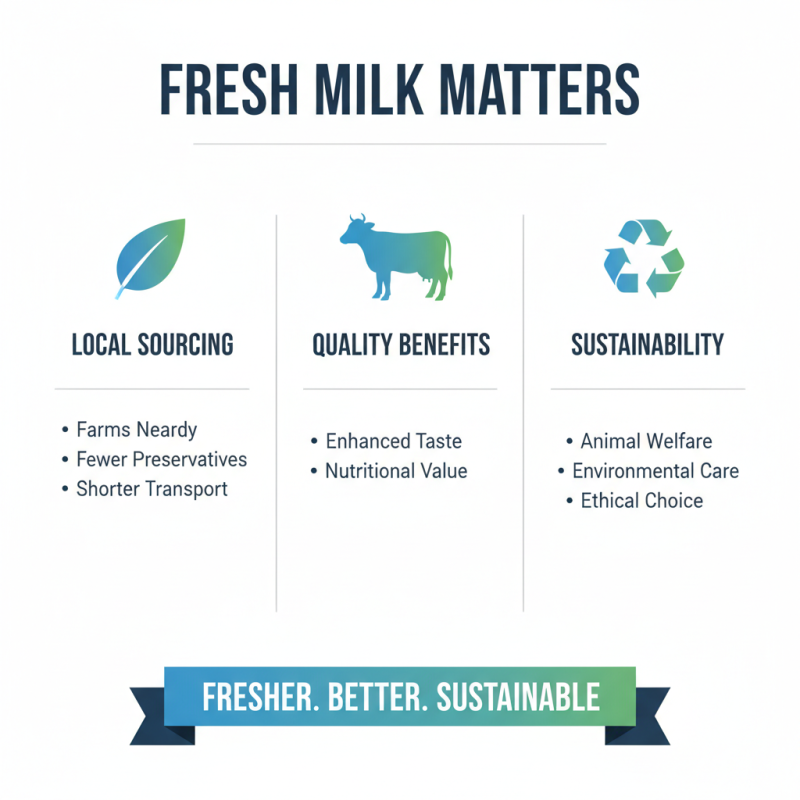
When choosing the best fresh milk, sourcing and sustainability matter. Local farms often provide fresher options. They use fewer preservatives and have shorter transport times. This leads to better taste and nutritional quality. Sustainable practices in dairy farming focus on animal welfare and environmental care.
Many farmers now practice rotational grazing. Cows are moved to fresh pastures regularly. This method not only benefits the cows but also enriches the soil. Healthier soil can lead to healthier crops and better milk quality. Choosing milk from these sources supports a cycle of sustainability.
Tips: Look for farms that prioritize organic practices. Visit local markets to find fresh milk options. Consider the overall ecological footprint of your choices. Building a relationship with local producers can yield rewards. Their transparency can help you make informed decisions. Finding fresh milk takes effort, but it’s worth it for your health and the planet.
Consumer Trends: Preferences in Fresh Milk Choices for 2026
As we approach 2026, fresh milk consumption is evolving rapidly. Consumers are becoming increasingly health-conscious. They are looking for options that not only taste good but also offer nutritional benefits. This shift reflects a broader change in dietary preferences. Organic and plant-based milks are gaining popularity. People want transparency in sourcing and production. They want to know what goes into their milk.
Flavor variety is also becoming essential. Many individuals seek unique tastes, such as nutty or herbal infusions. Some consumers enjoy experimenting with different textures, aiming for creamy or frothy experiences. Yet, not every option meets these preferences. Some products fall flat, lacking richness or flavor.
Price also plays a pivotal role. While consumers may favor premium products, they also seek value. Balancing affordability with quality can be challenging. Furthermore, sustainability is a growing concern. Many wish to support eco-friendly practices and local farms. However, finding options that meet both taste and ethical standards isn't easy. Thus, as we move toward 2026, consumers must navigate these complexities in their fresh milk choices.
Related Posts
-
Top Benefits of Fresh Milk for Health and Wellness?
-

Top 10 Ways to Enjoy Fresh Milk in Your Daily Diet?
-
How to Choose the Best Cow Milk for Your Health and Lifestyle Needs
-
Best Unsalted Butter for Baking Which Brands to Choose?
-

What is Animal Farm Butter and Its Significance in Literature?
-

How to Choose the Best Lactose Free Food for Your Diet?