2026 Top Green Matcha Powder Types for Global Buyers?
Global buyers are entering 2026 with stronger expectations for quality, traceability, and consistent supply. Green Matcha Powder is no longer judged by color alone. Buyers now examine origin, cultivar, shading methods, milling style, and laboratory documentation. A vivid jade tone may suggest freshness, but it cannot prove authenticity by itself.
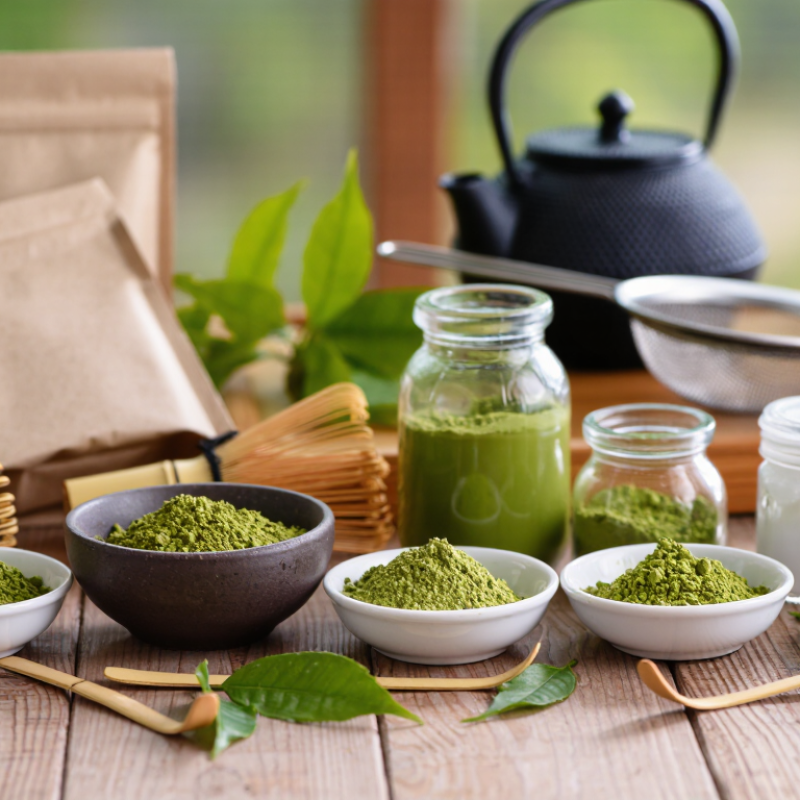
This guide reviews the leading Green Matcha Powder types for international sourcing. It compares ceremonial, premium, culinary, organic, and single-origin options. Each type serves a different purpose, from tea ceremonies to bakery fillings and ready-to-drink beverages. Practical purchasing decisions should consider taste, solubility, particle size, packaging, and seasonal availability. Stone-milled powder should feel exceptionally fine, almost like soft flour between the fingers.
Reliable suppliers should provide harvest information, production details, and current certificates of analysis. Testing for pesticides, heavy metals, microbes, and undeclared additives supports safer commercial decisions. Organic certification can add value, but buyers should verify the issuing body and certificate scope. Marketing claims are not enough.
Quality is not perfectly uniform across markets. Even respected origins can show batch variation. That matters. Flavor may shift from sweet and creamy to grassy or slightly bitter. Therefore, buyers should request samples before placing large orders. They should also confirm storage conditions, shelf life, carton protection, and export documentation. This overview offers a practical framework, while recognizing that no single matcha type suits every buyer, beverage, or budget.
Define Matcha by JAS Criteria: Tencha Shading, Stone-Grinding, and Moisture
2026 Top Green Matcha Powder Types for Global Buyers?
For buyers using JAS criteria, matcha should begin with tencha, not ordinary green tea. Tencha leaves are shaded before harvest, reducing direct sunlight and supporting a softer, greener profile. The leaves are steamed, dried without rolling, and cleaned of stems and veins before milling. Shade matters. Not every green powder qualifies.
Traditional stone-grinding creates a fine powder with a gentle mouthfeel. It also works slowly and may generate less heat than aggressive industrial milling. However, stone grinding alone cannot prove matcha quality. Ask for processing records, origin details, harvest information, and a lot-specific certificate of analysis. Particle size, color, aroma, and taste should agree. One test is not enough.
Moisture deserves equal attention. Excess moisture can cause clumping, dull aroma, oxidation, and storage problems. Very dry powder may still lose freshness through poor packaging or repeated opening. JAS references should be checked against the applicable product specification, not guessed from appearance. A reliable supplier should explain its moisture method and testing date. Bright green color can mislead. I would also inspect the powder after opening: it should look fine, smell fresh, and dissolve without persistent hard lumps. Some purchasing decisions remain imperfect, especially when samples represent only one production lot.

2026 Top Green Matcha Powder Types for Global Buyers
Matcha is traditionally made from shaded tencha leaves that are steamed, dried without rolling, deveined, and stone-ground into a fine powder. The chart compares practical sourcing benchmarks; moisture values are reference targets, not universal statutory JAS limits.
Longer shading generally supports higher levels of amino acids such as theanine and a greener color. Traditional stone milling is slow and helps limit heat exposure. For export stability, buyers commonly seek moisture below approximately 5% and should verify the specification, test method, and applicable JAS requirements with the supplier.
Compare Ceremonial Grades by Color, Particle Size, Caffeine, and Umami
2026 Top Green Matcha Powder Types for Global Buyers
Ceremonial matcha is judged by more than a bright green appearance. Color usually reflects chlorophyll, shading, freshness, and processing control. A vivid jade tone can suggest careful handling, but color alone proves little. Some excellent powders look slightly softer green after storage.
Particle size strongly affects texture. Well-milled ceremonial powder should feel almost silky between the fingers. Many premium lots measure roughly 5 to 15 microns, though milling equipment creates variation. Finer particles suspend more evenly, while coarse powder may feel sandy and settle quickly. Buyers should request sieve data or particle-size testing, not rely only on supplier descriptions.
Caffeine is naturally variable. Cultivar, shading period, leaf position, harvest season, and serving size all matter. A typical two-gram serving may provide approximately 35 to 70 milligrams of caffeine, but laboratory results are more dependable. Umami often comes from shaded leaves rich in amino acids, especially theanine and glutamate. Look for a rounded savory taste, gentle sweetness, and limited bitterness. Harsh bitterness can indicate poor freshness, excessive heat, or unsuitable brewing water.
Sensory testing should use consistent water temperature, dosage, and whisking time. Taste decides. However, personal preference still changes the result. Global buyers should compare color, particle size, caffeine data, and umami together. Confirm moisture, microbial safety, heavy-metal testing, packaging conditions, and harvest details through current certificates. Even experienced buyers can overvalue vivid color and overlook a flat finish.
Evaluate Premium Matcha: 20–30 Days of Shading and 5–20 μm Particles
2026 Top Green Matcha Powder Types for Global Buyers
For premium matcha, shading time deserves close attention. Plants shaded for 20–30 days usually develop deeper green color, softer bitterness, and more savory notes. This happens because reduced light changes chlorophyll and amino acid levels. However, shading alone does not guarantee excellent powder. Harvest timing, leaf selection, steaming, drying, and storage also shape the final cup.
Particle size Particle size provides another practical checkpoint. A 5–20 μm range can create a smoother texture and faster suspension in water. It may also reduce the gritty feeling found in coarser powders. Buyers should request a particle-size distribution report, not only a single average number. Testing methods can differ, and one measurement may hide uneven particles. This is where evaluations can become imperfect.
Look for vivid green powder, a fresh vegetal aroma, and a clean finish without harsh dryness. A sample should dissolve evenly after careful whisking, although some natural settling remains normal. Ask for shading records, harvest dates, moisture data, and independent testing for contaminants. Reliable suppliers should explain these documents clearly. Sensory review still matters. A technically impressive powder can taste flat, stale, or overly bitter. Small sample trials are wiser than judging from specifications alone.
Select Culinary Matcha for Baking, Beverages, and High-Volume Foodservice
For global buyers, culinary matcha should be selected by application, not color alone. Baking matcha needs a strong green tone and a firm flavor that can withstand heat, sugar, and dairy. Its fine texture helps prevent speckling in cakes, cookies, fillings, and frozen desserts. A slightly bitter profile can work well in chocolate recipes. It may taste too sharp in a simple latte.
For beverages, choose a smoother culinary grade with balanced umami and restrained bitterness. It should disperse quickly in cold water, milk, or plant-based drinks. During production trials, I check a small sample for clumping, sediment, aroma, and aftertaste. A vivid powder is not always a better powder. Some samples look impressive but fade after mixing. That detail is easy to miss.
High-volume foodservice requires consistent particle size, stable supply, and practical packaging. Buyers should request recent certificates of analysis, microbiological results, pesticide screening, heavy metal testing, origin details, and shelf-life data. These documents support reliable purchasing across markets. Store opened powder away from heat, moisture, light, and strong odors. Smaller working packs may reduce waste during busy service. Our early assumption was simple: brighter means stronger. It was not always correct. Sensory tests, recipe trials, and batch comparisons provide better evidence than appearance alone.
Assess Organic, Instant, and Single-Origin Types for Global Compliance Needs
2026 Top Green Matcha Powder Types for Global Buyers
Organic matcha can support clean-label positioning, but certification rules differ across importing markets. Verify the certificate, issuing authority, scope, and renewal date before approving a supplier. Ask for pesticide, heavy-metal, microbiological, and allergen test results. A certificate can look reassuring, yet it may not answer every buyer’s question. Traceable farm records and sealed batch samples provide stronger evidence.
Instant matcha offers easy dosing for beverages, bakery mixes, and vending applications. However, carriers, processing aids, solubility, and flavor changes require careful review. Single-origin matcha provides clearer geographic identity and may simplify storytelling. It still needs harvest details, origin records, lot numbers, and consistent testing. No category is automatically safer. Local labeling, customs, organic, and food-safety requirements must guide the final specification.
Tips: Request a current certificate of analysis for every production lot. Compare the powder’s color, aroma, particle texture, and dispersibility with the approved sample. Check packaging language, shelf-life evidence, storage conditions, and country-specific documents. If instant powder dissolves too quickly, question its formulation. If single-origin claims lack field-level records, pause the purchase. Compliance work is rarely perfect; review assumptions before scaling orders.
2026 Top Green Matcha Powder Types for Global Buyers? - Assess Organic, Instant, and Single-Origin Types for Global Compliance Needs
| Matcha Type | Typical Product Characteristics | Processing and Format | Key Global Compliance Considerations | Recommended Verification Data | Buyer Suitability and Main Trade-Offs |
|---|---|---|---|---|---|
| Certified Organic Matcha | Green tea powder produced under certified organic agricultural and processing controls. Flavor and color still vary by cultivar, harvest timing, shading, and milling. | Usually shade-grown before harvest, steamed to stop oxidation, dried, deveined, and stone- or air-milled into powder. Supplied in bulk powder or retail-ready packs. | USDA Organic EU Organic JAS Organic Certification must match the destination market, product scope, handling site, and organic claim. Organic status does not replace food-safety testing or contaminant controls. | Valid organic certificate and transaction documentation; lot traceability; pesticide-residue screening; heavy-metal testing; microbiological results; allergen and food-contact packaging declarations. | Suitable for premium retail, wellness, and ingredient applications where certified claims support price positioning. Usually involves higher audit, segregation, documentation, and supply-planning costs. |
| Conventional Ceremonial-Style Matcha | Bright green appearance, fine texture, and fresh vegetal, umami, or lightly sweet notes when made from carefully selected tea leaves. “Ceremonial” is a market term rather than a universal legal grade. | Made from shade-grown tea leaves that are steamed, dried, deveined, and finely milled. Typically intended for whisking with water, although culinary uses are also possible. | Avoid treating “ceremonial” as a regulated quality certification. Product identity, country of origin, ingredient statement, net quantity, nutrition labeling, and claims must follow the importing market’s rules. | Identity and authenticity review; pesticide residues; heavy metals; microbiology; moisture and water activity; sensory and color specifications; batch-level traceability. | Best for beverage and premium foodservice channels. Delivers strong sensory appeal but may be more sensitive to oxygen, light, heat, and moisture during storage and distribution. |
| Culinary-Grade Matcha | More robust vegetal, bitter, or astringent notes and often a deeper green tone. Designed to perform in recipes where sweetness, dairy, cocoa, or other ingredients are present. | Powdered green tea produced using the same general tencha-to-powder process, but with specifications optimized for baking, confectionery, beverages, sauces, and blended products. | Confirm permitted use in the destination category, especially for beverages, supplements, confectionery, and foods for specific groups. Check additive, contaminant, labeling, and claims requirements. | Pesticide residues; heavy metals; microbiology; moisture; color; particle size; caffeine declaration where required; allergen cross-contact statement; batch consistency. | Generally offers better cost efficiency for industrial recipes and foodservice. Color and flavor can vary more between lots, so a written specification and retained reference sample are important. |
| Instant Matcha Powder | Designed for rapid dispersion in water or liquid formulations. May provide a more uniform drink-making experience than traditional finely milled matcha, depending on the formulation. | Can be produced from matcha or green-tea extract using drying and agglomeration technologies. Some products include carriers, sweeteners, or other permitted ingredients, so the ingredient list must be checked carefully. | Confirm whether the product is pure matcha, green-tea extract, or a multi-ingredient preparation. Review novel-food, additive, sweetener, caffeine, nutrition, and supplement rules for the destination market. | Full ingredient and carrier disclosure; solubility and dispersibility; caffeine; moisture and water activity; pesticide residues; heavy metals; microbiology; stability and shelf-life data. | Suitable for ready-to-mix beverages, vending, foodservice, and convenience formats. Easier to portion and disperse, but the formulation may not meet a buyer’s “100% matcha” requirement. |
| Single-Origin Matcha | Matcha sourced from one declared geographic area, estate, cooperative, or production region, subject to the supplier’s traceability definition. Regional identity may influence flavor and color. | Processing method is not fixed by the single-origin claim; the product may be stone-milled, mechanically milled, conventional, or organic depending on the supply chain. | Origin claims must be accurate, supportable, and consistent with customs, food-labeling, and advertising rules. “Single-origin” does not automatically mean organic, pesticide-free, premium grade, or protected geographical indication. | Harvest and lot records; grower or processing-site traceability; country and region documentation; pesticide residues; heavy metals; microbiology; sensory profile; authenticity review where origin is commercially important. | Attractive for premium storytelling and differentiated retail products. Supply may be less flexible, and continuity can be affected by harvest conditions, small-lot production, and regional availability. |
| Blended-Origin Matcha | Matcha made by combining material from more than one lot, farm, or region to achieve a target color, flavor, particle size, and cost. | May use conventional or organic ingredients, but organic lots must be controlled and documented according to the applicable certification rules if an organic claim is made. | Country-of-origin and blending disclosures depend on the destination market. Marketing must not imply a single origin when multiple origins are used. Organic segregation and mass-balance records may be required. | Lot composition and traceability; pesticide-residue testing for the finished blend; heavy metals; microbiology; moisture; sensory consistency; certificate and supplier approval records. | Often provides more stable year-round supply and consistent specifications. It offers less geographic exclusivity and requires strong change-control procedures when blend sources are revised. |
| Decaffeinated or Reduced-Caffeine Green Tea Powder | Green-tea powder processed to reduce caffeine rather than representing standard matcha by default. Residual caffeine varies by process and must be verified analytically. | May involve extraction or other caffeine-reduction steps before final drying and milling. The product can differ from traditional matcha in taste, color, solubility, and composition. | “Decaffeinated” or “low caffeine” thresholds and labeling expectations vary by jurisdiction. Do not rely on a process description alone; use the destination market’s legal definition and substantiated analytical results. | Caffeine assay; solvent or processing-residue review where applicable; pesticide residues; heavy metals; microbiology; moisture; stability; complete process and ingredient documentation. | Suitable for products targeting caffeine-conscious consumers, subject to local claim rules. Additional processing can increase cost and may change the sensory profile compared with conventional matcha. |
Buyer note: Compliance requirements differ by destination country and product category. Before purchase, confirm the current rules of the importing market, the exact ingredient composition, applicable organic certification, labeling obligations, maximum contaminant limits, and lot-specific documentation.
Article Source:
- culinary matcha powder,culinary matcha,jade leaf culinary matcha,best culinary matcha powder,best culinary matcha,matcha love culinary matcha,organic culinary matcha,jade leaf classic culinary matcha green tea powder mix 1oz
- matcha tea powder,matcha tea powder,matcha green tea latte,matcha green tea bags,pukka matcha green tea,matcha drink
